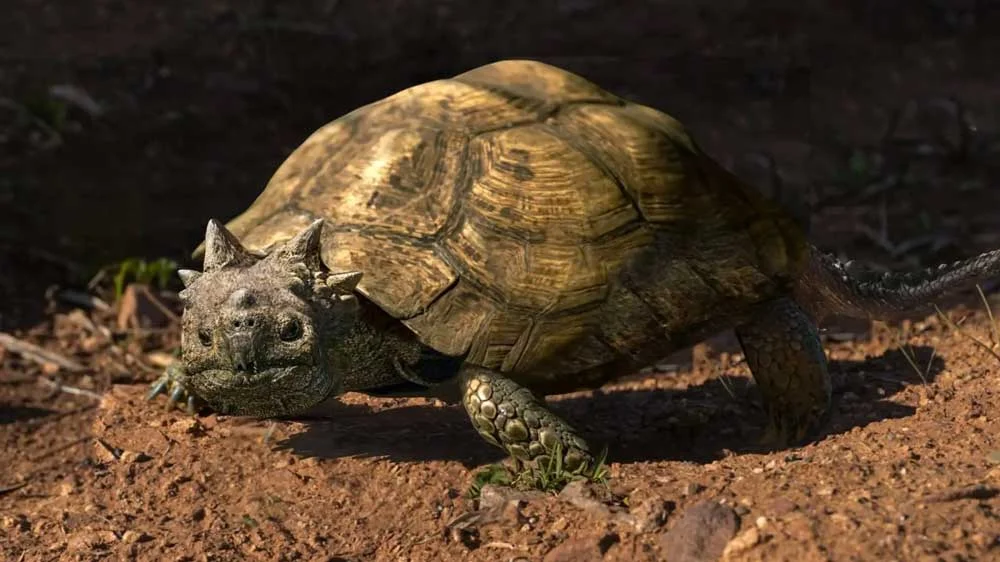
In the desolate, wind-swept landscapes of Argentina’s Rio Negro Province, paleontologists have unearthed a relic of a bygone era that challenges our understanding of reptilian evolution. The discovery of Patagoniaemys aeschyli, a newly identified species of horned turtle, sheds light on the elusive Meiolaniformes—a group of bizarre, robust chelonians that once roamed the Southern Hemisphere from the Early Cretaceous to the Holocene.
This discovery, centered in the fossil-rich Los Alamitos Formation, provides a rare glimpse into the complex ecosystems of the Maastrichtian age, the final stage of the Cretaceous period, just before the catastrophic K-Pg extinction event.
Main Facts: Introducing Patagoniaemys aeschyli
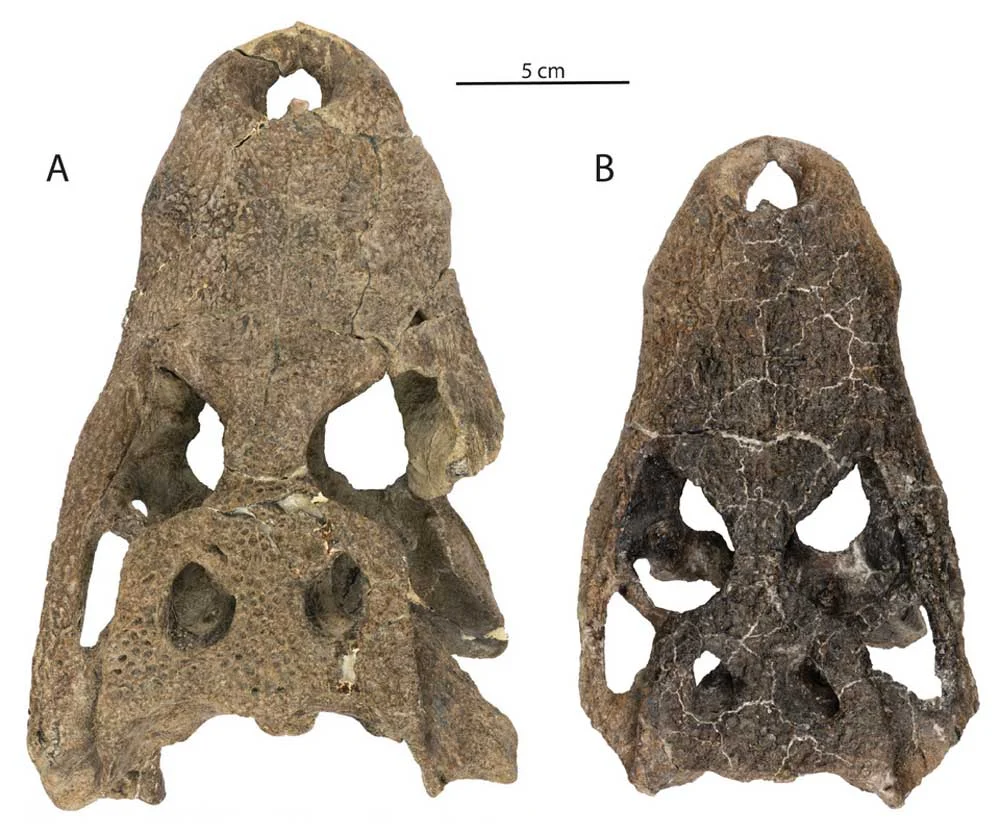
The discovery of Patagoniaemys aeschyli was announced following the analysis of fossilized remains found at the base of the Cerro Cuadrado mountains, specifically at the Nueva Poupée Farm. The specimens, which include a partial basicranium, fragments of the carapace (the upper shell), and various postcranial bones, have allowed researchers to distinguish this species from its known relative, Patagoniaemys gasparinae.
Distinguishing Morphology
The primary diagnostic feature that sets P. aeschyli apart is the presence of distinct longitudinal ridges on the nuchal bone. While both species share the general anatomical hallmarks of the Patagoniaemys genus, these morphological nuances suggest a divergence in evolutionary development within the Meiolaniformes lineage.
These turtles were not the sleek, aquatic sliders common today. Meiolaniformes were characterized by their heavy, often ornate armor and, in some derived species, bizarre cranial outgrowths that gave them a "horned" appearance. While the fossil remains of P. aeschyli are fragmentary, they provide sufficient data to confirm that this species occupied a specific ecological niche in Northern Patagonia during the twilight of the dinosaurs.
Chronology: The Long Shadow of the Meiolaniformes
The history of the Meiolaniformes is one of remarkable resilience and geographic reach. To understand the significance of P. aeschyli, one must examine the timeline of this unique reptilian group.
The Cretaceous Dawn
The group emerged during the Early Cretaceous, a period marked by shifting continents and the rise of flowering plants. During this era, the ancestors of the meiolaniforms began to carve out territories across the vast, interconnected landmasses of the Southern Hemisphere.
The Maastrichtian Transition
The Los Alamitos Formation, where P. aeschyli was found, dates back to the Maastrichtian (approximately 72 to 66 million years ago). This was a time of immense geological activity. As the supercontinent Gondwana continued its slow fragmentation, these turtles found themselves isolated in pockets of South America, evolving in parallel with the changing climate and flora.
Persistence into the Holocene
What makes the Meiolaniformes truly unique is their longevity. Unlike many groups that succumbed to the mass extinction event at the end of the Cretaceous, members of this lineage persisted for millions of years afterward. They maintained a presence across Australia, Oceania, and South America, surviving until the Holocene—the current geological epoch. In some regions, they existed alongside early human populations, becoming the subject of ancient myths and legends, such as the "big-headed" turtle, Maturin, which shares lineage traits with these ancient giants.
Supporting Data: The Ecosystem of Nueva Poupée
The site at Nueva Poupée Farm is a paleontological treasure trove. The discovery of P. aeschyli did not occur in isolation; the fossil bed acts as a time capsule containing a cross-section of the Maastrichtian biome.
A Biodiversity Hotspot
The researchers noted that the P. aeschyli specimens were found in close association with an array of microvertebrates. This "community" of fossils provides context for the environment in which the turtle lived:
- Aquatic Life: Diverse fish species suggest a freshwater or riverine environment, likely a delta or slow-moving river system.
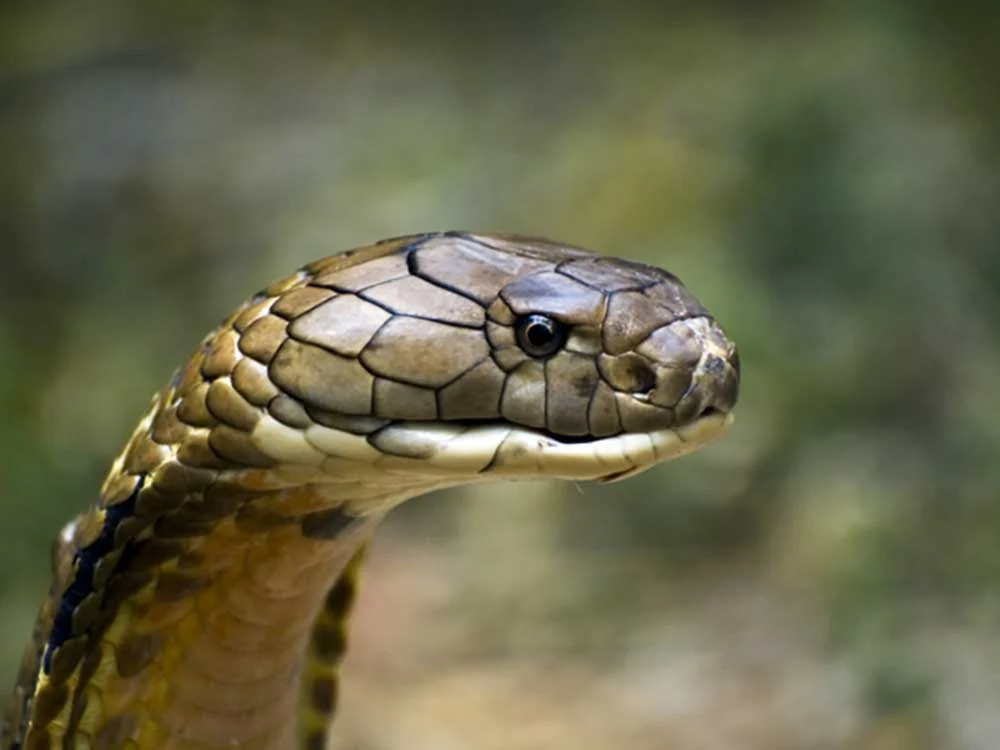
- Amphibians and Reptiles: The presence of anurans (frogs and toads), snakes, and sphenodonts indicates a high level of humidity and a complex, multi-layered food web.
- Avian and Dinosaurian Presence: Perhaps most startling is the co-occurrence with birds, as well as massive sauropods and theropods. This highlights that P. aeschyli was a small-to-medium-sized participant in a world dominated by giants.
- Mammalian Diversity: A variety of early mammals were also identified, suggesting that the Los Alamitos area was a primary habitat for both small, ground-dwelling creatures and larger reptilian predators.
The chemical and physical composition of the sediment surrounding these bones suggests a stable, possibly seasonal environment that supported a high density of biomass, allowing for the preservation of even the most delicate fragmentary bones.
Official Responses and Scientific Context
The description of Patagoniaemys aeschyli was published in a recent paper titled, "A new meiolaniform turtle from the Maastrichtian of Northern Patagonia, Argentina." The lead researchers emphasize that this find is not merely the addition of a new name to the taxonomic list, but a vital piece of the puzzle concerning the evolution of chelonians in the Southern Hemisphere.
Taxonomic Clarification
The Meiolaniformes group is currently comprised of several key taxa: Chubutemys, Otwayemys, Patagoniaemys, and Peligrochelys. By adding P. aeschyli to this roster, the research team has enabled a more robust phylogenetic analysis. Scientists can now better trace the "cranial ornamentation" trend, observing how the skull and nuchal bones changed as the group adapted to different environmental pressures across South America.
The "Maturin" Connection
In popular culture and broader scientific discourse, the group has gained notoriety due to the "Big-headed" turtle species—often colloquially named after Stephen King’s cosmic turtle character, Maturin. While the name is a whimsical nod to literature, it underscores the fascination with the outsized, prehistoric skulls that define this group. The formal description of P. aeschyli provides the serious, anatomical bedrock upon which such public fascination rests.
Implications: Rewriting the History of the Southern Hemisphere
The discovery of Patagoniaemys aeschyli has profound implications for how we interpret the survival and extinction of species during the K-Pg boundary.
Evolutionary Resilience
The survival of the Meiolaniformes into the Holocene poses a fundamental question: how did they persist when so many other reptiles failed? Some hypotheses suggest that their unique carapace structure and potentially burrowing behaviors offered a buffer against the rapid climate shifts that occurred at the end of the Cretaceous. By studying P. aeschyli, we gain insight into the biological "hardiness" that allowed this lineage to outlive the dinosaurs.
Biogeographic Connectivity
The distribution of Meiolaniformes across South America, Australia, and Oceania serves as a testament to the ancient connectivity of the Southern continents. P. aeschyli provides a crucial data point for mapping these prehistoric migration routes. It challenges the traditional view of these turtles as strictly sedentary, suggesting instead a more dynamic history of dispersal and adaptation.
Future Research Directions
The fragmentary nature of the P. aeschyli specimens is a call to action for the scientific community. The Rio Negro Province remains one of the most promising regions for paleontological discovery. The current findings suggest that with further excavation at the Nueva Poupée site, more complete skeletal remains could be recovered. A more complete skull, for instance, would allow researchers to model the bite force and feeding habits of P. aeschyli, further clarifying its role in the Maastrichtian food chain.
As climate change alters the global landscape today, the study of how organisms like P. aeschyli navigated the environmental upheavals of the late Cretaceous becomes increasingly relevant. They are not merely ancient curiosities; they are lessons in biological endurance.
For those wishing to delve deeper into the technical specifications and the formal cladistic analysis of the species, the full paper is currently available via the ResearchGate platform. This discovery marks a significant milestone in South American paleontology, ensuring that the legacy of the horned turtles of Patagonia will continue to be debated and celebrated for decades to come.