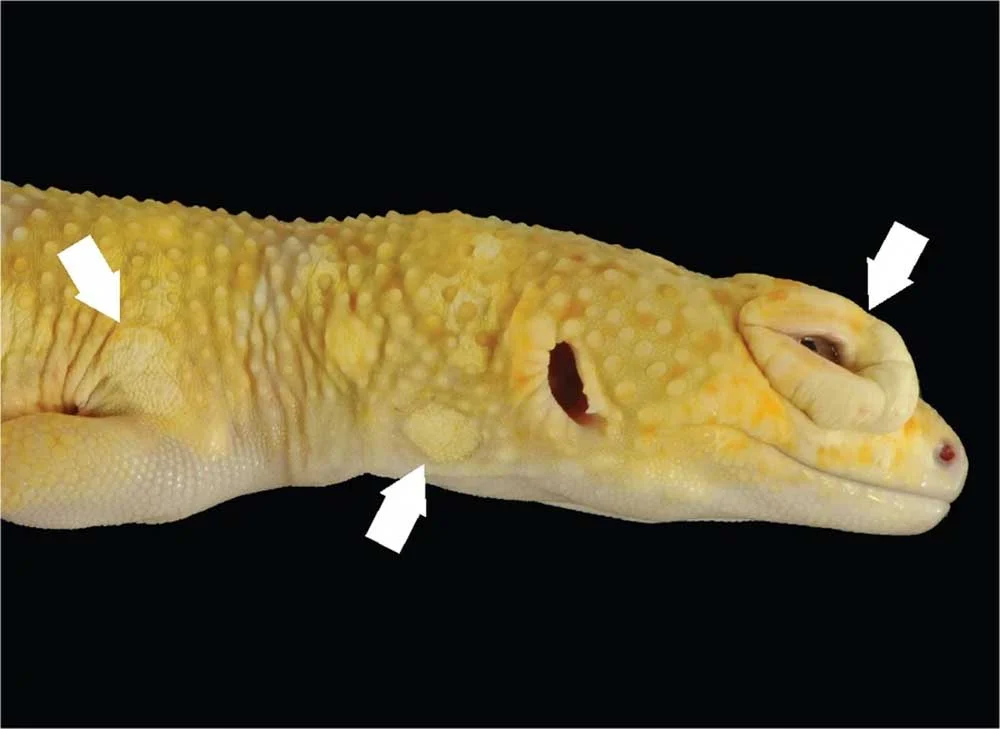
In the specialized world of reptile breeding, the "Lemon Frost" leopard gecko (Eublepharis macularius) was once heralded as a triumph of aesthetic selection. With its striking, high-contrast coloration and bright, luminous appearance, the morph quickly became a highly sought-after commodity among enthusiasts. However, that beauty masked a grim biological reality: a staggering 80 percent of these geckos develop iridophoromas, a rare and aggressive form of pigment cell cancer.
Now, a groundbreaking study published in Springer Nature titled "Dissecting cancer in a non-mammalian model: genomic insights from lemon frost geckos" has transformed these reptiles from luxury pets into essential subjects for oncological research. By mapping the genetic landscape of this morph, scientists have provided the first comprehensive characterization of genomic changes associated with iridophoromas in a reptilian species, opening new doors for understanding how cancer manifests, spreads, and survives in non-mammalian vertebrates.
The Discovery: A Genetic Cookbook Gone Awry
To understand how the Lemon Frost morph develops tumors, researchers employed whole genome sequencing on matched tumor and non-tumor samples taken from the geckos. The results revealed a complex genetic architecture that essentially forces the animal’s cells to misread their own instructions.
At the heart of the discovery is a missense mutation in the TATA-box binding protein (TBP). To conceptualize this, researchers suggest viewing the genome as a massive, intricate cookbook. In this analogy, every gene is a specific recipe. Before a cell can execute a recipe, it requires a clear signal indicating where the instructions begin. The "TATA box" acts as that critical "Start Here" sign located at the beginning of many genes. The TBP is the protein responsible for locating that sign and initiating the transcription process. When this protein is mutated in Lemon Frost geckos, the cell’s ability to correctly initiate gene expression is fundamentally compromised, leading to a cascade of cellular errors.
The Chronology: From Breeder’s Concern to Laboratory Breakthrough
The journey from a breeder’s backyard to a high-level laboratory study is a classic example of citizen science facilitating institutional discovery.
- 2015: Prominent reptile breeder Steve Sykes acquired a pair of Lemon Frost leopard geckos. The morph was relatively new, and the goal was to propagate the trait for its commercial viability.
- 2016: After one year of breeding the male Lemon Frost with other geckos, Sykes observed a troubling trend. His offspring were developing small, dense white nodules on their skin. Recognizing these as potential tumors, Sykes halted the commercial propagation of the line to investigate the health implications.
- The Investigative Phase: Driven by the question of whether the vibrant coloration could be decoupled from the tumors, Sykes reached out to the scientific community. His collection eventually made its way into the hands of Leonid Kruglyak, an evolutionary geneticist at the University of California, Los Angeles (UCLA).
- 2023-2025: Researchers conducted extensive genomic sequencing and clinical observation, identifying the specific mutations responsible for the phenotypic traits of the gecko.
- 2026: The peer-reviewed findings were published, confirming that the very trait that gave the gecko its value—the Lemon Frost coloration—is inextricably linked to the genetic mutations that drive tumor formation.
Supporting Data: The Molecular Drivers of Tumorigenesis
Beyond the TBP mutation, the study identified a series of complex genetic anomalies that explain why these tumors are so aggressive. The researchers uncovered a recurrent gene fusion between the IARS1 and RNF213 genes.
In a healthy organism, these genes play pivotal roles in ensuring proteins are folded and constructed correctly, while also regulating how blood vessels develop and react to external stressors or physical injury. In the Lemon Frost morph, these two genes are fused together, causing a systemic disruption in how the gecko’s body manages tissue health.
Furthermore, the team identified three additional mutated genes—MAP3K13, TENM4, and OR2AT4—which significantly contribute to the development of the cancer. These mutations lead to a dysregulation in actin filament organization. In cellular biology, the structural integrity of the cytoskeleton (the cell’s "skeleton") is essential for normal function. Its disruption is a hallmark of metastatic potential, allowing cancer cells to break away from their primary site and migrate through the body. This explains why the iridophoromas, which begin as white nodules in the dermis, possess such high rates of metastasis, often spreading to the liver and other vital organs.
Clinical Implications: The Iridophoroma Model
Iridophoromas are a specific type of pigment cell neoplasm unique to reptiles. These tumors arise from iridophores—cells responsible for the reflective, iridescent qualities of the gecko’s skin. In the Lemon Frost morph, these cells grow in an uncontrolled, rapid fashion.
Initially, these nodules are confined to the dermis. In the early stages, they are often surgically removable. However, the study confirms that without intervention, the "lesions easily metastasize and spread." The fact that these cancers are present in 80 percent of the studied population makes the Lemon Frost gecko an exceptionally reliable model for studying spontaneous tumor formation.
Unlike many laboratory mouse models where cancer must be artificially induced, the Lemon Frost gecko develops these conditions naturally. This allows researchers to study the tumor microenvironment in its "native" state, providing insights that are impossible to capture in synthetic, lab-grown cell lines.
Implications for the Future of Cancer Research
The publication of this research marks a turning point in the field of non-mammalian oncology. By characterizing the genomic changes associated with these cancers, scientists have established the Lemon Frost gecko as a robust, viable model for exploring the biological pathways of metastasis.
1. Advancing Comparative Oncology
Comparative oncology—the study of cancer across different species—is vital for understanding the universal mechanisms of malignancy. By comparing the mutations found in the gecko to those found in human melanomas and other pigment-cell cancers, researchers may uncover shared evolutionary "weak spots" that could lead to more effective targeted therapies.
2. Ethical Breeding and Animal Welfare
For the reptile breeding community, this study serves as a somber warning. It underscores the dangers of selecting for aesthetic traits without an understanding of the underlying genetic architecture. The "Lemon Frost" saga highlights how a single recessive or dominant mutation intended to improve skin pigmentation can have catastrophic effects on the overall health of the animal. Breeders are now better equipped to understand that the "Lemon Frost" phenotype is essentially a marker for a genetic disease.
3. Therapeutic Potential
While the primary goal of the study was characterization, the identification of the IARS1-RNF213 fusion and the role of actin filament dysregulation provides clear targets for future pharmacological intervention. If researchers can develop molecules that inhibit the activity of these specific fusion proteins, they might be able to slow or halt the progression of the cancer, potentially saving individual geckos and providing a blueprint for treating similar tumors in other species.
Conclusion
The Lemon Frost leopard gecko is no longer just a subject of curiosity for hobbyists; it is a vital key to unlocking the mysteries of cellular mutation and cancer progression. Through the collaborative efforts of breeders like Steve Sykes and the rigorous analytical power of researchers at institutions like UCLA, we have gained a profound look into the mechanisms of iridophoromas.
As the scientific community continues to dissect the genomic insights provided by this unique reptile, one thing is clear: the road to curing cancer often leads through unexpected places. By studying the "cookbook" of the Lemon Frost gecko, we are learning not just how to fix a single, broken recipe, but how to better understand the complex, often unpredictable language of life itself. The study of this gecko serves as a reminder that every mutation tells a story, and sometimes, the most tragic stories contain the most essential truths for the future of medicine.