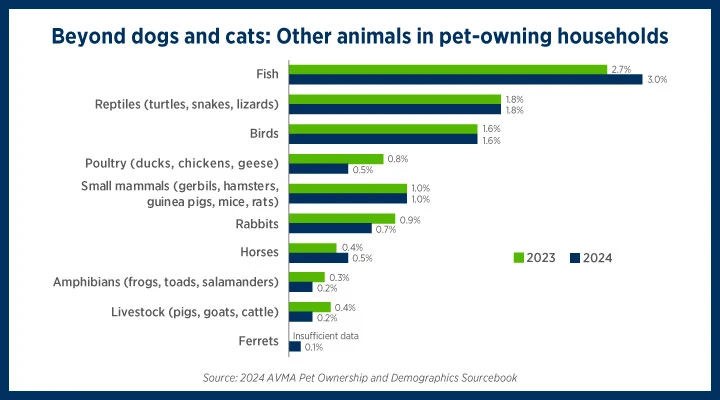
As the landscape of American pet ownership shifts, rabbits have carved out a unique and enduring niche. While dogs and cats remain the undisputed titans of the domestic sphere, the rabbit—once relegated to the status of a secondary "small pet"—has increasingly become a centerpiece of the modern household. According to the most recent data released in May 2025 by the American Veterinary Medical Association (AVMA), roughly one million households across the United States currently provide a home for at least one rabbit.
This figure represents approximately 0.7% of all U.S. households. However, as we examine the trajectory of these figures over the last quarter-century, a complex picture emerges: one of shifting demographics, evolving attitudes toward exotic pets, and a changing approach to animal welfare.
Main Facts: The 2025 Landscape
The current status of rabbits as companion animals is defined by a modest but stable footprint. Based on the 2024 Pet Ownership & Demographics data summarized by the AVMA, the estimated population of pet rabbits resides in roughly one million homes. This data serves as a vital benchmark for veterinarians, rescue organizations, and policymakers who must account for the specific medical and social needs of these lagomorphs.
Unlike the rapid surges seen in dog or cat ownership during the 2020-2021 pandemic era, rabbit ownership has remained relatively steady, suggesting that those who choose rabbits are often committed, long-term owners. This stability is crucial, as the modern pet rabbit is no longer viewed merely as a child’s starter pet; they are increasingly treated as sophisticated, indoor companions requiring specialized veterinary care, high-quality nutrition, and significant social interaction.
A Chronological Journey: The Evolution of Ownership
To understand where we are today, we must look at the historical data. The popularity of rabbits as pets has fluctuated significantly since the turn of the millennium, influenced by economic trends, cultural shifts, and the availability of education regarding their care.

The Early 2000s: A Peak in Numbers
At the beginning of the 21st century, the reported numbers of pet rabbits were notably higher than today. In 2002, the USDA estimated that there were five million rabbits living in 2.2 million households. By 2007, the AVMA and the American Pet Products Association (APPA) both placed the national pet rabbit population at approximately 6.1 million. During this era, rabbits were frequently marketed as popular "small animal" choices, often leading to impulse purchases that did not always align with the long-term needs of the animals.
The 2010 Transition
The 2010s marked a pivot point. While the total number of rabbits in homes remained significant—reaching 6.6 million in 2010—the subsequent years saw a gradual consolidation. By 2012, the AVMA survey reported that 1.2% of American households (roughly 1.2 million) were living with about 3 million rabbits. This suggests a transition toward fewer, but perhaps more highly cared-for, individual rabbits per household.
The Modern Stabilization
Between 2017 and 2022, the number of households owning rabbits remained consistent at roughly 1.5 million. However, the most recent 2025 metrics indicate a slight contraction to one million households. This decline may be attributed to several factors, including the increasing cost of veterinary care, a better public understanding of the commitment required to raise a rabbit, and the maturation of the pet adoption market.
Supporting Data: Understanding the Demographics
The data provided by the APPA and the AVMA offers more than just raw counts; it reveals the "who" and "how" behind the numbers.
The Generational Shift
Perhaps the most compelling trend in recent years is the affinity younger generations have for exotic and small-animal companions. Reports from Forbes and other market analysts indicate that Millennials and Gen Z are significantly more likely to consider rabbits as viable, primary pets. Unlike previous generations, who may have viewed rabbits as "caged animals," younger owners are increasingly adopting "free-roam" models, where rabbits live indoors with the run of the house, much like a cat.
Sourcing and Adoption
A pivotal change in the rabbit world has been the source of the animals. Data from the 2013-2014 APPA survey provided a rare look at sourcing, showing that 25% of pet rabbits were adopted, while 14% were purchased from pet stores. Most importantly, the industry saw a 42% decline in pet store rabbit sales between the 2011-2012 and 2013-2014 periods. This decline is largely credited to the "adopt, don’t shop" movement and the growing presence of specialized rabbit rescues that educate potential owners on the complexities of rabbit behavior and health.
Official Responses and Veterinary Perspectives
The veterinary community has responded to these trends by increasing the specialization of exotic animal medicine. Because rabbits are classified as "exotics," they require veterinarians with specific training in their unique physiology, particularly their dental needs and delicate gastrointestinal systems.
The AVMA’s continued tracking of these statistics is not merely for statistical interest; it is a public health and welfare necessity. By identifying that one million households are home to rabbits, the veterinary industry can better distribute resources, training, and educational materials to ensure that these animals receive the specialized care they require. The shift in population numbers also forces a reckoning within the industry: as the number of rabbits per household decreases, the intensity of the bond between owner and animal often increases, leading to higher demands for specialized diagnostic services and high-quality rabbit-specific nutrition.
Implications: What Does This Mean for the Future?
The data presents several clear implications for the future of rabbit ownership in the United States.
1. The Professionalization of Rabbit Care
As ownership numbers stabilize, the "amateur" era of rabbit keeping is fading. Owners are more educated than ever, utilizing online resources like the RabbitWiki and specialized organizations to understand the nuances of rabbit health. This will likely lead to an increase in demand for "exotic-only" veterinary practices and specialized pet insurance products.

2. The Influence of Social Media
Social media has played a disproportionate role in the "rebranding" of the rabbit. Platforms like Instagram and TikTok have popularized the idea of the "house rabbit," showcasing their intelligence, trainability, and social nature. This visibility has helped shift the narrative away from the rabbit as a fleeting childhood plaything toward a respected, long-term companion.
3. Welfare and Rescue Challenges
While the decline in pet store sales is a positive indicator for welfare, the rescue community continues to face the reality of the "post-holiday" or "post-impulse" rabbit. Even with better education, the high abandonment rates of rabbits—often occurring shortly after Easter or after owners realize the complexity of rabbit care—remain a significant challenge. The fact that the population has leveled off at around one million households suggests that while the "fad" period may be behind us, the need for robust shelter systems remains constant.
4. Economic Resilience
The economic investment required for a rabbit—including habitat setup, high-quality timothy hay, fresh produce, and specialized veterinary care—is non-trivial. The current data suggests that the one million households currently owning rabbits are, on average, more economically prepared to meet these needs than the larger, more dispersed ownership base of the early 2000s.
Conclusion
The story of the American pet rabbit is one of evolution. We have moved from a time of high-volume, low-information ownership to a more discerning, welfare-focused era. While the total number of rabbits in U.S. homes has decreased from the peaks of 2007-2010, the quality of life for the average pet rabbit has likely improved.
As we look toward the remainder of 2025 and beyond, the rabbit’s position as a permanent fixture in the American household seems secure. Whether they are the primary companion for a Gen Z professional or a cherished family member in a suburban home, the rabbit has solidified its place as a cornerstone of the modern pet-owning experience. The challenge for the next decade will be to continue fostering this culture of informed, compassionate ownership, ensuring that for the one million households and their lagomorph companions, the future is as healthy and stable as possible.