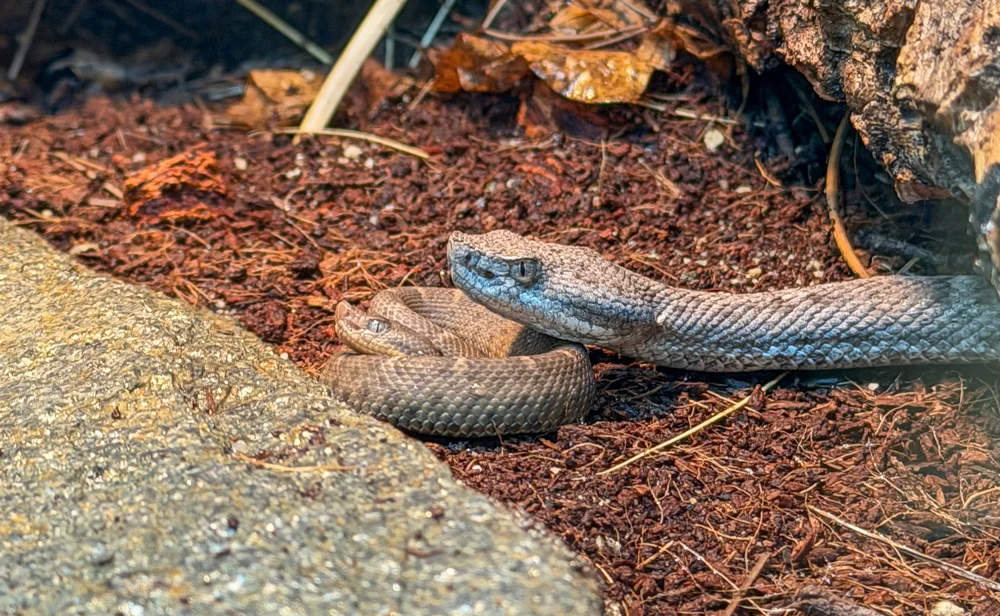
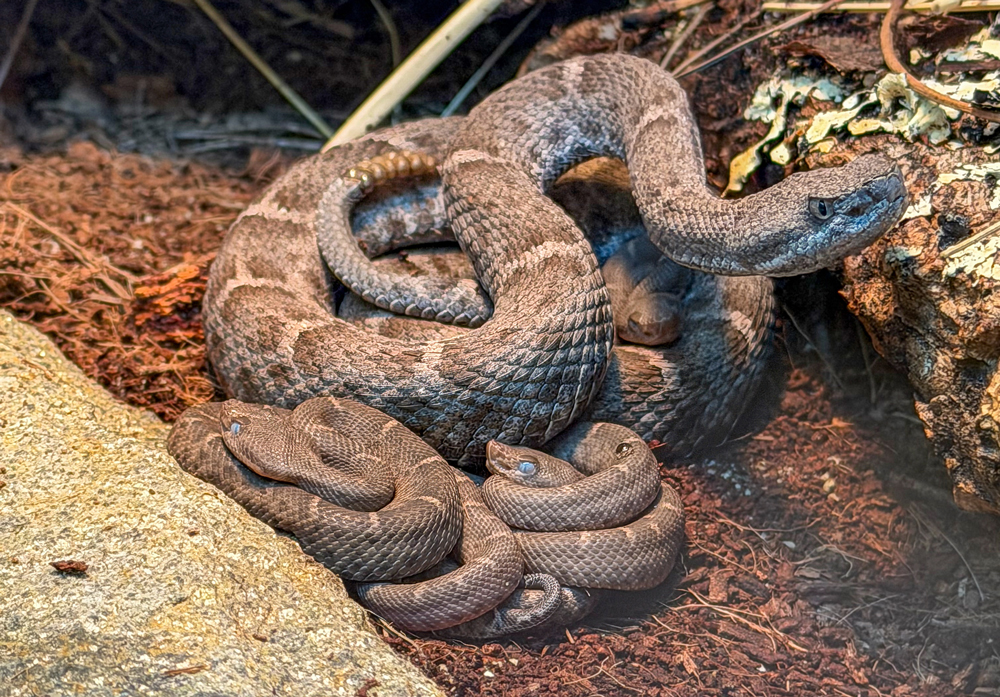
LOS ANGELES — In a major victory for American herpetology and endangered species management, the Los Angeles Zoo has announced the successful breeding of the New Mexico ridge-nosed rattlesnake (Crotalus willardi obscurus). Marking a monumental milestone for reptile conservation in the United States, the institution welcomed a litter of five neonates on August 18, followed by a single neonate on August 29.
These six hatchlings represent the very first successful litters born under the umbrella of "Project Obscurus," a newly established, multi-institutional recovery initiative dedicated entirely to pulling this elusive pit viper back from the brink of extinction. As populations of the snake face severe fragmentation and steep declines across its native southwestern habitats, conservationists view these tiny, pale gray serpents as a tangible lifeline for a species fighting for survival in an increasingly hostile environment.
Main Facts: The Rarest Rattlesnake in the United States
To understand the magnitude of the Los Angeles Zoo’s recent achievement, one must examine the precarious status of the New Mexico ridge-nosed rattlesnake. Widely recognized by biologists and wildlife officials as the rarest rattlesnake species in the United States, Crotalus willardi obscurus is currently classified as Threatened under the U.S. Endangered Species Act and receives stringent protections from state and federal wildlife agencies.
Physically, the New Mexico ridge-nosed rattlesnake is a striking yet diminutive creature. Growing to a maximum length of approximately 26 inches, the snake is easily identified by its pale gray to gray-brown coloration, which provides exceptional camouflage among the leaf litter of its mountain home. Its defining characteristic—and the source of its common name—is a distinct, upturned set of scales along the snout that forms a prominent "ridge."
Unlike many lowland snakes that thrive in arid environments, this pit viper is a specialist of high-altitude "sky islands." It is restricted to montane habitats ranging between 5,000 and 8,000 feet (1,500 to 2,500 meters) in elevation. Within these high-altitude zones, the snakes inhabit humid woodlands, rocky canyons, and grassy mountain slopes. They are notoriously shy, secretive, and difficult to study in the wild; according to reports from the U.S. Fish and Wildlife Service (USFWS), field researchers in certain historical localities have spent upward of 800 grueling hours searching the brush without encountering a single specimen.
As ambush predators, these snakes feed primarily on a specialized diet of lizards, small mammals, birds, and large invertebrates, including scorpions and centipedes. Unlike most snake species that lay eggs, the New Mexico ridge-nosed rattlesnake is a livebearer (viviparous), giving birth to small litters typically ranging from one to nine young at a time.
Chronology: Three Decades of Conservation Leading to Project Obscurus
The arrival of these six neonates at the Los Angeles Zoo is not a stroke of accidental luck; rather, it is the culmination of more than thirty years of dedicated research, field monitoring, and institutional collaboration.
- The 1990s–2010s (Foundational Research): For decades, herpetologists and state wildlife agencies in Arizona and New Mexico recognized the mounting pressures facing high-elevation reptiles. Habitat degradation, historical over-collection, climate shifts, and the looming threat of catastrophic wildfire began shrinking the already isolated ranges of the ridge-nosed rattlesnake. Researchers quietly laid the groundwork, studying the snake’s fragile ecology, micro-habitat requirements, and captive husbandry needs.
- Early 2024 (The Birth of Project Obscurus): Recognizing that independent, fragmented conservation efforts were no longer enough to counter the threats facing the species, leading zoological institutions, conservation groups, and government agencies formalized their partnership. Project Obscurus was officially established in 2024. The collaborative network brings together the Los Angeles Zoo, The Rattlesnake Conservancy, the Arizona-Sonora Desert Museum, the San Antonio Zoo, independent researchers, and state and federal wildlife agencies from Arizona and New Mexico. The mission of Project Obscurus was clear: establish a resilient, genetically diverse insurance population through coordinated captive management, with the ultimate goal of reinforcing wild populations.
- August 18, 2026 (The First Milestone): Following months of careful management by the Los Angeles Zoo’s ectotherm care team—who successfully mimicked the complex seasonal and temperature shifts required by montane vipers—a female New Mexico ridge-nosed rattlesnake gave birth to a healthy litter of five neonates.
- August 28, 2026 (A Second Addition): Just ten days after the initial birth, a second female produced a single neonate, bringing the total number of healthy offspring for the season to six. Zoo officials confirmed that these births mark the first successful reproduction events under the newly minted Project Obscurus framework.
Supporting Data: Understanding the "Sky Island" Ecosystem
The fragility of the New Mexico ridge-nosed rattlesnake is intimately tied to its geography. The species is considered a classic "sky island" organism. Millions of years ago, as the climate warmed following the last ice age, widespread cool and humid forests retreated up the slopes of southwestern mountains. The low-lying valleys between these mountain ranges transformed into hot, arid deserts, effectively stranding cold-adapted species on isolated mountain peaks that resembled green islands in a sea of sand.
Today, the known distribution of the New Mexico ridge-nosed rattlesnake is restricted to a handful of isolated ranges:
- The Animas Mountains of southwestern New Mexico.
- The Peloncillo Mountains of southeastern Arizona.
- The Sierra San Luis Mountains of northern Mexico.
Because these mountain ranges are geographically isolated from one another, gene flow between populations is virtually nonexistent. If a localized catastrophe—such as an intense, uncharacteristic wildfire fueled by climate change—sweeps through one of these ranges, an entire genetic sub-population can be permanently wiped out with no natural mechanism for recolonization. Furthermore, illegal poaching for the exotic pet trade has historically targeted these vulnerable populations, siphoning off mature breeding adults from an already depleted gene pool.
Project Obscurus was designed specifically to combat these compounding ecological pressures by acting as both a biological vault and an active demographic booster.
Official Responses: Voices from the Conservation Frontline
The historic births have generated widespread excitement and relief within the conservation community. Officials from the participating institutions have emphasized that this achievement validates the power of cooperative, science-based wildlife management.
"This incredible breeding success is a testament to our animal care team’s deep expertise in managing delicate montane pit vipers," said Byron Wusstig, Curator of Ectotherms at the Los Angeles Zoo, in an official statement released to the media.
Wusstig elaborated on the broader significance of the milestone for the coalition of partners working to save the reptile. "Being the first of the program partners to welcome these litters of New Mexico ridge-nosed rattlesnakes proves that our collaborative, science-based approach is working well. These two litters represent a tangible lifeline for a species whose numbers have drastically declined in the U.S."
Representatives from The Rattlesnake Conservancy and the Arizona-Sonora Desert Museum echoed these sentiments, noting that captive breeding of montane rattlesnakes is notoriously difficult. Unlike hardier lowland species, high-elevation vipers have extremely specific metabolic, thermal, and humidity requirements. Replicating the distinct winter brumation (hibernation) periods and summer monsoonal cycles of the Animas and Peloncillo mountains within a controlled zoological environment requires a high degree of technical precision. The success at the Los Angeles Zoo demonstrates that modern professional zoos have evolved into vital arks for safeguarding biodiversity that cannot be protected through habitat preservation alone.
Implications: The Path Forward for Project Obscurus
With six healthy neonates now under the watchful eyes of the Los Angeles Zoo’s specialized animal care staff, attention is turning toward the long-term strategy of Project Obscurus.
Zoo officials have outlined a careful, phased plan for the young snakes and any future offspring produced by the breeding program. Rather than remaining permanent residents of the zoo’s behind-the-scenes conservation breeding facilities, these venomous snakes are intended for repatriation. As the neonates mature and hit specific biological and behavioral milestones, they will be prepared for release into carefully selected, secure sites within their native historical ranges in Arizona and New Mexico.
Reintroduction, however, is a delicate science. Wildlife biologists working with Project Obscurus must ensure that released snakes possess proper anti-predator responses, foraging instincts, and disease resistance. Post-release monitoring programs—utilizing tiny radio telemetry transmitters or PIT tags—will likely be employed to track the survival rates and movements of the reintroduced snakes, providing invaluable data that will refine future conservation releases.
Beyond the immediate goal of bolstering wild headcounts, the success of Project Obscurus serves as a crucial educational and advocacy tool. Rattlesnakes, particularly rare and venomous ones, often suffer from negative public perception rooted in fear and misunderstanding. By shining a spotlight on the delicate beauty and ecological importance of the New Mexico ridge-nosed rattlesnake, the Los Angeles Zoo and its partners hope to foster a deeper public appreciation for the unique, fragile biodiversity of the American Southwest.
As climate change continues to alter high-altitude ecosystems and human pressures encroach upon wild lands, initiatives like Project Obscurus offer a beacon of hope. Through cutting-edge animal husbandry, inter-agency cooperation, and an unwavering commitment to species preservation, the conservation community is working hard to ensure that the distinct, ridge-nosed silhouette of Crotalus willardi obscurus remains a permanent fixture of the southwestern sky islands for generations to come.