
March 30, 2026 | Feature Analysis
In the annals of scientific discovery, the mid-20th century is often defined by the "Trimates"—Jane Goodall, Dian Fossey, and Birutė Galdikas. Recruited by the legendary anthropologist Louis Leakey to study great apes, these women were famously chosen for their perceived patience—a trait Leakey deemed essential for long-term field observations. However, while their work brought the complexity of our closest evolutionary relatives into the public consciousness, a quiet, seismic shift was occurring simultaneously in the study of baboons.
Two pioneering researchers, Dr. Jeanne Altmann and Dr. Shirley Strum, fundamentally dismantled the male-centric, dominance-focused paradigms that had dominated primatology for decades. By shifting the scientific lens from aggression to cooperation, they provided a new framework for understanding not just primates, but all social animals—including our own domestic dogs.
The Methodological Revolution: From Ad Lib to Focal Sampling
To understand the magnitude of Altmann’s contribution, one must understand the environment of 1970s field research. Most researchers were men, and the prevailing scientific methodology was "ad libitum sampling"—essentially, taking notes on whatever interesting or dramatic event occurred in the field.

In a 1974 paper that would become a cornerstone of behavioral science, Dr. Jeanne Altmann identified a critical flaw in this approach: it created a massive selection bias. When a researcher notes only "what happens," they are naturally drawn to high-intensity interactions. In primate troops, this means aggression, fights, and displays of male dominance. Because the researchers were largely male, their observations reflected a "nature, red in tooth and claw" perspective, effectively erasing the quieter, more consistent behaviors of females and the underlying social fabric of cooperation.
Altmann introduced "focal sampling," a rigorous, objective method that required researchers to observe a single individual for a fixed, predetermined duration. By recording everything a specific subject did—regardless of whether it was "dramatic"—the focus shifted. Suddenly, the mothering behaviors of females, the subtle social grooming, and the intricate reciprocity between sexes became as statistically significant as the male dominance hierarchies. This shift was not merely procedural; it was a profound ontological change in how we view the animal kingdom.
Chronology of a Paradigm Shift: The 1970s and Beyond
The 1970s represented a crucible for gender roles in both society and science. As women were fighting for fundamental rights—such as the ability to hold a bank account in their own name without a husband’s co-signature—the scientific community was slowly being forced to confront its own gendered blind spots.
- 1968–1972: The era of "male-centric" biology reaches its peak, emphasizing hierarchical, aggressive models of social structure.
- 1974: Dr. Jeanne Altmann publishes her seminal work on observational methods, challenging the reliability of ad lib sampling and introducing focal sampling.
- 1972–1980s: Dr. Shirley Strum begins her groundbreaking, longitudinal study of olive baboons in Kenya, challenging the notion that dominance is the primary driver of baboon social success.
- 1980s–Present: The cumulative findings of Altmann and Strum begin to influence modern ethology, leading to a more nuanced understanding of "phenotypic plasticity"—how a mother’s environment affects the development of her offspring in ways that are not purely genetic.
Challenging the "Alpha" Myth: The Findings of Shirley Strum
While Altmann revolutionized the how of research, Dr. Shirley Strum revolutionized the what. When she began her study of olive baboons in Kenya in 1972, the scientific dogma suggested that baboon society was a brutal meritocracy where the strongest, most aggressive males held all the power and access to resources.

Strum’s findings were an inconvenient truth for the era. She discovered that while aggression was a tool used by baboons, it was neither the most effective nor the most common social strategy. Instead, she documented a society underpinned by complex friendship networks, mutual grooming, and reciprocity.
One of her most famous and widely cited observations involved male olive baboons using infants as "social buffers." A male might pick up an infant and hold it on his belly while approaching another, potentially aggressive male. Because the social code of the baboon troop forbade violence toward infants, the protective male essentially used the baby as a "living shield." This demonstrated a high level of cognitive planning and social intelligence that was previously dismissed in favor of simpler, instinctual dominance theories.
Strum also observed that friendships between males and females were vital. Males would often protect female "friends" from unwanted suitors, and in exchange, the females would groom the males, strengthening the pair bond. Strum’s work proved that baboon societies were, in many ways, more structurally similar to human social systems than those of the more "dramatic" chimpanzees.
Implications for Modern Science and Animal Training
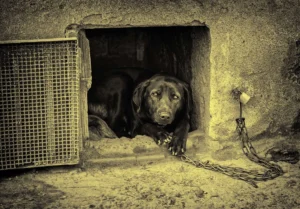
The legacy of Altmann and Strum extends far beyond the savannas of Africa. Their work forced a re-evaluation of "dominance theory" in other species—most notably in domestic dogs. For decades, dog training was heavily influenced by the idea that humans must establish themselves as the "Alpha" to suppress the "red in tooth and claw" instincts of the animal.

However, if even baboons—long held up as the gold standard of aggressive dominance—rely primarily on cooperation and social reciprocity, the application of rigid, dominance-based models in dog training becomes increasingly untenable. Modern canine behavioral science, informed by the work of these women, emphasizes the "light blue in heart and soul" of animal nature: the importance of trust, clear communication, and the reinforcement of cooperative behaviors.
Personal Reflections and the Broader Context
The erasure of women’s contributions in science has historically mirrored their erasure in the broader economic and social spheres. The fact that many of these breakthroughs occurred while women were still legally restricted from basic financial independence adds a layer of poignancy to the history.
As noted in recent reflections on the state of field research, the transition from viewing nature as a battlefield to viewing it as a cooperative network is perhaps the most significant intellectual shift of the last fifty years. This is visible even on a small scale, such as on a farm. Observing sheep after shearing, one might witness the "smack down"—a period of social friction as animals re-identify one another through scent. Yet, beneath the surface of this apparent chaos, one also observes clear, enduring friendships between unrelated individuals who protect and support one another.
Conclusion
The scientific community owes a significant debt to Dr. Jeanne Altmann and Dr. Shirley Strum. By demanding scientific rigor in observation and refusing to let their data be filtered through the lens of male-centric bias, they changed the way we interpret the natural world. They taught us that social stability is not the result of unchecked aggression, but of the far more sophisticated, durable mechanism of cooperation.

As we continue to study the behavior of our companion animals and the natural world, we carry forward their legacy. We have learned that the most effective way to understand a species is not to look for the "drama" of the fight, but to observe the "quiet" of the connection. In doing so, we move toward a future where our understanding of animal behavior is as complex, nuanced, and cooperative as the animals themselves.