
Introduction: The Siege at Blue Mounds
On Saturday, April 18, 2026, the quiet landscape surrounding Blue Mounds, Wisconsin, became the epicenter of a volatile confrontation between animal rights activists and the controversial research and breeding facility known as Ridglan Farms. Approximately 1,000 protesters converged on the site, driven by a singular, desperate objective: to rescue the estimated 1,900 beagles housed within the facility’s walls.
While the protest resulted in arrests and reports of excessive force by law enforcement, the incident has reignited a fierce national debate regarding the ethics of animal testing, the adequacy of the Animal Welfare Act (AWA), and the moral obligation society holds toward its most loyal companions. The standoff at Ridglan is not merely a local news story; it is a flashpoint for a broader movement questioning whether our current scientific practices have become decoupled from our evolving understanding of animal sentience.
Chronology of a Conflict
The tension at Ridglan Farms did not manifest overnight. It is the culmination of years of investigative efforts, legal battles, and mounting public outcry.
- Documented History: Over the past several years, inspections by state and federal agencies have repeatedly cited Ridglan Farms for a "raft of problems," including untreated injuries, substandard housing, and environments rife with biological waste.
- The Whistleblower Evidence: A breakthrough occurred when a former employee provided video evidence of the conditions inside. The footage revealed dogs in states of severe distress, living in barren, wire-bottomed cages that forced them to stand and sleep in their own excrement.
- Legal Intervention (2025): The organization Dane4Dogs spearheaded a legal effort to compel the Wisconsin Attorney General to appoint a special prosecutor. Expert witnesses, including noted applied animal behaviorist Patricia McConnell, provided depositions detailing the psychological trauma visible in the dogs—specifically "stereotypies," or repetitive, frantic circular movements indicative of profound mental collapse.
- The Plea Deal (October 2025): Special Prosecutor Tim Gruemke, tasked with investigating the facility, reached a controversial agreement with the owners. In exchange for dropping felony animal cruelty charges related to unauthorized, painful surgeries performed by untrained staff, the facility agreed to surrender its "seller’s license" on July 1, 2026.
- The April 18 Protest: As the July deadline approaches, frustration among activists has boiled over. Protesters attempted to breach the facility to liberate the animals, leading to clashes with security and law enforcement. The event drew massive media attention, from local affiliates to international outlets, highlighting the global interest in the fate of these beagles.
The Behavioral Science of Suffering
To understand the gravity of the situation at Ridglan, one must look beyond the physical state of the animals and examine their psychological reality. Applied animal behaviorists have been clear: the environment at the facility is inherently abusive.

The Psychology of Confinement
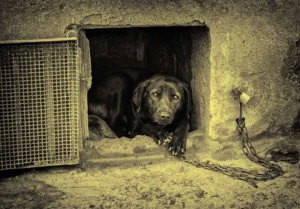
The dogs at Ridglan are frequently kept in solitary confinement or minimal pairings. For a species as social and companion-oriented as the beagle, this is a form of psychological torture. The frustration of being able to see and smell other dogs but never physically interact with them creates a state of chronic stress.
As expert testimony has highlighted, the dogs exhibit "shut down" behaviors—slumping in corners, unresponsive to external stimuli—which are clinical markers of deep depression and helplessness. When they are active, they engage in frantic, hysterical pacing. These are not signs of healthy energy; they are the manifestations of a mind breaking under the strain of a sterile, restrictive, and lonely existence.
Regulatory Failure: The Limits of the Animal Welfare Act
A significant portion of the outrage surrounding Ridglan Farms stems from the realization that, under current federal law, the facility may be "compliant" even while being cruel.
The AWA’s Minimalist Standards
The Animal Welfare Act (AWA) is often cited as the gold standard for animal care, but critics argue it is effectively a "bare minimum" policy that prioritizes industry convenience over animal welfare.

- Cage Size: According to the USDA, a cage must be merely six inches larger than the animal on all sides. This standard ignores the need for movement, play, or exploration.
- Environmental Enrichment: The AWA does not require that research dogs ever leave their cages. They can live their entire lives without experiencing the touch of grass, the warmth of the sun, or the comfort of human companionship.
- The "Scientific Necessity" Loophole: Researchers can bypass almost all AWA standards by claiming that standard care would "interfere with the experiment." This creates a scenario where the needs of the animal are always secondary to the variables of the study.
Marc Bekoff, a prominent animal behaviorist, has noted that the USDA’s own inspector general found that 80% of accredited lab animal breeders fail to correct previous noncompliances. This suggests a systemic failure in oversight, where the agencies responsible for protection are either under-resourced or ideologically aligned with the industries they regulate.
Implications: The Moral Imperative
The standoff in Blue Mounds forces us to confront a difficult question: Is the use of dogs as research subjects ethical in 2026?
The "Confounding Factor" Argument
From a scientific perspective, keeping a dog in a sensory-deprived, high-stress, solitary environment is actually bad science. If the goal of research is to test medications or treatments for living creatures, the "confounding factor" of a stressed, depressed, and physically ill lab animal can render results unreliable. If we are to use animals in research, they must be kept in conditions that allow them to express their species-typical behaviors.
The Bond Between Human and Canine
The beagle is a dog breed uniquely evolved to work alongside humans. From hunting to search-and-rescue to companionship, the bond between human and dog is a "biological miracle." To subject these specific, trusting animals to the life of a laboratory commodity is a betrayal of a centuries-old partnership.

The Path Forward
The situation at Ridglan Farms is a black mark on Wisconsin’s conscience. As the July 1st deadline approaches, the 1,900 beagles remain in limbo. While the owners have rejected offers from outside parties to purchase and rehome the dogs, the precedent set by the closure of the Envigo facility in Virginia—where thousands of beagles were successfully rescued and adopted—shows that a humane alternative is possible.
The time for "continuous evaluation," as suggested by the American Veterinary Medical Association (AVMA), has passed. We now possess the neurobiological understanding to know that dogs experience fear, pain, and joy in ways that mirror our own. When we know better, we must do better.
The citizens of Wisconsin and the broader animal welfare community are calling for:
- Immediate Access: Transparency for independent veterinary inspections of all animals remaining at the facility.
- Rehoming Protocols: Allowing the purchase and release of the beagles to established rescue organizations, as was done in the Envigo case.
- Legislative Reform: A fundamental rewrite of the AWA to shift from a system that facilitates animal testing to one that enforces meaningful, science-based welfare standards.
As the protest in Blue Mounds demonstrated, the public is no longer willing to look away. The "fog" surrounding Ridglan Farms is lifting, and what is being revealed is an industry that is rapidly losing its social license to operate. The beagles of Ridglan deserve more than a cage; they deserve a life. It is time to bring them home.