By Dana Krempels, Ph.D.
Updated and Revised, June 2005 (Originally Published July 1997)
For rabbit owners and veterinary professionals alike, few medical emergencies are as terrifying, fast-moving, and potentially fatal as Gastrointestinal (GI) Stasis. Often mischaracterized merely as "hairballs" or simple digestive upset, GI stasis is a complex, multi-systemic crisis. When a rabbit’s digestive tract slows down or grinds to a complete halt, it sets off a dangerous cascade of systemic events that can prove fatal within hours if not aggressively treated.
Understanding the root causes, recognizing subtle early warning signs, and knowing the appropriate emergency protocols can mean the difference between life and death for a beloved pet.
What Is Gastrointestinal Stasis?
Unlike humans or cats, which can occasionally experience mild digestive sluggishness without severe consequences, rabbits are hindgut fermenters with a delicate, highly specialized gastrointestinal tract. Their survival depends on a continuous, one-way flow of high-fiber food through the system.
When a rabbit stops eating, drinking, or defecating—even for a brief period—the normal muscular contractions (peristalsis) of the stomach and intestines slow down or cease entirely. This condition is medically known as ileus or GI stasis.
The Pathophysiology of GI Stasis
The mechanics of GI stasis follow a frighteningly rapid downward spiral:
- Trigger Event: Stress, pain, dental disease, dehydration, or an inappropriate diet causes a drop in gut motility.
- Food Stasis: Food and hair remain trapped in the stomach and cecum, drying out and becoming dense, impacted masses.
- Gas Production and Pain: Pathogenic bacteria and gas-producing organisms (such as Clostridium species) proliferate in the stagnant environment, causing severe, painful abdominal distension (gas bloat).
- The Pain-Stasis Cycle: The intense pain of gas accumulation causes the rabbit to become more depressed, stop eating entirely, and further depress gut motility.
- Hepatic Lipidosis (Fatty Liver Disease): Because rabbits cannot safely fast, a prolonged lack of food forces the body to mobilize fat stores rapidly, overwhelming the liver and leading to fatal hepatic lipidosis.
Recognizing the Early Warning Signs
The signs of GI stasis can initially be subtle, making vigilance essential. Common indicators include:
- A noticeable decrease in appetite or complete refusal of food.
- Smaller, misshapen, or entirely absent fecal pellets.
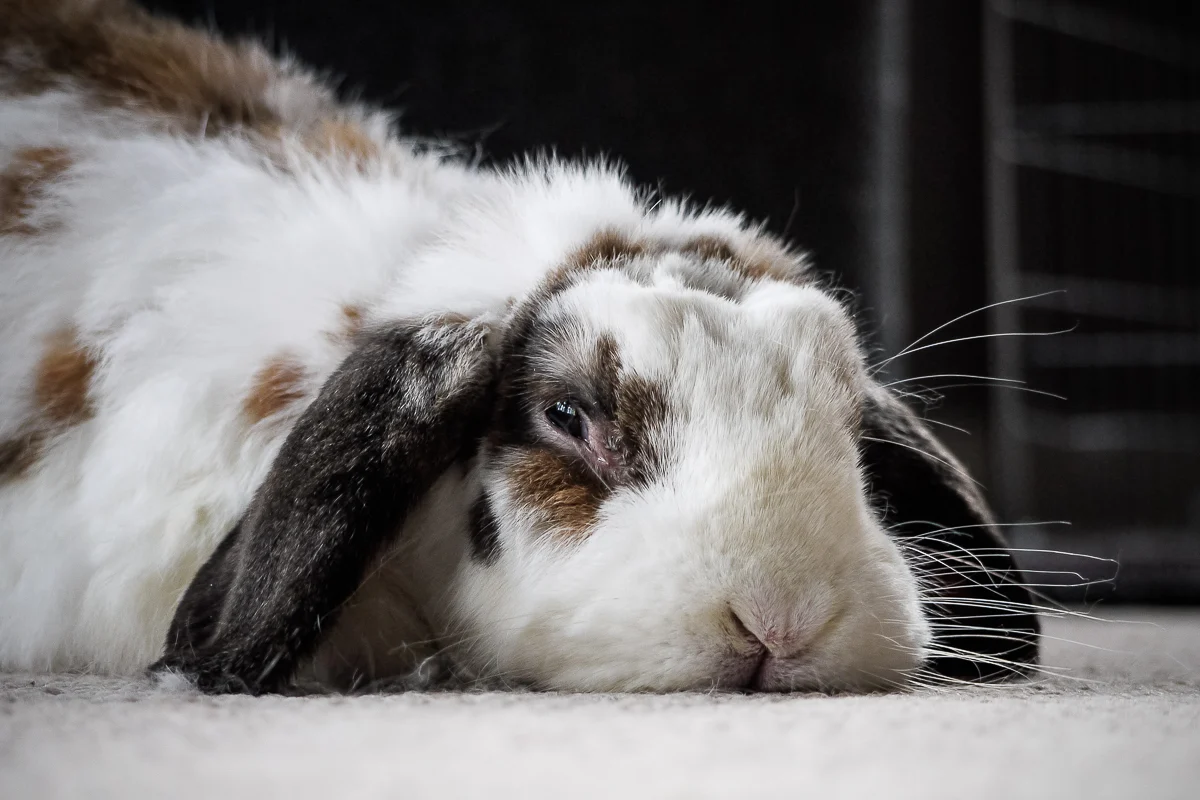
- Lethargy, depression, or a hunched posture (often with teeth-grinding, which is a sign of severe abdominal pain).
- A noticeable decrease in water intake.
- A firm, distended, or "squishy" feeling abdomen.
If a rabbit goes more than 12 hours without eating, passing normal stool, or showing interest in food, it should be treated as a medical emergency. Do not wait for the condition to resolve on its own.
Emergency Veterinary Protocol: What to Expect
When you bring a rabbit showing signs of GI stasis to an exotics-savvy veterinarian, a systematic diagnostic and treatment protocol should be initiated immediately.
1. Diagnostics
A veterinarian will typically perform a physical examination, gently palpating the abdomen to check for impacted stomach contents or gas buildup. Radiographs (X-rays) are critical to rule out mechanical obstructions (such as a swallowed toy or carpet fibers) and to evaluate the degree of gas and fluid accumulation in the stomach and intestines. Blood work may also be performed to assess organ function and check for dehydration or systemic infection.
2. Fluid Therapy
Dehydration is almost always present in GI stasis cases, as lack of food and water thickens GI contents. Subcutaneous (SQ) or intravenous (IV) fluids are administered immediately to rehydrate the rabbit, restore electrolyte balance, and help soften impacted GI contents.

3. Pain Management
Pain is a primary driver of the anorexia-stasis cycle. Analgesics such as Meloxicam (an NSAID) or Buprenorphine (an opioid) are crucial to control visceral pain, allowing the rabbit to relax and the gut to resume normal motility. Historically, some veterinarians used flunixin meglumine (Banamine), but due to potential risks to the kidneys and gastrointestinal tract with overuse, many modern exotics specialists favor safer alternatives like meloxicam.
4. Prokinetics (Motility Modifiers)
Drugs that stimulate gut motility are the cornerstone of medical management.
- Metoclopramide (Reglan): Stimulates the upper GI tract (stomach and upper small intestine).
- Cisapride: A more potent prokinetic that stimulates motility throughout the entire GI tract, including the colon. It is frequently combined with metoclopramide for a synergistic effect.
5. Assisted Feeding (Critical Care)
Because rabbits cannot safely fast, assisted feeding with specialized critical care formulas (such as Oxbow Critical Care) is mandatory. These high-fiber, powdered recovery formulas are mixed with warm water and fed via syringe every few hours if the rabbit is not eating voluntarily.
Addressing Underlying Causes
Treating the symptoms of GI stasis without identifying and resolving the root cause is a recipe for recurrence. Common underlying triggers include:
Dental Disease
Overgrown molars, spurs, or sharp points can make chewing painful or impossible, leading to secondary GI stasis. Regular dental checks by an exotics veterinarian are essential.
Pain and Stress
Anything that causes chronic pain or stress—such as arthritis, a new pet in the household, environmental changes, or improper housing—can trigger stasis.
Inappropriate Diet
A diet low in fiber and high in carbohydrates and sugars is a primary contributor. Unlimited grass hay (such as timothy or orchard grass) must form the foundation of every rabbit’s diet.
Prevention: The Best Medicine
Preventing GI stasis is far easier than treating it. Owners can take several proactive steps:
- Unlimited Hay: Provide unlimited access to fresh, high-quality grass hay 24/7. Hay provides the indigestible fiber necessary to keep the gut moving.
- Proper Pellets: Feed a high-fiber, timothy-based pellet in measured amounts (usually about 1/4 cup per 5 pounds of body weight per day), rather than offering free-choice pellets.
- Fresh Greens: Offer a daily variety of fresh, washed leafy green vegetables (such as romaine lettuce, parsley, cilantro, and dandelion greens).
- Hydration: Ensure fresh water is always available in both a bowl and a bottle. Many rabbits drink more readily from heavy ceramic bowls than from traditional bottles.
- Regular Veterinary Care: Establish a relationship with an experienced rabbit veterinarian for annual wellness exams to catch dental or systemic issues before they result in stasis.
Conclusion: A Collaborative Effort
Gastrointestinal stasis is not a disease in its own right, but rather a syndrome signaling that something is fundamentally wrong in the rabbit’s body or environment. Successfully navigating a stasis crisis requires vigilance, prompt veterinary intervention, and meticulous home care.
By understanding the physiological needs of rabbits, providing an optimal high-fiber diet, and partnering with a knowledgeable exotics veterinarian, owners can drastically reduce the risk of this frightening condition and ensure their long-eared companions live long, healthy lives.
Special thanks to the veterinary advisors who contributed to the revision of this guide, including Mary Cotter, Ed.D., Susan Kelleher, D.V.M., George Flentke, Ph.D., and Kevin Johnson.