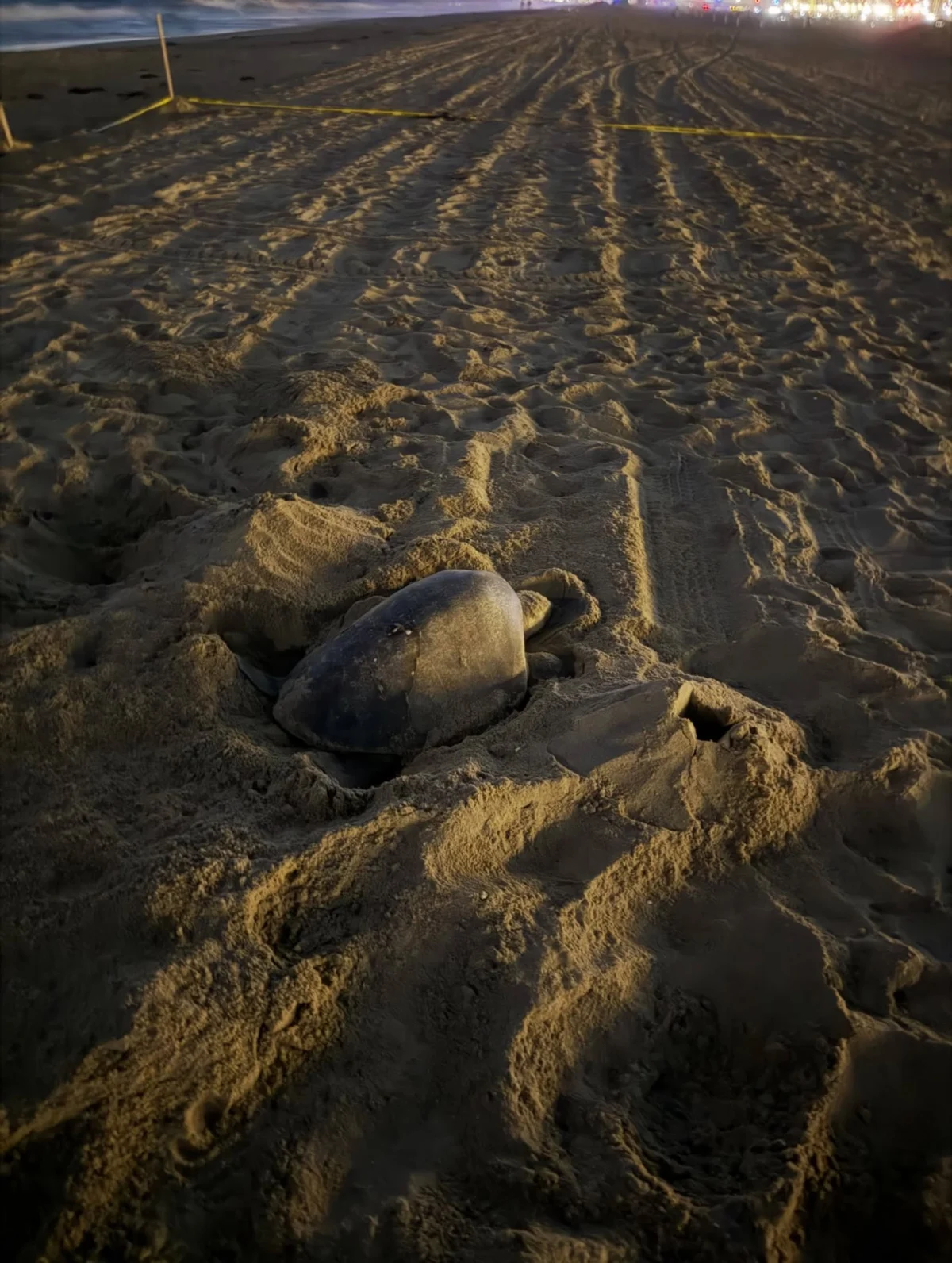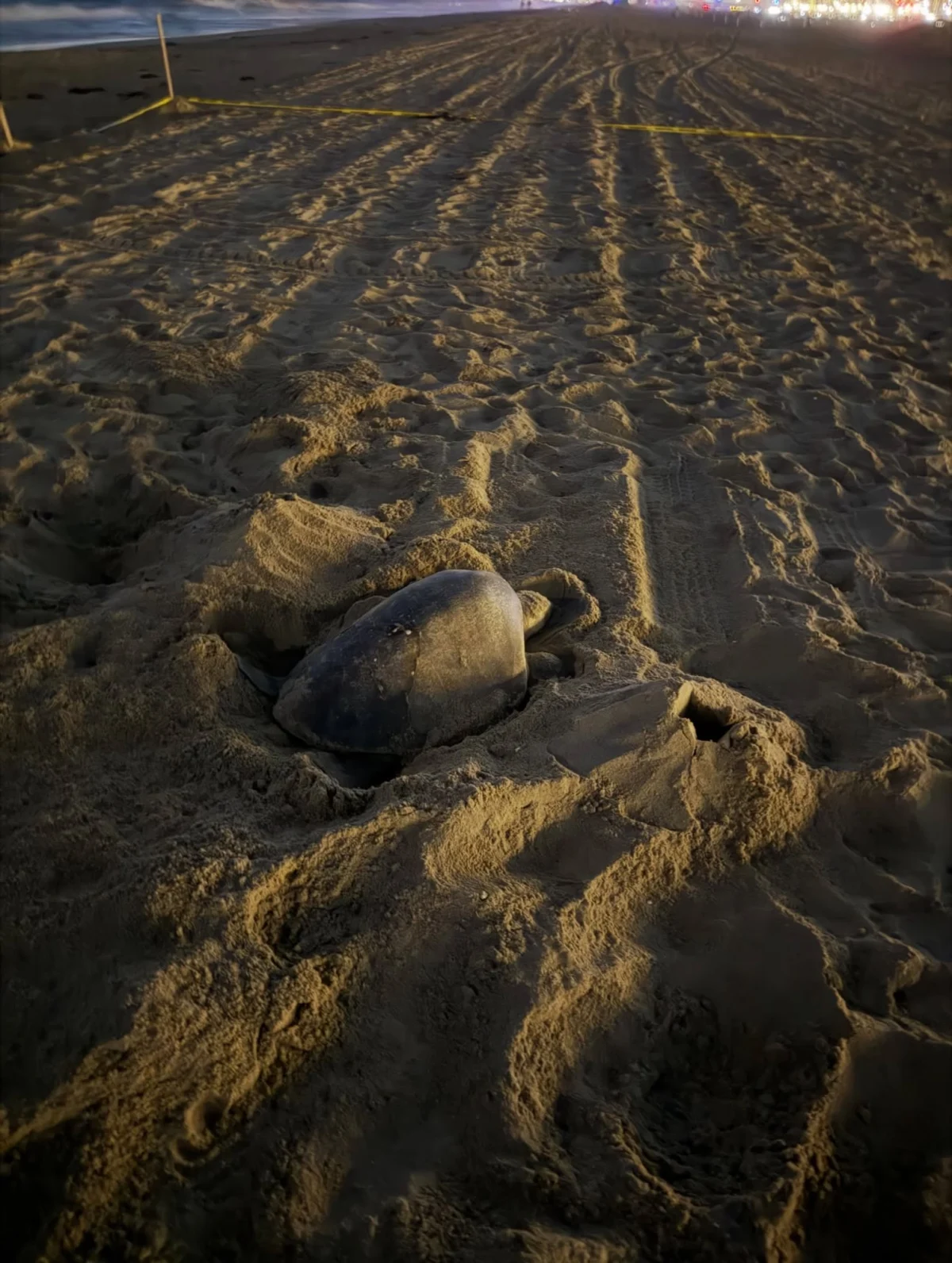
ORANGE COUNTY, California — In an unprecedented marine wildlife event that has stunned biologists and conservationists alike, the United States West Coast has recorded its very first sea turtle nesting event in history. NOAA Fisheries West Coast officially announced the groundbreaking occurrence, revealing that an olive ridley sea turtle (Lepidochelys olivacea) was observed hauling herself onto a Southern California beach to dig a nest and deposit her eggs.
To compound this already historic ecological marvel, just three days following the initial discovery, a second nesting event took place only miles away. Wildlife officials report that an unidentified sea turtle came ashore to lay eggs in Huntington Beach, mere steps from the city’s world-famous pier.
These unprecedented events have triggered a massive collaborative response from local, state, and federal wildlife protection agencies. As marine biologists race to secure the sites, the dual nesting incidents have opened up critical conversations regarding shifting marine ecosystems, rising ocean temperatures, and the broader implications of climate change on migratory marine species.
Main Facts: A Historic First for the Pacific Coast
The confirmation of sea turtle nesting on the mainland West Coast of the United States shatters long-standing biogeographical norms. While marine turtles are frequently sighted swimming off the coast of California—often riding warm-water currents into local bays, estuaries, and river mouths—they have never before been documented using mainland U.S. Pacific beaches to lay their eggs.
- The Primary Subject: An adult female olive ridley sea turtle (Lepidochelys olivacea).
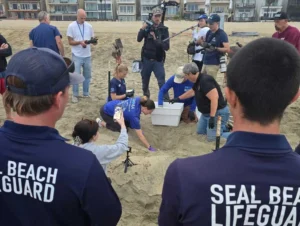
- Location of First Event: Surfside, a private community nestled within the city limits of Seal Beach, California, in Orange County.
- The Secondary Event: An unidentified sea turtle species nesting in Huntington Beach near the iconic municipal pier just 72 hours later.
- Significance: This marks the first-ever recorded sea turtle nesting event of any species on the entire West Coast of the United States.
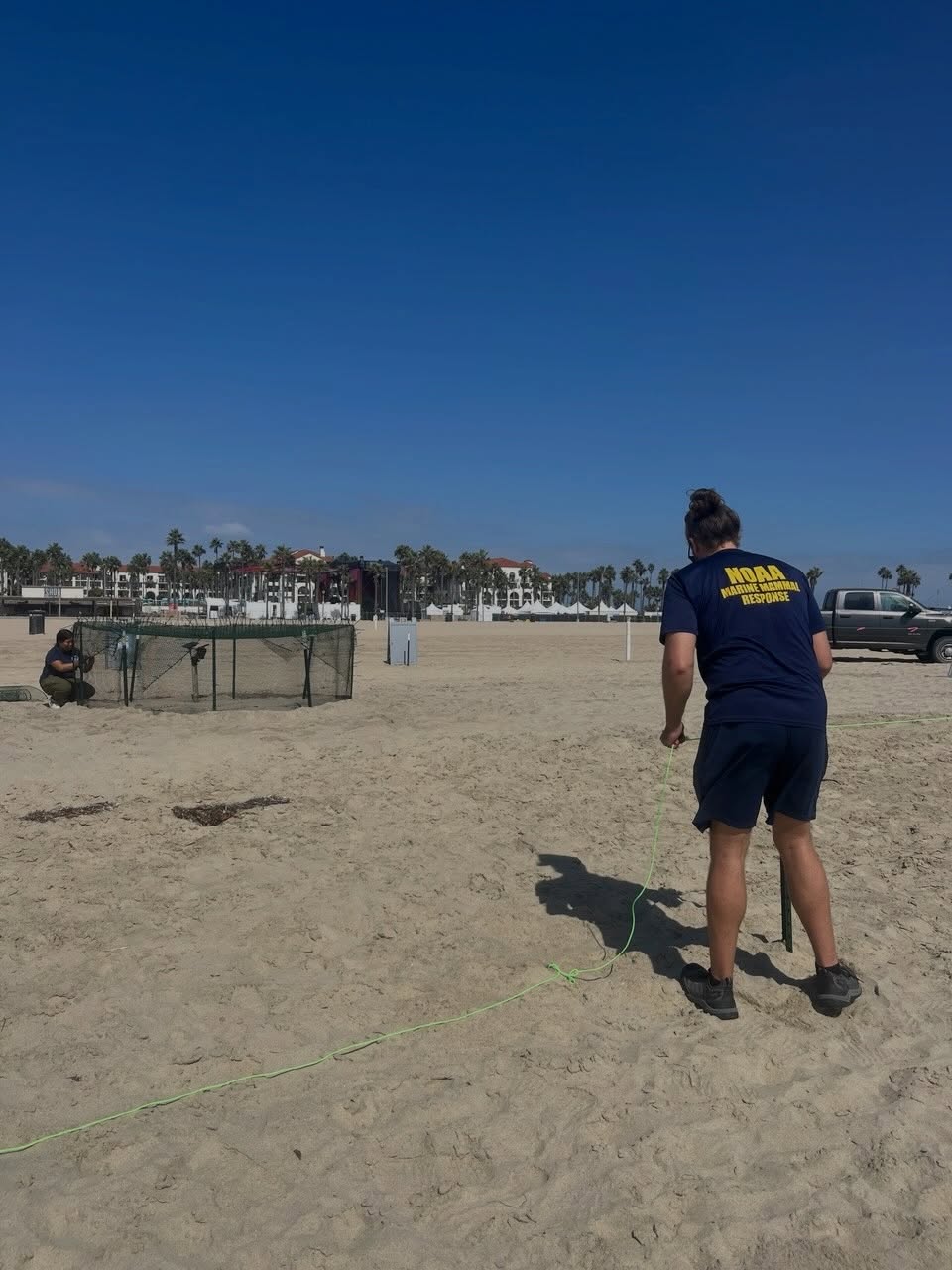
- Current Status: Both nesting sites have been securely cordoned off with protective fencing, outfitted with informational interpretive signage, and placed under 24/7 observation by an integrated team of environmental protection partners.
Chronology of Events: A Rapid Succession Along the Orange County Coastline
The unfolding of these historic events took marine authorities and local first responders completely by surprise, turning quiet Southern California beaches into active wildlife management zones.
Phase One: The Surfside Discovery
The extraordinary sequence began when vigilant observers spotted an olive ridley sea turtle navigating the surf and pulling herself onto the sand in Surfside, CA. Moving with the deliberate, exhausting pace characteristic of sea turtles on land, the reptile successfully carved out a body pit, excavated a deep egg chamber, deposited her clutch, and carefully concealed the nest before returning to the Pacific Ocean.
Local authorities were immediately notified, prompting a rapid response from NOAA Fisheries and regional marine mammal and reptile rescue networks. Biologists verified the species as an olive ridley, an identification that immediately elevated the significance of the sighting, as these turtles are rarely encountered this far north in the eastern Pacific.
Phase Two: The Huntington Beach Encore
Just as marine scientists were processing the implications of the Surfside nest, a second historic alarm was sounded. Only three days after the initial event, beachgoers and the Huntington Beach Fire Department reported a second sea turtle ashore. This individual chose a highly public and heavily trafficked stretch of sand near the Huntington Beach Pier.
While officials have not yet officially confirmed the species of the second nesting turtle, her successful subterranean deposit of eggs compounded the historic nature of the week. Two separate sea turtle nesting events within a 72-hour window and a few miles of one another in Southern California represent a statistical and biological anomaly that has left researchers spellbound.
Supporting Data and Biological Profile: Understanding the Olive Ridley
To fully grasp the magnitude of this event, it is necessary to examine the biology, natural history, and typical geographical range of the olive ridley sea turtle, alongside the unique environmental conditions currently prevailing off the California coast.
Anatomy and Life History of Lepidochelys olivacea
The olive ridley is globally recognized as the smallest of all extant sea turtle species.
- Size & Weight: Adults typically achieve a weight of roughly 100 pounds (approx. 45 kilograms), with a shell (carapace) length measuring between 2.5 and 3 feet.
- Lifespan: These resilient reptiles can live up to 50 years in the wild, navigating vast pelagic zones throughout their multi-decade lifespans.
- Global Distribution: Olive ridleys boast a circumpolar distribution, inhabiting tropical and subtropical waters primarily across the Pacific, Indian, and Atlantic oceans.
The Pacific Nesting Strongholds
In the Eastern Pacific basin, olive ridleys are famous for their arribadas—synchronized, mass-nesting events where hundreds of thousands of females come ashore simultaneously on select beaches. However, these monumental nesting grounds are heavily concentrated much further south, primarily along the Pacific coasts of Mexico, Nicaragua, Costa Rica, and Panama.
For an individual to travel hundreds, if not thousands, of miles north of these traditional nesting latitudes and successfully initiate a reproductive cycle on a Southern California beach is an extraordinary departure from normal migratory patterns.
Local Precedents and Environmental Catalysts
While mainland nesting is entirely unprecedented, Southern California is not entirely devoid of permanent sea turtle residents. A well-documented, localized population of green sea turtles (Chelonia mydas) resides year-round in the warm effluent and tidal channels of the San Gabriel River, which delineates the border between Orange County and Los Angeles County. This specific colony represents the northernmost permanent population of green sea turtles in the eastern Pacific.
However, the catalysts for these 2026 nesting events likely extend far beyond normal population behaviors. Climatologists and oceanographers note the profound influence of a powerful super El Niño cycle currently active in the Pacific. Ocean surface temperatures off the coast of Southern California have spiked dramatically, with coastal waters reaching a tropical-like 80 degrees Fahrenheit on numerous days.
These sustained high temperatures have fundamentally altered local marine ecology, creating thermal corridors that may have tricked sea turtles into miscalculating their migratory boundaries and physiological cues for reproduction.
Official Responses and Conservation Measures
Following the confirmation of the nests, NOAA Fisheries and its network of local, state, and federal partners mobilized immediately to establish protective protocols. Because sea turtle eggs are vulnerable to human disturbance, domestic predators, tidal erosion, and urban light pollution, strict containment measures were put into effect immediately.
In an official statement distributed across public and social media channels, NOAA Fisheries emphasized the fragility of the sites:
"Our team of local, state, and federal partners will monitor the nesting sites throughout the incubation period, which typically lasts for 45 to 60 days. Both areas are fenced, protected, and have interpretive signage. We urge beachgoers to steer clear and not disturb the sites."
Local municipalities, including the Huntington Beach Fire Department and city lifeguards, have stepped up patrols around the fenced perimeters. Environmental educators are utilizing the signage to educate the public on the biology of sea turtles, turning an unexpected wildlife event into a valuable public teaching moment regarding marine conservation.
Implications: Climate Shifts, Incubation Challenges, and Ocean Health
The nesting of tropical sea turtles on Southern California beaches carries profound implications for marine biology, climate change research, and the future conservation of marine species.
The Incubation Gamble and Thermal Dynamics
Sea turtle incubation is a delicate biological process heavily dictated by ambient environmental conditions. Typically lasting between 45 and 60 days, the success of the clutch depends heavily on stable sand temperatures. Furthermore, in many sea turtle species, temperature determines the sex of the developing embryos (warmer temperatures tend to produce females, while cooler temperatures produce males).
With water and sand temperatures currently sitting at record highs due to the super El Niño, the embryos are developing under unusually warm conditions. However, meteorologists and marine scientists are keeping a wary eye on the calendar. In 45 to 60 days, as autumn settles into Southern California, coastal air and water temperatures are projected to cool substantially.
Biologists are actively debating how these shifting seasonal temperatures will impact the hatching success rate. If a sudden cold snap hits the region before the hatchlings emerge, the viability of the nests could be severely compromised. Conversely, if the warmth holds, Southern California may witness the successful hatching of the first-ever Pacific Northwest-adjacent sea turtle clutch in recorded history.
A Broader Ecological Warning: Plastic Pollution and Habitat Pressures
While the nesting event has been celebrated as a fascinating biological marvel, conservationists warn that it also highlights the increasing pressures marine life faces in modern oceans. Shifting current patterns driven by climate change are pushing species into unfamiliar, highly urbanized territories where they encounter unprecedented anthropogenic threats.
Marine turtles navigating the heavily populated coastline of Southern California face immense hazards, ranging from commercial ship strikes and recreational watercraft to intense coastal light pollution that can disorient nesting females and disoriented hatchlings.
Moreover, marine conservation organizations point to an ongoing, pervasive crisis facing these animals: plastic ingestion. Scientific studies consistently demonstrate that sea turtles ingest marine plastic debris at alarming rates—often suffering fatal blockages or toxic accumulation more frequently than many seabirds and marine mammals. The arrival of these nesting turtles serves as a stark reminder of the urgent need to protect marine habitats from plastic pollution and climate instability.
Looking Forward
As the countdown to the 45-to-60-day incubation period continues, the eyes of the global marine biology community remain firmly fixed on Surfside and Huntington Beach. Whether these nests successfully yield a new generation of resilient California sea turtles remains to be seen. Regardless of the outcome, this historic moment has fundamentally rewritten our understanding of marine reptile distribution and underscored the profound, unpredictable ways our global oceans are changing.