KENNESAW, GA — The Georgia House Rabbit Society (GHRS) has officially aligned with a coalition of more than 100 animal rescue organizations nationwide, demanding that national pet retail chain Petland immediately cease the commercial sale of live rabbits.
Advocates across the Peach State argue that retail-store rabbit sales fuel a continuous, devastating cycle of impulse purchasing, subsequent abandonment, preventable animal neglect, and severe strain on the resources of non-profit foster systems. This statewide mobilization forms a core component of The Rabbit.org Foundation’s ongoing national Stop Rabbit Sales campaign, which applies pressure on corporate entities to adopt humane retail models—such as partnering with local shelters for adoption events—rather than sourcing and selling live animals directly for profit.
Main Facts
The concerted campaign targets Petland’s business practices, focusing specifically on the impact retail sales have on domestic rabbits (Oryctolagus cuniculus). Unlike dogs and cats, which are frequently the focus of retail pet store regulations, rabbits occupy a complex regulatory and social space. Widely misunderstood as low-maintenance, "starter" pets for children, rabbits are actually delicate, highly sensitive prey animals with specialized behavioral, dietary, and medical requirements.
According to the Georgia House Rabbit Society:
The Scale of the Crisis: GHRS, operating out of its Kennesaw facility, has rescued and rehomed thousands of domestic rabbits since its establishment in 1996.
The Retail Pipeline: Volunteers and shelter administrators note a direct pipeline between commercial pet stores—including Petland’s operational Georgia storefronts in Kennesaw, Norcross, and Marietta—and the influx of surrenders arriving at rescue facilities.
The National Movement: The local effort is mirrored nationwide, with over 100 independent rescue organizations utilizing grassroots organizing, digital petitions, and public awareness campaigns to force corporate policy shifts at Petland.
The Core Demand: The coalition is urging Petland to transition away from live animal sales and pivot toward a humane partnership model where store spaces are utilized to showcase adoptable rescue animals in need of permanent homes.
Chronology of a Crisis: From Retail Display to Rescue Intake
To understand the urgency behind the Stop Rabbit Sales campaign, advocacy groups point to the predictable, recurring timeline that characterizes commercial rabbit sales and their aftermath.
Phase 1: The Impulse Purchase (Spring and Holidays)
Rabbits are heavily commodified around specific seasonal events, most notably Easter, as well as during the winter holiday shopping season. Displayed in bright, engaging retail environments alongside commercial cages and treats, young rabbits are frequently marketed as easy, cuddly pets for young children. Point-of-sale education in commercial settings is often inadequate, failing to inform buyers that rabbits require specialized veterinary care (similar to cats and dogs, often termed "exotic" care), daily exercise outside of cages, a diet consisting primarily of unlimited grass hay and fresh greens, and a lifespan that can stretch from 8 to 12 years.
Phase 2: The Realization Gap
Within weeks of purchase, the realities of rabbit ownership set in. Unlike dogs, rabbits do not naturally seek out human affection on human terms; they are ground-dwelling prey animals that can become easily frightened by being picked up or handled roughly by small children. Furthermore, unspayed or unneutered adolescent rabbits begin displaying normal hormonal behaviors—such as territorial spraying, aggressive lunging, and relentless chewing on baseboards, carpets, and electrical cords—that unprepared owners find unmanageable.
Phase 3: Surrender, Neglect, or Abandonment
Facing behavioral challenges, veterinary bills, or simply waning interest, owners frequently attempt to offload the animals. Because local municipal animal shelters are rarely equipped to house or medically treat exotic pets like rabbits, shelters often turn away surrenders or are forced to euthanize them due to overcrowding. Consequently, the burden falls almost entirely on private, donor-funded rescues like the Georgia House Rabbit Society, which operate perpetually at or above maximum capacity.
Supporting Data and Evidence: The Story of Lazarus
Statistics regarding retail-induced surrenders are vividly underscored by individual cases of extreme medical neglect processed through the GHRS intake system.
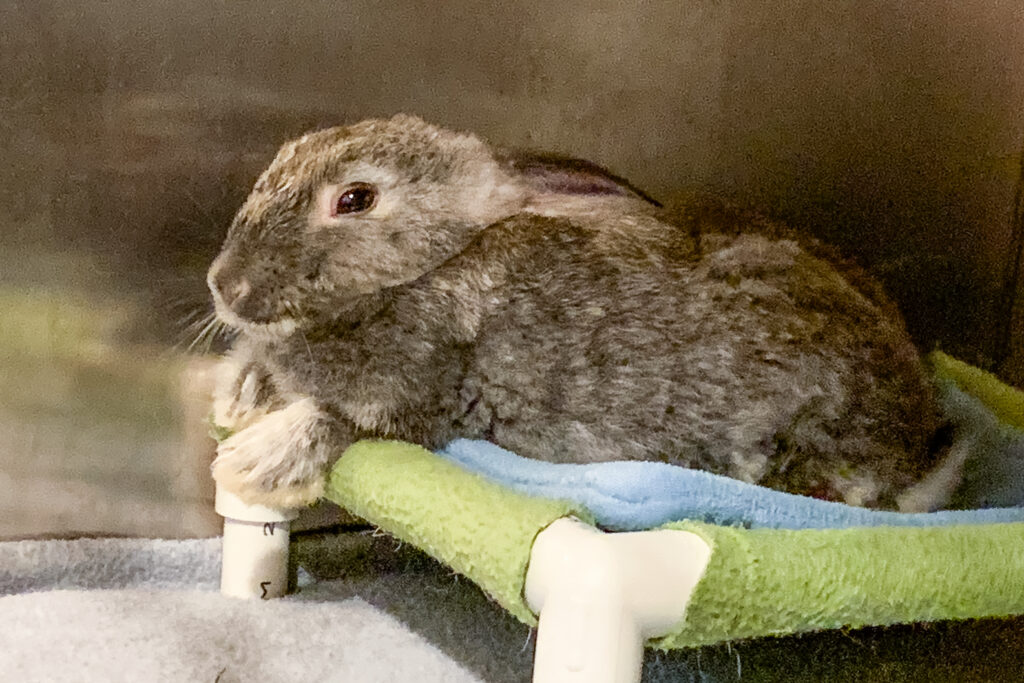
Among the most harrowing files in the Kennesaw shelter’s history is the case of Lazarus, a young rabbit surrendered to the rescue in 2020 by a sympathetic Petland employee who recognized the animal was deteriorating rapidly.
When Lazarus arrived at the facility, he was barely responsive:
Physical Condition: He was critically underweight, lethargic, and his fur was heavily soiled and matted with feces.
Medical Diagnosis: Veterinary evaluations revealed that the young rabbit was suffering from a severe case of coccidia, a parasitic intestinal infection common in unsanitary, high-density breeding and housing environments, which can quickly prove fatal to young rabbits without aggressive pharmaceutical intervention.
The Rehabilitation Process: GHRS medical volunteers instituted a rigorous protocol of round-the-clock supportive care, including hand-feeding critical care formulas, subcutaneous fluid administration, specialized medications, and intensive sanitation management.
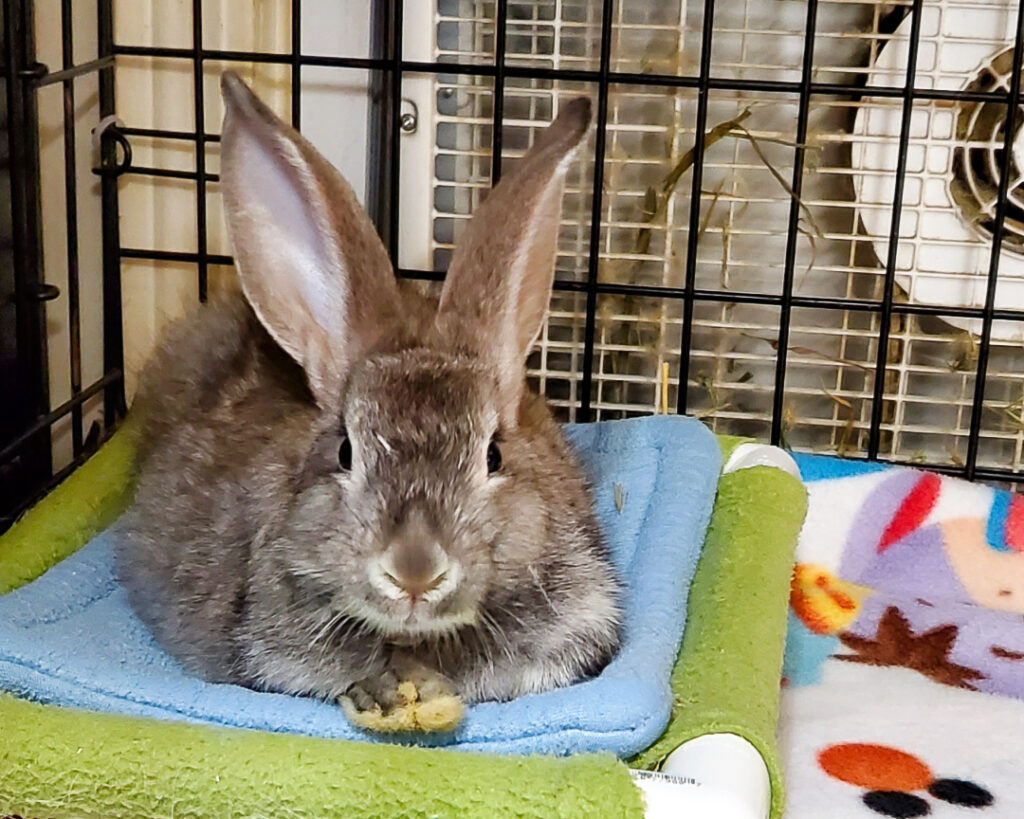
Within a single week of targeted medical care, Lazarus began to gain strength and weight. Once medically stabilized, he underwent a routine neutering procedure—a critical step for health and behavioral management in domestic rabbits—and was eventually adopted into a permanent, loving home.
Shelter managers point to Lazarus not merely as an isolated survival story, but as an emblematic case study highlighting the human and animal cost of mass commercial breeding and retail distribution models. His recovery stands as physical proof of the discrepancy between how commercial entities handle live inventory and how specialized rehabilitation facilities restore health and dignity to neglected animals.
Official Responses and Perspectives
The Shelter Perspective: Courtney Gurley
The psychological and physical toll of retail-driven animal surrender is witnessed daily by shelter staff on the front lines of rabbit welfare.
"Across Georgia’s three Petland locations, we see the fallout firsthand," stated Courtney Gurley, Shelter Manager for the Georgia House Rabbit Society.
"Young rabbits are often sent home with families who don’t yet understand their specialized needs. Weeks later, many of those same rabbits arrive at our rescue underweight, frightened, and in need of extensive veterinary care. The commercial model treats sentient, complex animals like retail merchandise, and our shelter system is left picking up the pieces of that philosophy every single day."
The National Advocacy Perspective: The Rabbit.org Foundation
National organizers emphasize that the campaign against Petland is part of a broader, systemic movement to modernize pet retail ethics across North America. For decades, animal welfare organizations have successfully shifted public opinion regarding the retail sale of dogs and cats, leading to widespread municipal bans on puppy mills and retail puppy sales.
The Stop Rabbit Sales campaign aims to apply this same ethical standard to rabbits, which rank as the third most commonly abandoned animal in shelters nationwide, trailing closely behind dogs and cats. The Rabbit.org Foundation argues that commercial breeders—often operating large-scale breeding facilities with minimal oversight—prioritize volume over genetic health, temperament, or proper weaning ages, setting both the animals and their adopters up for failure.
Broader Implications for Animal Welfare in Georgia
The confrontation between Georgia rescue organizations and commercial pet retailers highlights several critical policy and cultural challenges facing animal welfare advocates in the state.
1. Strain on Non-Profit Infrastructure
Private rescues in Georgia, including GHRS and allied foster networks, rely almost entirely on private donations, corporate matching, and volunteer labor. Every animal absorbed into the system due to retail abandonment diverts financial and spatial resources away from cruelty seizure cases, feral rabbit population management, and community education initiatives.
2. The Need for Public Education
Veterinary professionals and animal behaviorists note that public perception of rabbits remains decades behind that of dogs and cats. While a prospective dog owner expects to invest in obedience training, specialized diets, and veterinary checkups, prospective rabbit owners are frequently blindsided by the financial and temporal investment required to properly house and care for a rabbit. Advocates stress that retail environments—where sales incentives encourage rapid transactions—are fundamentally unsuited for educating the public on these complex realities.
3. A Call to Action for Consumers
As the statewide campaign gains momentum, advocacy organizations are directing consumers toward actionable ways to support the movement:
Pledge Against Retail Sales: Consumers are urged to sign national petitions through The Rabbit.org Foundation demanding that Petland transition away from selling live animals.
Adopt, Don’t Shop: Prospective pet owners looking to add a rabbit to their families are encouraged to bypass commercial stores entirely, visiting local rescues or municipal shelters where animals are spayed, neutered, behavior-evaluated, and medically cleared prior to adoption.
Amplify the Message: Supporters are utilizing digital platforms to share rescue stories, educate friends and family members on proper rabbit care, and raise awareness regarding the origins of commercially sold exotic pets.
For more information on the ongoing campaign, to read the complete press release, or to learn about volunteering, fostering, or adopting through the Georgia House Rabbit Society, visit houserabbitga.com or explore national resources at Rabbit.org.