Nomenclature in the animal kingdom is often a curious blend of the intuitive and the opaque. While some species possess names that seem entirely detached from their biological reality, the Indian Ringneck parrot (Psittacula krameri) is a rare example of literalism. Its name serves as a definitive roadmap for its most striking physical feature: the vibrant, multi-colored ring that adorns the neck of the adult male.
However, for avian enthusiasts and owners, the emergence of this feature is shrouded in questions of timing, biology, and genetics. At what age does this iconic ring manifest? Is it a universal trait, and what does it signify about the bird’s maturity? To understand the Indian Ringneck is to understand the slow, deliberate transition from a plain-feathered juvenile to a display-ready adult.
Main Facts: The Anatomy of a Display
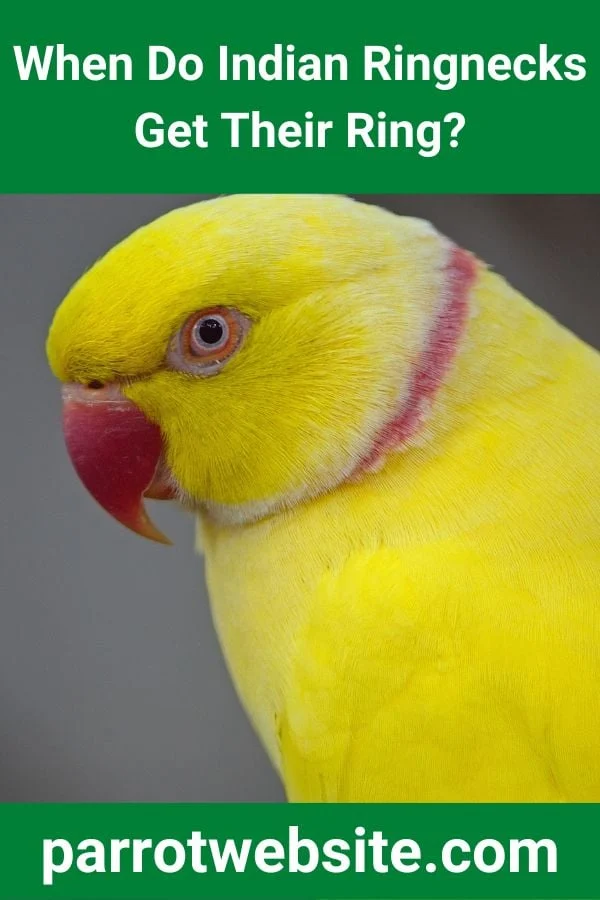
The defining feature of the male Indian Ringneck is not merely a single line of color, but a complex, multi-layered plumage pattern that typically consists of a black, pink, and blue ring. Unlike the uniform plumage of many other parrot species, the Ringneck exhibits a form of sexual dimorphism that is both aesthetic and functional.
Biologically, these rings serve as a high-stakes advertisement. In the wild, where competition for mates is fierce, the brightness and clarity of a male’s ring function as a visual health certificate. The development of such elaborate, non-survival-oriented plumage is a classic example of "honest signaling"—a theory suggesting that an individual with the excess energy to produce vibrant, superfluous colors is likely a robust, high-quality mate.
Conversely, female Ringnecks do not possess these flamboyant displays. While they may exhibit a faint, pale "ghost" ring, they lack the intense pigmentation of their male counterparts. This is consistent with evolutionary trends where the female, often the primary caregiver or the selective agent in mating, requires more camouflage to remain inconspicuous while nesting.
The Chronology of Development
The timeline for ring development is characterized by significant individual variation, yet there are reliable biological benchmarks that owners can track.
The Juvenile Stage (0–18 Months)
For the first year and a half of life, both male and female Indian Ringneck parrots appear remarkably similar. At approximately 12 weeks of age, the bird has acquired its adult-like feather structure, making visual sexing via plumage impossible to the untrained eye. During this phase, the neck remains entirely clear of the iconic markings.
The Black Ring (18–24 Months)
The first indication that a bird is male typically appears around the 18-month mark. Owners will begin to notice the subtle emergence of a black line, which starts as a faint shadow and gradually deepens in intensity. While some precocious individuals may show signs of this earlier, 18 months is the standard threshold for the onset of this process.
The Completion of the Display (2–3 Years)
Between the two-year and three-year milestones, the full, multi-colored spectrum—incorporating the pink and blue hues—becomes fully realized. By the age of three, in the vast majority of cases, the ring is considered fully developed. However, nature is rarely uniform; in some outlier cases, particularly those where the bird’s nutritional or hormonal development is delayed, the full display may not reach its peak until the bird is four years old.
Supporting Data: Factors Influencing Maturity
Understanding the age of a Ringneck is a challenge that often leaves even experienced aviculturists guessing. Once a parrot passes the one-year mark, it enters a "plateau" of physical appearance where age becomes nearly impossible to distinguish through visual inspection alone.
Sexual Maturity vs. Reproductive Readiness
A critical distinction must be made between sexual maturity and reproductive readiness. While a female Indian Ringneck may be anatomically capable of breeding as early as 18 months to two years, responsible breeders generally advise against pairing birds until they are at least three years old. This extra year allows for full physical maturation, ensuring that the female has the necessary bone density and physiological stamina to handle the demands of egg-laying and chick-rearing.
The "No-Ring" Anomaly
While the absence of a ring is a reliable indicator of a female, owners occasionally report males that appear to lack the feature. In rare cases, this can be attributed to genetic mutations, such as albinism or specific color morphs (like the "Cleartail" or "Lutino" variations), which may mask the pigment of the ring. However, these cases represent a statistically insignificant portion of the global population. For the purpose of pet ownership, it is a safe assumption that if an adult male lacks a visible ring, he is the exception rather than the rule.
Expert Perspectives: The Role of the Veterinarian
When visual cues fail, the professional consensus turns toward diagnostic science. Veterinarians emphasize that for juvenile birds, physical inspection is an unreliable method of determining sex.
"We often see owners who have waited two years for a ring to appear, only to realize their bird is female," notes Dr. Elena Vance, a specialist in avian medicine. "For those who need to know sooner, DNA sexing is the only gold standard. It removes the guesswork of waiting for the plumage to change, which is influenced by factors ranging from seasonal light cycles to individual hormonal variance."
Veterinary clinics now utilize feather or blood samples to provide near-100% accurate sexing within days. This is particularly crucial for owners who intend to introduce a companion to their existing parrot, as the social dynamics between two males versus a male-female pair can differ significantly.
Implications: Managing Expectations
The slow maturation of the Indian Ringneck is a significant factor in their long-term care. Because they do not exhibit their full adult characteristics until they are three or four years old, they are often misunderstood by novice owners who equate their plain, youthful appearance with a lack of adult personality.
Behavioral Changes
As the ring begins to form, owners often report subtle shifts in behavior. The onset of sexual maturity is frequently accompanied by increased vocalization, territoriality, and a greater desire for independence. This is a natural stage of development, not a sign of poor training. It is the bird’s way of transitioning from a dependent chick to a proactive member of a potential breeding pair.
Long-Term Commitment
The fact that a Ringneck’s physical appearance remains relatively static from age four to age forty underscores the necessity of a long-term commitment. A bird that displays no ring at age one is not "broken" or "stunted"; it is simply in the early stages of a life cycle that spans several decades. Owners should be prepared for the reality that the "show" of the ring is merely a brief, albeit beautiful, phase in the bird’s development.
The Ethics of Breeding
The delayed maturation of the Ringneck also carries ethical implications for breeding. Attempting to force a pair to breed before they have reached their full, mature weight and hormonal balance can lead to health complications, such as egg-binding in females or aggression in males. Patience is not just a virtue in observing the ring; it is a necessity for the welfare of the species.
Conclusion
The development of the Indian Ringneck parrot’s ring is a slow, unfolding narrative of biological maturation. While it is a process that can test the patience of an owner, it serves as an excellent, non-invasive indicator of the bird’s journey toward adulthood.
From the subtle beginnings of the black line at 18 months to the full, vibrant display of the mature male by age three, the ring serves as a visual testament to the bird’s health and genetic vigor. By understanding these timelines, owners can better appreciate the life stages of their avian companions. Whether you are observing the first hints of color in a young male or caring for a mature adult in its prime, the Indian Ringneck remains a fascinating study in the intersection of aesthetics, evolutionary biology, and the long-term joys of avian stewardship.