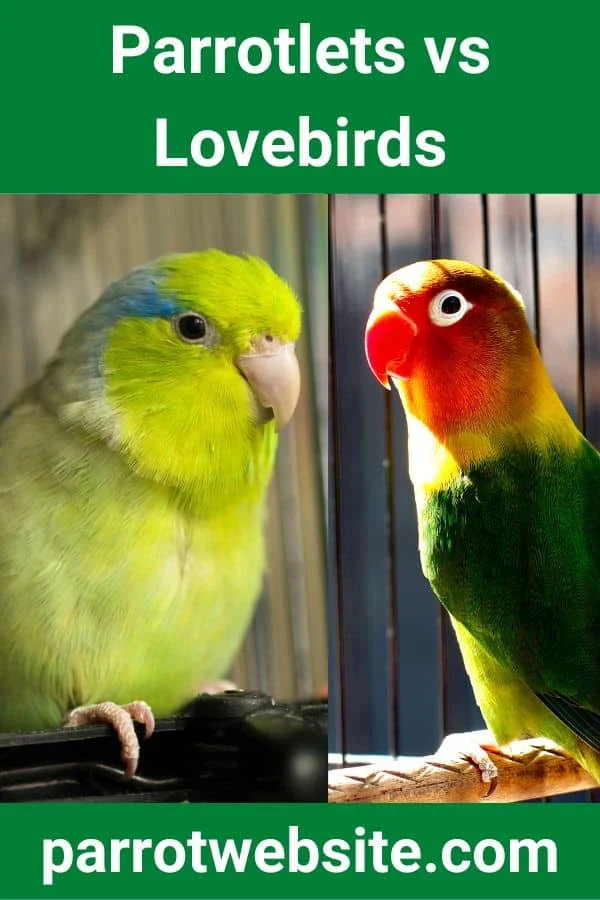
To the casual observer, the avian world of small parrots can seem monolithic. Among the most popular choices for domestic companionship are the parrotlet and the lovebird. At a glance, their diminutive stature and vibrant plumage often lead prospective owners to conflate the two. However, beneath their similar size profiles lie distinct evolutionary histories, complex temperaments, and divergent care requirements. For those considering welcoming a feathered friend into their home, understanding these nuances is not merely a matter of preference—it is a matter of animal welfare.
Main Facts: Understanding the Species Divide
While both species fall under the umbrella of "small parrots," they are biologically and behaviorally distinct. Lovebirds (Agapornis) are members of the African continent, while parrotlets (Forpus) are indigenous to Central and South America. This geographic divide is the bedrock of their evolutionary adaptation, influencing everything from their social structures in the wild to their vocalizations and interaction styles in captivity.
Lovebirds are famously named for their intense, pair-bonding behavior. In the wild, they are rarely seen alone, often moving in small flocks and maintaining deep, lifelong attachments to their mates. Parrotlets, while equally social, exist in much larger wild colonies—sometimes reaching upwards of 100 individuals—and exhibit a more "gregarious but independent" social dynamic.
When brought into a domestic setting, these differences become manifest. Lovebirds tend to be more expressive and emotionally demanding, whereas parrotlets are often described as "big parrots in tiny bodies," possessing a feisty, independent, and sometimes territorial streak that belies their small stature.
A Chronological Perspective: From Habitat to Household
The history of these birds in human care is a study in divergent paths.
- The Lovebird Legacy: Lovebirds have been a staple of the pet trade for decades. Their presence in human households dates back to the 19th century, with significant interest peaking in the early 20th century. Their evolution from wild, tropical inhabitants to popular cage birds has been characterized by extensive selective breeding, which has stabilized some of their behavioral traits.
- The Parrotlet’s Rise: Parrotlets have gained significant popularity in more recent decades. As urban living spaces have shrunk, the appeal of the world’s smallest parrot—the parrotlet, which typically measures only about five inches—has surged. However, because they have not been as extensively domesticated as lovebirds, they often retain a sharper, more "wild" edge in their temperament, requiring a more nuanced approach to socialization.
Supporting Data: Size, Sound, and Social Dynamics
Prospective owners often look at the physical and sensory "specs" of a bird before making a commitment. Here, the differences are quantifiable.
Physical Dimensions
Parrotlets hold the title for the smallest of all parrot species, typically measuring five inches in length. Lovebirds are generally two to three inches larger, though individual variation exists. While this size difference may seem negligible, it dictates the scale of the cage required and the handling techniques necessary. A smaller bird is not necessarily an "easier" bird; in fact, the parrotlet’s smaller size often leads to a more pronounced "Napoleon complex," where they may challenge larger household pets or even their owners with surprising fearlessness.
Decibel Levels and Vocalization
The debate over noise levels is a primary concern for apartment dwellers.
- Parrotlets: These birds are generally quieter, with vocalizations peaking at approximately 65 decibels. They communicate primarily through soft chirps and melodic whistles. However, their quiet nature is conditional; if a parrotlet is bored or neglected, they can become repetitive and persistent in their vocalizations.
- Lovebirds: Known for their signature high-pitched, shrill call, lovebirds can hit upwards of 85 decibels. While this is not deafening in the context of larger parrots like macaws or cockatoos, it is a sharp, penetrating sound that can be disruptive in shared walls.
The Question of Affection
Affection in parrots is not a static trait; it is a learned behavior built on trust. While lovebirds are frequently cited as the more "affectionate" of the two, forming intense, sometimes jealous bonds with their handlers, this can be a double-edged sword. A lovebird that has bonded exclusively to one person may become aggressive toward others. Parrotlets are often more aloof and "busy," preferring to explore their environment rather than sit passively for long periods. They are affectionate on their own terms, making them rewarding for owners who respect avian boundaries.
Professional Insights: Expert Handling and Care
Leading avian veterinarians and breeders consistently emphasize that neither the lovebird nor the parrotlet is an ideal "beginner" bird.
"The most common mistake prospective owners make is assuming that small size equates to low maintenance," notes a prominent avian behaviorist. "Both species require significant cognitive stimulation, high-quality nutrition, and several hours of out-of-cage time daily."
The Aggression Factor
The aggression displayed by both species, particularly in parrotlets, is often a product of improper socialization. Because these birds are highly intelligent, they require early, consistent, and positive reinforcement. A bird that is not given clear boundaries or adequate mental engagement will often resort to biting or territorial displays.
The Importance of Pairs
A recurring theme in avian welfare is the question of housing. Can these birds be kept alone? While a human can act as a "flock member," it is an exhaustive role that requires constant presence. Most professionals argue that both species thrive best in pairs. However, this creates a trade-off: a pair of birds will be happier and more mentally stable, but they will likely bond with each other, making them less "tame" or affectionate toward their human caretakers.
Implications: Can They Coexist?
A common question is whether a lovebird and a parrotlet can share a space. The short answer is: proceed with extreme caution.
- Risk of Conflict: Both species are territorial. Even if they are introduced at a young age, the potential for a fatal disagreement is high. Their beaks are designed for cracking seeds and nuts, and in a territorial dispute, they can cause significant injury to one another.
- Supervision: Any interaction between the two must be strictly supervised by an experienced handler.
- Strategic Advice: The most responsible path is to keep these species in separate enclosures. This prevents the stress of competition and allows each bird to express its natural behaviors without the threat of inter-species conflict.
Sexual Dimorphism: A Morphological Distinction
One area where the two species differ significantly is in their visual appearance based on sex. Parrotlets exhibit marked sexual dimorphism; for example, male Pacific parrotlets possess distinct blue markings on their wings and rump that are absent in females. This makes sexing them relatively straightforward for breeders. Lovebirds, conversely, are largely monomorphic, meaning males and females are nearly identical to the naked eye. DNA testing is often the only definitive way to determine the sex of a lovebird, which has implications for breeding and behavioral management.
Conclusion: Making an Informed Decision
Choosing between a lovebird and a parrotlet is a significant decision that impacts the next 10 to 15 years of your life. Neither is a "set it and forget it" pet.
If you prioritize a bird that is more likely to form a deep, singular attachment and you are prepared to manage a high-pitched call, the lovebird may be your match. If you are drawn to the challenge of a tiny, high-energy, and independent companion who prefers a more nuanced form of interaction, the parrotlet may be the right fit.
Ultimately, the best way to determine which species is right for you is to spend time with both. Visit a reputable breeder, observe their behavior in a home-like environment, and ask yourself if you can commit to the social, emotional, and physical needs these intelligent creatures require. By moving beyond the surface-level similarities, you ensure a harmonious and long-lasting relationship with your new avian companion.