
Published by: Our Think Tank
Reviewed by: Paige K Parsons
Organization: Rabbit.org Foundation
Executive Summary: Main Facts
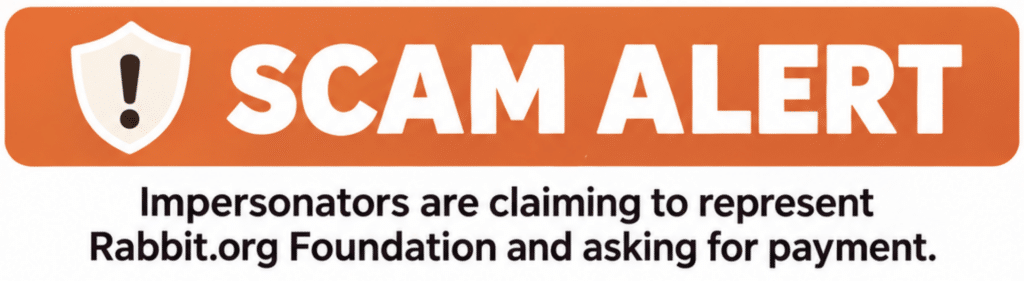
The Rabbit.org Foundation, a globally recognized authority and premier advocacy group dedicated to rabbit welfare, rescue, and education, has issued an urgent security warning to its community. Recent intelligence gathered by the organization reveals that bad actors are actively targeting authors, researchers, contributors, and potentially other stakeholders associated with the foundation. These cybercriminals are engaging in sophisticated social engineering attacks, impersonating representatives of the Rabbit.org Foundation, and fraudulently soliciting funds under false pretenses.
In an era where digital fraud has become increasingly commonplace, non-profit organizations and their networks of supporters are frequently targeted by bad actors seeking to exploit trust. The Rabbit.org Foundation wants to make it explicitly clear that leadership, staff, and authorized representatives will never initiate unsolicited contact demanding direct monetary transfers, wire payments, gift cards, or payments via unsecured channels.
The organization is urging all members of the rabbit advocacy community—including independent writers, rescue volunteers, foster networks, and animal lovers—to exercise extreme caution when receiving unexpected communications. To combat these fraudulent efforts, the foundation has outlined strict verification protocols, emphasizing that legitimate financial contributions should only be processed through their secure, official donation portal hosted on rabbit.org. Furthermore, the foundation is actively collecting evidence to track down the perpetrators and is asking anyone targeted by these scammers to preserve documentation to assist in ongoing investigations.
The Anatomy of the Threat: Chronology of Recent Events
The emergence of these fraudulent activities highlights a growing trend of bad actors exploiting the good names of animal welfare organizations. While digital scams targeting non-profits are not entirely new, the tactics employed in this recent wave of impersonations reflect a targeted approach directed specifically at content creators and literary contributors within the rabbit welfare community.
Phase 1: Identification of the Scheme
The fraudulent activity first came to light when multiple authors affiliated with the Rabbit.org Foundation reported receiving unexpected messages. These communications appeared, at first glance, to originate from trusted internal figures within the organization. The scammers utilized convincing language, official-sounding titles, and tailored pretexts designed to lower the guard of the recipients.
Phase 2: The Pitch and Solicitation
Once initial contact was established via email, messaging apps, or social media platforms, the impersonators escalated their engagement. They introduced scenarios requiring immediate financial intervention, administrative fees, or mandatory "processing payments" tied to publication rights, donations, or community initiatives. By fabricating urgency, the scammers sought to bypass the critical thinking and verification steps that individuals typically employ before sending money.
Phase 3: Internal Review and Verification
Recognizing the potential harm to both individual authors and the reputation of the foundation, the Rabbit.org Foundation’s Think Tank initiated an internal review. Working alongside reviewers like Paige K Parsons, the organization verified that these outreach efforts were entirely unauthorized. No legitimate representative of the foundation was behind the messages, confirming a malicious external impersonation campaign.
Phase 4: Public Disclosure and Defense
In response to the confirmed security breach, the Rabbit.org Foundation acted swiftly to safeguard its community. Rather than handling the incidents quietly, leadership opted for transparency, releasing an immediate public advisory to warn authors, rescue groups, and advocates worldwide about the ongoing threat.
Supporting Data and Context: The Rise of Non-Profit Impersonation
To understand the gravity of the Rabbit.org Foundation’s warning, it is essential to examine the broader landscape of digital fraud targeting non-profit entities and charitable organizations. According to cybersecurity analysts and consumer protection watchdogs, impersonation scams cost individuals and organizations billions of dollars annually.
Why Non-Profits are Targeted
Non-profit organizations operate on trust, community goodwill, and open communication channels. Because these organizations frequently reach out to the public for donations, grants, and collaborative writing projects, their public-facing profiles are easily accessible to malicious actors. Scammers exploit this structural openness by scraping author lists, staff directories, and public contact pages from institutional websites.
- Social Engineering: Cybercriminals rely heavily on psychological manipulation, playing on an individual’s willingness to help animals or support a trusted cause.
- Targeted Phishing (Spear Phishing): By specifically singling out authors and contributors, scammers create bespoke narratives that feel personal and credible, significantly increasing the likelihood of compliance.
- Low Overhead, High Reward: Digital impersonation requires minimal financial investment from the scammer, meaning even a single successful extraction yields immediate profit.
The Role of Digital Infrastructure in Modern Scams
Modern fraudsters utilize spoofed email domains, masked phone numbers, and cloned social media profiles to mimic authentic organizational assets. In the case of the Rabbit.org Foundation alerts, the perpetrators went to great lengths to masquerade as internal leadership, exploiting the professional relationship between the foundation and its network of dedicated writers.
Official Responses and Verification Protocols
In light of these developments, the Rabbit.org Foundation has released clear, definitive guidelines on how to identify legitimate communications and what steps to take if targeted by cybercriminals.
Statement from the Rabbit.org Foundation Leadership
Through its official advisory, the foundation has reiterated its unwavering commitment to transparency and community safety. Leadership emphasized that safeguarding the personal and financial security of authors and advocates is a top priority.
"If you receive an unexpected message claiming to be from Rabbit.org Foundation, do not engage in financial transactions or share sensitive data until you have independently verified the authenticity of the request through our official channels."
Official Verification Guidelines
To ensure that supporters do not fall victim to these fraudulent schemes, the foundation has established baseline rules for verifying official interactions:
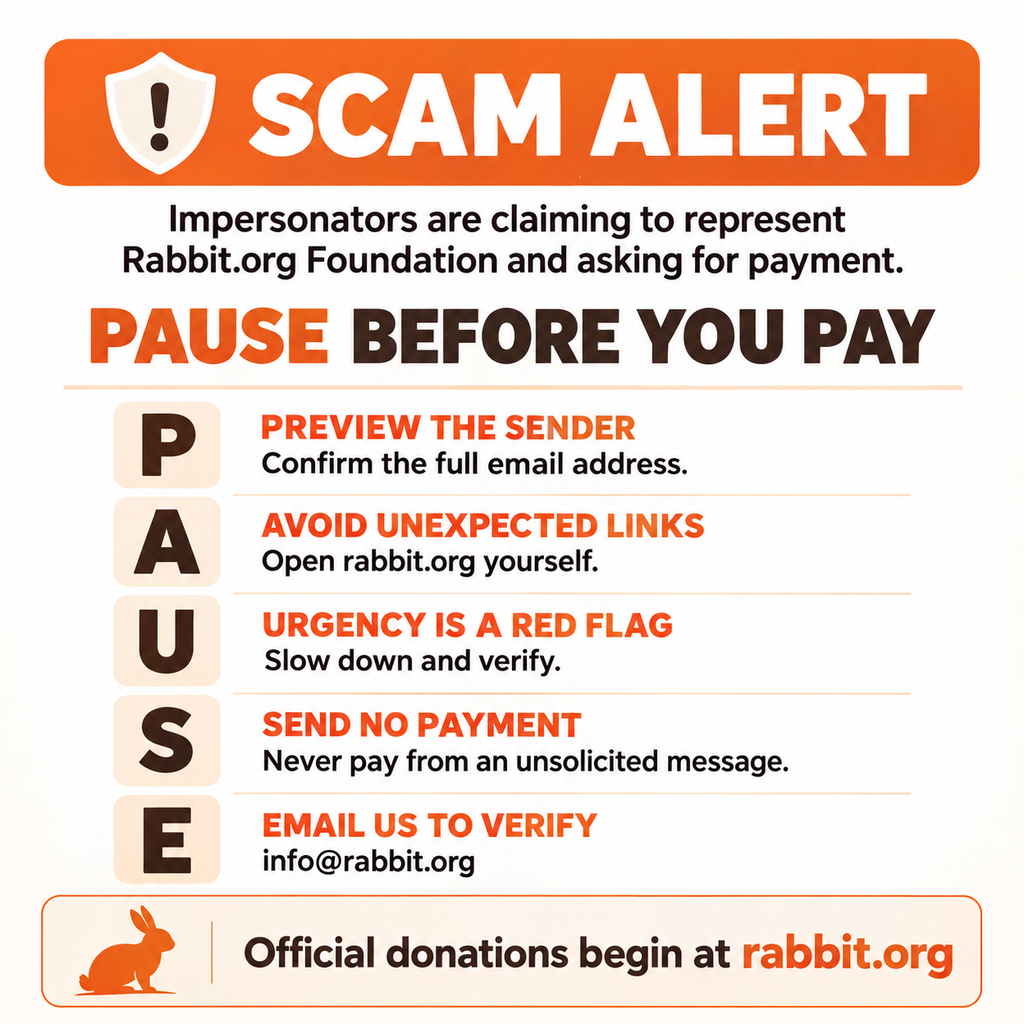
- Check the Domain: All official electronic mail correspondence from foundation administrators will originate from verified institutional domains associated with
rabbit.org. Be wary of free webmail services (such as Gmail, Yahoo, or Outlook) used by individuals claiming to represent the organization. - Inspect Financial Links: Legitimate donations, payments, or financial transactions will never be requested via direct peer-to-peer payment apps, cryptocurrency wallets, or informal wire transfers. All official financial contributions must begin exclusively through the verified Stripe donation link on rabbit.org.
- Verify Unsolicited Requests: If an author or community member receives a message demanding payment or sensitive information under the banner of the foundation, they should independently navigate to the official website and contact verified administrative staff to confirm the request.
Implications for the Rabbit Advocacy and Rescue Community
The targeted impersonation of Rabbit.org Foundation representatives carries significant implications not just for the organization itself, but for the broader rabbit rescue and advocacy ecosystem.
Erosion of Trust
The most insidious effect of impersonation scams is the erosion of trust between organizations and their supporters. When bad actors pose as legitimate charities, it forces community members to second-guess authentic outreach efforts. This defensive posture can hinder collaborative projects, slow down rescue coordination, and complicate fundraising efforts essential for the welfare of animals.

Increased Cybersecurity Awareness
On a positive note, incidents of this nature serve as an urgent wake-up call regarding the necessity of digital hygiene. Organizations and individuals alike must adopt proactive cybersecurity measures:
- Multi-Factor Authentication (MFA): Securing all professional and personal accounts with robust MFA protocols.
- Staff and Contributor Training: Educating writers, volunteers, and rescue workers on how to recognize the red flags of social engineering.
- Incident Reporting Frameworks: Establishing clear pathways for reporting suspicious activities immediately upon discovery.
Community Solidarity and Action
The Rabbit.org Foundation is calling upon its entire network to act as a unified defense shield. By sharing the security warning widely among authors, rabbit advocates, local rescue shelters, and online communities, the foundation aims to neutralize the scam before additional individuals are victimized.
Call to Action: What You Should Do
If you are an author, volunteer, donor, or active member of the rabbit advocacy community, you play a vital role in preventing these scams from succeeding. Follow these recommended steps:
- Share the Warning: Distribute this alert across your social media networks, writing groups, rescue boards, and community forums. Awareness is the strongest deterrent against digital fraud.
- Preserve Evidence: If you receive a suspicious message, email, or social media outreach from someone claiming to represent the Rabbit.org Foundation, do not delete it. Preserve screenshots, capture complete email headers, note the sender’s address, and save any specific payment instructions provided.
- Report Suspicious Activity: Forward the gathered evidence to the Rabbit.org Foundation through their official contact channels so their team can document the impersonation attempt and take appropriate legal or technical countermeasures.
- Donate Securely: Always ensure that any financial support directed toward the foundation is processed strictly through their official Stripe donation portal.
By maintaining vigilance, verifying communications, and looking out for one another, the rabbit welfare community can successfully protect itself against malicious impersonation attempts and continue its vital work for rabbits worldwide.