Authors: Our Think Tank, Paige K Parsons
Editor: Margie Wilson
Published by: Rabbit.org
Introduction: The Foundation of Rabbit Health
Providing optimal nutrition is one of the most critical responsibilities for any rabbit owner. Unlike dogs, cats, or humans, rabbits have highly specialized, delicate gastrointestinal (GI) tracts designed to process large volumes of fibrous, low-calorie plant matter continuously. When a rabbit’s diet deviates from this natural blueprint, the consequences can range from minor digestive discomfort to severe, life-threatening conditions such as gastrointestinal stasis.
To help rabbit owners navigate the complexities of daily feeding, experts and veterinarians have established a gold-standard dietary framework: the Rabbit Food Pyramid. This structured approach breaks down nutritional requirements into precise percentages, ensuring that companion rabbits live long, healthy, and active lives free from preventable diet-related illnesses.
Main Facts: The Core Rabbit Diet Pyramid
Understanding the rabbit food pyramid requires looking at how different food groups contribute to a rabbit’s biological needs. The pyramid is structured around three primary tiers, supported by limited treats and hydration.
85% Hay: The Indispensable Foundation
Hay is the single most important component of a rabbit’s diet and should be available without restriction 24 hours a day. Hay provides crucial crude fiber, which is necessary to maintain proper gut motility and prevent fatal blockages.
Furthermore, because rabbits have continuously growing teeth, the rigorous chewing required to break down fibrous hays naturally wears down their incisors and molars. Without a constant supply of coarse fiber, rabbits frequently suffer from painful dental disease, overgrown roots, and sharp cheek spurs that can pierce their cheeks or tongue, leading to severe secondary infections.
- Proportion: Hay constitutes roughly 85% of a rabbit’s total daily food intake.
- Selection: Veterinarians recommend providing a variety of fresh, sweet-smelling hays, such as Timothy hay, orchard grass, and oat hay. Alfalfa hay, while nutritious, is too high in calcium and protein for adult rabbits and should generally be reserved for growing kits or pregnant/nursing does.
10% Fresh Vegetables: Vitamins, Minerals, and Hydration
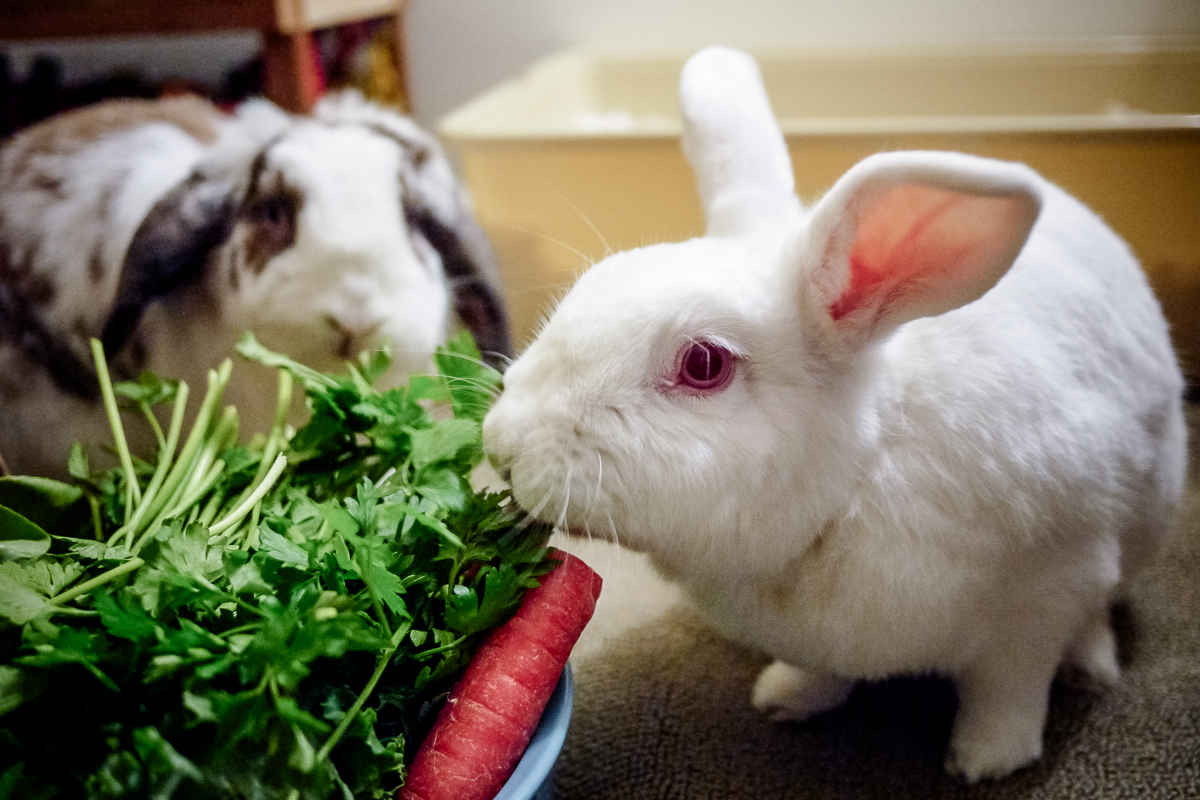
While hay provides the necessary fiber and dental wear, fresh vegetables supply essential vitamins, minerals, and crucial water content to support overall physiological health.
As a general guideline, rabbit owners should feed approximately 1 cup of fresh vegetables per 4 pounds of body weight daily. Introducing vegetables slowly—one type at a time—allows owners to monitor their rabbit’s sensitive digestive system for signs of intolerance, gas, or soft stools. If a rabbit experiences digestive upset, the new vegetable should be removed immediately.
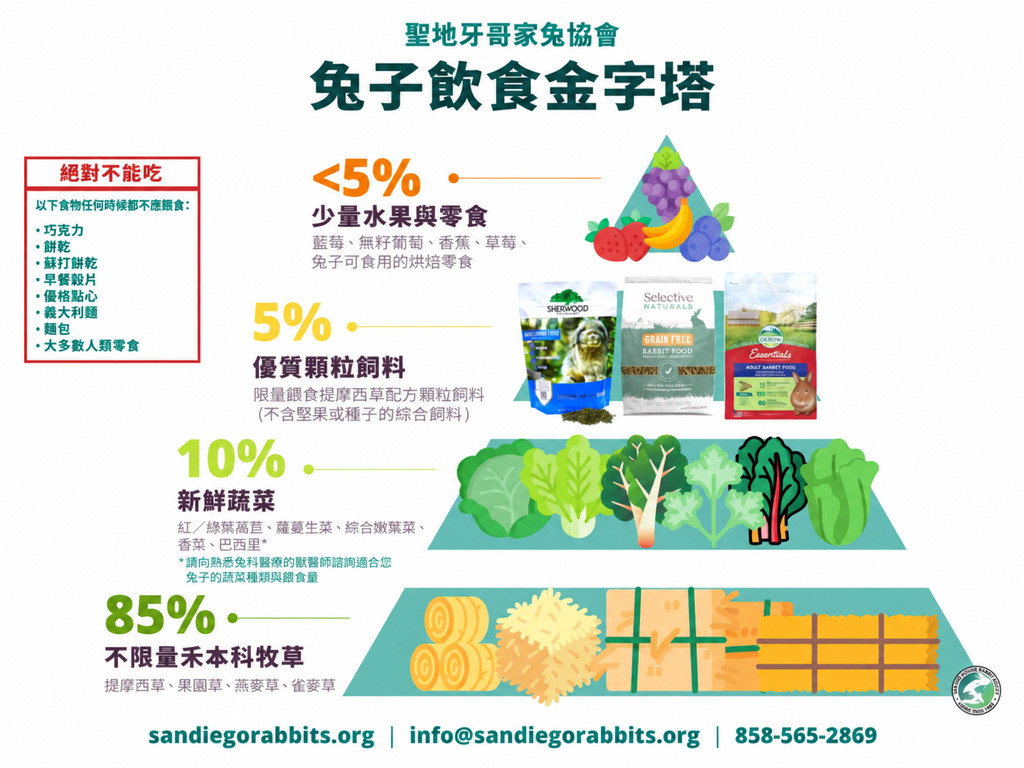
- Proportion: Fresh vegetables make up about 10% of the daily diet.
- Variety: A balanced mix of dark leafy greens (such as romaine lettuce, parsley, cilantro, dandelion greens, and carrot tops) should be rotated regularly to ensure a broad spectrum of nutrients.
5% Pellets: Concentrated Nutrition in Moderation
High-quality commercial rabbit pellets are nutrient-dense, but they are meant to be a supplement rather than the core of the diet. Dr. Susan Brown, a renowned exotic animal veterinarian, notes:
"If a rabbit is allowed free-choice access to pellets, the food is far too calorie-dense. This often leads to obesity, spinal and hock problems, slothful behavior, sludgy urine, and urinary tract infections."
Pellets serve as a convenient vehicle for concentrated vitamins and minerals, but overfeeding them disrupts the delicate balance of the rabbit’s digestive tract. Adult rabbits generally need no more than 1/8 to 1/4 cup of plain pellets per 5 pounds of body weight per day. Owners should avoid muesli-style or colorful "mix" pellets, as selective feeding can lead to nutritional deficiencies and severe health complications.
Chronology: The Evolution of Modern Rabbit Nutrition
The understanding of rabbit nutrition has evolved significantly over the past several decades. Historically, domestic rabbits were frequently fed grain-heavy, high-starch diets based on misconceptions derived from agricultural production models meant for meat or laboratory rabbits.
- Early Decades (Mid-20th Century): Domestic rabbits were primarily kept in agricultural or laboratory settings, where diets emphasized rapid growth and weight gain over longevity. This led to heavy reliance on grain-based concentrates and minimal emphasis on long-stem fiber.
- The Shift Toward Companion Care (Late 20th Century): As rabbits transitioned into popular indoor household companions, veterinarians began noticing a high prevalence of chronic GI stasis, dental disease, and obesity. Autopsies and clinical observations revealed that these conditions were directly tied to inadequate fiber intake and excessive caloric density in commercial chinchilla or rabbit feeds.
- Establishment of the Modern Pyramid (21st Century): Through decades of veterinary research, organizations like the Rabbit.org Think Tank successfully shifted the paradigm. The modern standard—prioritizing unlimited grass hay, restricted leafy greens, and measured, high-fiber pellets—became universally accepted by exotic veterinarians worldwide, drastically improving the life expectancy and welfare of pet rabbits.
Supporting Data: Nutritional Breakdown by Food Group
To maintain optimal health, owners must balance the macronutrients entering their rabbit’s digestive system. The following data highlights the nutritional profile of a well-maintained companion rabbit’s diet:
- Crude Fiber: Must comprise a minimum of 18% to 25% of the total diet to maintain normal peristalsis and prevent enteritis.
- Protein: Adult maintenance diets require roughly 12% to 14% crude protein. Excessive protein can lead to excessive calcium absorption and kidney strain.
- Calcium: Maintained at around 0.6% to 1.0%. High calcium levels in poorly managed diets frequently result in calcium carbonate sludge in the bladder.
- Fat: Kept low, typically between 1.5% and 2.5%, to prevent obesity and associated secondary mobility issues.
Official Responses: Veterinary Guidelines and Expert Recommendations
Leading veterinary organizations and exotic animal specialists consistently emphasize that diet is the single most controllable factor in rabbit health.
Dr. Susan Brown and other leading exotics specialists recommend annual wellness checks to monitor dental health, weight, and overall body condition. Veterinarians advise against sudden dietary shifts, warning that even minor changes can trigger catastrophic disruptions in the gut microbiome.
According to official guidelines from the Rabbit.org Think Tank, owners should always consult a qualified rabbit-savvy veterinarian when designing a specialized diet for senior rabbits, growing kits, or rabbits recovering from illness or surgery.

Implications: The Dangers of Commercial Mislabeling and High-Sugar Treats
One of the most persistent challenges in rabbit husbandry is the marketing of commercial rabbit treats and mixed feeds. Pet stores frequently stock brightly packaged seed mixes, yogurt drops, and sugar-laden fruit sticks that appeal to human buyers rather than meeting biological needs.
Why Sugary Treats and Mixed Feeds Are Harmful
The commercial pet food industry often targets rabbit owners with products that are fundamentally misaligned with a rabbit’s herbivorous digestive system.
- Gut Disruption: Sugars and simple carbohydrates bypass stomach acids and ferment rapidly in the cecum, causing a proliferation of harmful bacteria (Clostridium species) and a drastic reduction in beneficial microflora. This frequently results in gas, painful bloating, watery diarrhea, or sudden fatal enterotoxemia.
- Selective Feeding: When presented with muesli-style mixes containing seeds, colored bits, and dried corn, rabbits will selectively pick out the high-fat, high-sugar morsels and leave the healthy fibrous pieces behind. This behavior leads directly to nutritional imbalances, obesity, and severe dental misalignment.
Safe Alternatives: Low-Sugar Treats (Under 5%)
When owners wish to reward their rabbits, they should look beyond commercial pet store aisles. Safe, low-sugar treats include small pinches of fresh herbs, single slices of leafy greens, or very small pieces of low-sugar fruits (such as papaya or blueberries) given strictly as occasional training rewards—never exceeding 5% of the overall diet.
Conclusion
Proper nutrition is the cornerstone of a long, vibrant life for any companion rabbit. By adhering strictly to the Rabbit Food Pyramid—prioritizing unlimited grass hay, measured fresh greens, minimal high-fiber pellets, and avoiding harmful sugary treats—owners can protect their pets from the most common and dangerous nutritional illnesses. Regular veterinary consultations and careful dietary management will ensure your rabbit remains healthy, active, and happy for years to come.