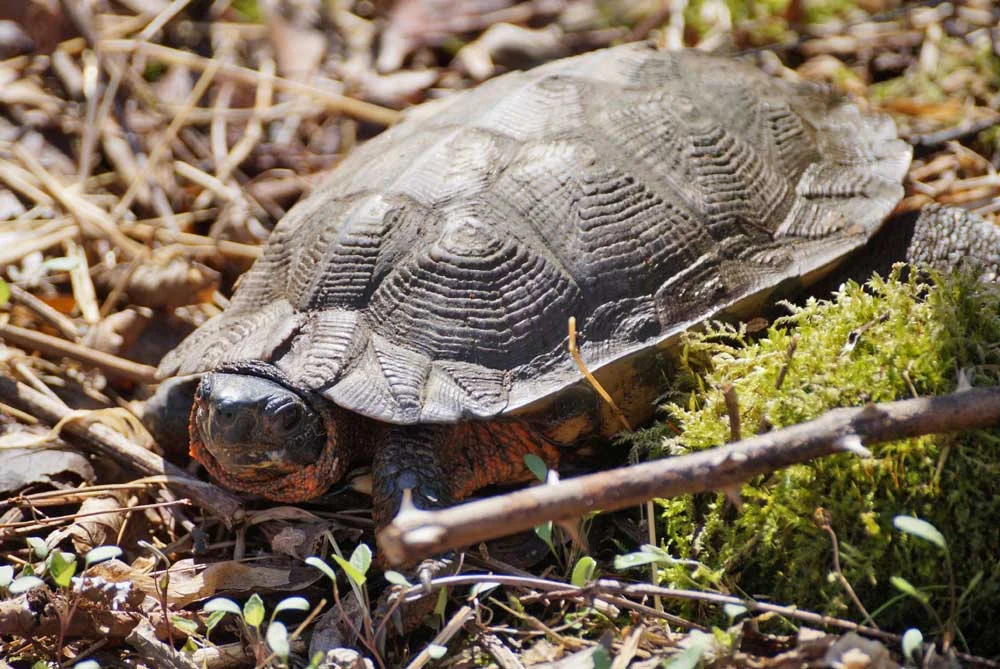
NEW YORK — As global temperatures steadily climb and traditional ecosystems undergo rapid, often devastating transformations, wildlife conservationists are racing to understand how vulnerable species will cope with a shifting climate. While many animals face grim prospects as their native habitats warm beyond endurance, a recent study offers a glimmer of hope for one of North America’s most charismatic and imperiled freshwater reptiles: the wood turtle (Glyptemys insculpta).
New research conducted by scientists at the Great Hollow Nature Preserve and Ecological Research Center in Connecticut suggests that wood turtles may possess a natural pathway to survival. By migrating to higher elevations, these reptiles could find crucial climate refuges in places like New York’s Catskill Mountains. However, while high-altitude habitats may serve as future strongholds for the species, significant questions remain regarding whether lowland populations can successfully make the perilous journey upward before climate change outpaces their natural mobility.
Main Facts: The Catskills as a Climate Refuge
The comprehensive study, published in the Journal of Herpetology under the title "High-Elevation Habitat Associations of Wood Turtles (Glyptemys insculpta) in New York’s Catskill Mountains: Conservation Implications in a Changing Climate," sheds light on an overlooked dimension of reptile conservation.
Researchers surveyed 28 distinct one-kilometer stream segments across the rugged terrain of the Catskill Mountains. To the surprise of many conservationists, the team documented wood turtle populations thriving at some of the highest elevations ever officially recorded for the species. Crucially, these high-altitude turtles were found occupying stream habitats that featured many of the same structural and ecological characteristics—such as gravel substrates, meandering channels, and accessible terrestrial foraging areas—found in the lowland ecosystems where the species traditionally prospers.
According to the research team, these high-elevation environments are poised to become vital safe havens. Habitat-suitability modeling conducted across the northeastern United States indicates that as lowland regions experience increasingly inhospitable temperatures and habitat degradation, optimal conditions for wood turtles will become severely restricted. The Catskill mountain range, among other high-elevation zones, is projected to transform into a primary climate refuge, anchoring the survival of the species in the region for decades to come.
Chronology: Uncovering the High-Elevation Populations
The path to these recent discoveries unfolded over several years of rigorous field research, building upon decades of mounting concern regarding the status of freshwater turtles across North America.
Decades of Decline
For years, herpetologists and wildlife managers have documented steady declines in wood turtle populations throughout their native range, which spans the northeastern United States, the Great Lakes region, and southeastern Canada. Factors such as habitat fragmentation, agricultural intensification, road mortality, and illegal poaching for the pet trade have heavily impacted the species. More recently, anthropogenic climate change emerged as an overarching threat, projected to alter hydrological regimes and destroy a significant percentage of traditional low-elevation wood turtle habitats through prolonged droughts and severe flooding events.
The Catskill Surveys
Recognizing a critical gap in scientific understanding regarding how wood turtles might utilize mountainous terrain, researchers from the Great Hollow Nature Preserve and Ecological Research Center launched a targeted investigation in the Catskills. Over successive field seasons, biologists systematically surveyed the 28 one-kilometer stream segments.
The Breakthrough Discovery
By documenting viable wood turtle colonies living at significantly higher altitudes than previously documented in standard literature, the research team shifted the paradigm of how montane stream systems are viewed in reptile conservation. Rather than viewing high-elevation zones as marginal or accidental habitats for the species, the survey results proved that these areas can support established, breeding populations with unique ecological characteristics.
Publication and Peer Review
The culmination of this fieldwork resulted in the peer-reviewed paper published in the Journal of Herpetology. The study immediately drew attention from the broader scientific and conservation communities, emphasizing that montane ecosystems must be formally integrated into long-term regional management plans.
Supporting Data: Understanding the Ecological Landscape
To fully grasp the significance of the Catskill study, experts point to a convergence of field data and predictive modeling that maps out the future of eastern North American reptile habitats.
- Elevation Milestones: The survey identified active wood turtle populations at altitudes previously thought to be outside the physiological and ecological tolerance limits of the species, which is typically associated with lower-gradient floodplains and valley streams.
- Habitat Parity: Despite the altitude difference, the high-elevation streams utilized by the Catskill turtles maintained key micro-habitat markers, including clean, fast-flowing water, accessible basking sites, and sandy or gravelly banks necessary for nesting.
- Modeling Projections: Predictive habitat-suitability models for the northeastern United States indicate a sharp northward and upward shift in climatic suitability. As lowland summers become hotter and drier—and traditional nesting grounds become more vulnerable to extreme weather—the geographic center of optimal wood turtle habitat will contract into mountainous uplands like the Catskills, the Adirondacks, and portions of northern New England.
This data paints a stark picture: while high-elevation areas will offer cooler temperatures and stable water sources, the total surface area of available optimal habitat is expected to shrink dramatically compared to the expansive lowlands of the past.
Official Responses and Conservation Implications
The findings from the Great Hollow Nature Preserve and Ecological Research Center carry profound implications for wildlife management agencies, conservation non-profits, and policy-makers tasked with protecting biodiversity in a warming world.
Overlooked Populations
One of the most pressing concerns raised by the researchers is that geographically distinct high-elevation populations have historically been ignored by conservation planning. Traditional management frameworks have focused heavily on valley and lowland systems where wood turtles were historically most abundant and easily accessed by researchers. The new study demands a complete recalibration of these priorities, urging state and federal agencies to direct resources toward mapping, monitoring, and protecting montane river systems.
The Lowland Dilemma
While high-elevation turtles are well-positioned to weather coming temperature shifts, the future looks far less certain for their lowland counterparts. The researchers noted that turtles currently residing in low-elevation habitats are unlikely to persist over the long term unless they can successfully migrate to higher elevations. However, whether these lowland populations possess the capacity to move upward at the rapid pace dictated by modern climate change remains an open and urgent question.
- The Migration Barrier: Lowland wood turtles attempting to reach the Catskills or other mountainous refuges face a daunting gauntlet of anthropogenic obstacles. Highways, agricultural fields, sprawling suburban developments, and industrial infrastructure create impassable barriers that can trap populations in warming lowlands.
- Conservation Interventions: Wildlife biologists suggest that proactive conservation strategies may be required. These could include creating ecological corridors—continuous strips of protected green space and riparian zones—that link low-elevation river systems to mountain bases, allowing animals to migrate safely.
A Broader Context for Reptile Conservation
The plight of the wood turtle mirrors broader crises facing reptile species globally. Rapid environmental shifts are disrupting delicate biological balances, often with severe demographic consequences. For instance, studies on other turtle species—such as research detailing how a warming planet has caused roughly 99 percent of sea turtle hatchlings at Raine Island to be born female due to temperature-dependent sex determination—underscore the multifaceted threats climate change poses to reptiles. While wood turtles do not share identical reproductive mechanisms, the overarching theme remains consistent: physiological limits are being tested across the animal kingdom, requiring unprecedented conservation ingenuity.
Looking Ahead: The Future of Glyptemys insculpta
As climate projections for the remainder of the 21st century point toward continued warming, the conservation of the wood turtle will depend heavily on our ability to protect these newly identified high-elevation strongholds while simultaneously safeguarding the ecological corridors that connect them to the wider landscape.
The complete paper, "High-Elevation Habitat Associations of Wood Turtles (Glyptemys insculpta) in New York’s Catskill Mountains: Conservation Implications in a Changing Climate," is available for review on the BioOne Digital Library website.
Ultimately, the discovery that wood turtles can persist in the chillier, faster-moving waters of the Catskill Mountains offers both a warning and a blueprint. It highlights how species attempt to naturally outrun climate change, while reminding scientists and conservationists that protecting the pathways to these upland sanctuaries is essential to preventing the silent disappearance of one of North America’s most remarkable freshwater reptiles.