By Dana Krempels, Ph.D.
Originally published: July 1997 | Last Revised: June 2005
Introduction: The Hidden Threat of Gastrointestinal Stasis
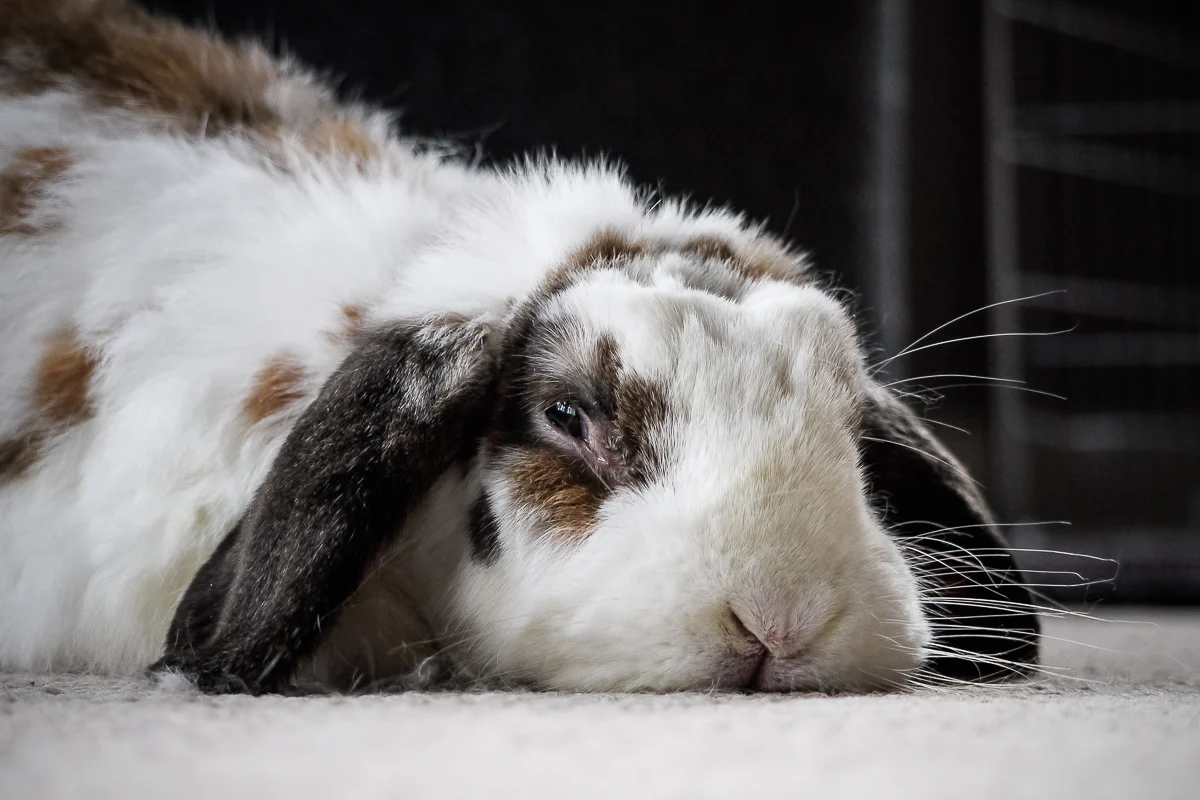
To the inexperienced rabbit owner, a companion animal sitting quietly in the corner, refusing food, and passing smaller-than-usual fecal pellets may simply appear tired or mildly upset. However, these seemingly subtle signs often act as the opening overture to a medical emergency that can prove fatal within hours: Gastrointestinal (GI) stasis (also frequently referred to in veterinary literature as ileus).
Unlike humans, dogs, or cats, whose digestive tracts can tolerate intermittent slowdowns without catastrophic systemic collapse, a rabbit’s gastrointestinal system operates on a delicate, continuous cycle of motility. When that biological engine sputters and stalls, it triggers a cascade of secondary metabolic crises. Understanding the nuances of GI stasis—recognizing its early warnings, implementing proper emergency protocols, and working alongside a rabbit-savvy veterinarian—is quite literally a matter of life and death for pet rabbits.
Main Facts: What is Rabbit GI Stasis?
Gastrointestinal stasis is not a primary disease in its own right. Instead, it is a clinical syndrome characterized by the sudden or gradual halting of normal intestinal motility (peristalsis).
In a healthy rabbit, the gut relies on a steady intake of indigestible fiber to stimulate continuous muscle contractions (peristalsis), which keeps food moving through the system. When a rabbit stops eating, or when motility slows down due to pain, stress, or secondary illness, the lack of dietary fiber causes the digestive tract to lose its muscular stimulation. This triggers a vicious cycle:
- The rabbit feels uncomfortable or is in pain.
- The rabbit stops eating.
- The gut slows down further.
- Gas and harmful bacteria accumulate in the stagnant digestive tract.
Common Misconceptions About GI Stasis
Many people confuse GI stasis with a simple "hairball" or intestinal blockage. While true blockages do occur, true blockages are relatively rare compared to functional GI stasis. In most cases, there is no physical obstruction (such as a foreign object or a dense hair mat) blocking the lumen of the intestines. Rather, the smooth muscle tissue of the gut simply loses its tone and stops contracting. Treating GI stasis as a simple blockage often leads to dangerous, unnecessary surgeries or inappropriate withholding of life-saving nutrition.
Chronology of the Condition: How Stasis Develops
The timeline of a GI stasis episode can progress rapidly, catching even attentive owners off guard. A typical progression follows this trajectory:

- The Trigger Event: A primary stressor—such as environmental changes, dental pain, sudden diet alterations, fear, or an underlying systemic infection—causes the rabbit mild discomfort.
- Behavioral Shift: The rabbit becomes slightly subdued, refuses treats it normally loves, or leaves its pellets untouched.
- Motility Slowdown: Within 12 to 24 hours of reduced food intake, the lack of fiber causes normal gut peristalsis to drop sharply. Gas begins to build up in the stomach and cecum, causing painful bloating.
- Bacterial Proliferation: As the normal microflora of the gut stagnates, opportunistic pathogens—such as Clostridium species—can multiply unchecked, releasing toxins into the bloodstream.
- Systemic Collapse: Without rapid veterinary intervention, the rabbit slips into hepatic lipidosis (fatty liver disease) due to rapid weight loss and mobilization of body fat. Dehydration sets in, blood pressure drops, and the vital organs begin to shut down.
Supporting Data: Signs, Symptoms, and Diagnostic Criteria
Recognizing the clinical signs of GI stasis early is critical for a successful recovery. Veterinarians rely on a combination of physical examination, history, and diagnostic imaging to confirm the syndrome.
Common Clinical Signs
- Anorexia: Total or partial refusal of food, including favored treats and hay.
- Fecal Changes: Pellets become increasingly small, misshapen, hard, strung together with mucus, or disappear entirely.
- Lethargy: The rabbit appears hunched, inactive, dull-eyed, and unresponsive to environmental stimuli.
- Abdominal Discomfort: The rabbit may grind its teeth loudly (bruxism), press its belly against the floor, or adopt a tense, hunched posture.
- Abdominal Distension: In severe cases, gas accumulation causes the abdomen to feel tight like a drum, though this is not always obvious without palpation.
Veterinary Diagnostics
When presented with a suspected case of GI stasis, a rabbit-savvy veterinarian will typically perform:
- Physical Palpation: Gently feeling the abdomen to check for gas-filled loops of bowel, a distended stomach, or impactions.
- Radiographs (X-rays): Essential for ruling out true physical obstructions (such as foreign bodies, bladder stones, or trichobezoars) and visualizing the distribution of gas and fluid within the GI tract.
- Blood Panels: To assess organ function (especially liver and kidney values) and check for systemic dehydration or infection.
Official Responses and Veterinary Protocols
Over the past two decades, veterinary understanding of rabbit gastrointestinal health has advanced significantly. Organizations like the House Rabbit Society have worked tirelessly to educate both exotic animal veterinarians and the general public on standardized, evidence-based treatment protocols.
Core Pillars of Treatment
A comprehensive veterinary treatment plan for acute GI stasis typically encompasses four main strategies:
- Fluid Therapy: Subcutaneous or intravenous fluids are administered immediately to correct dehydration, restore electrolyte balance, and help flush toxins through the kidneys.
- Pain Management: Because pain is both a primary cause and a secondary result of stasis, aggressive pain relief is non-negotiable. Medications such as meloxicam (an NSAID) or buprenorphine (an opioid) are frequently prescribed to keep the rabbit comfortable.
- Prokinetics: Drugs that stimulate smooth muscle contractions in the GI tract—such as metoclopramide or cisapride—are used to jump-start peristalsis.
- Assisted Feeding (Critical Care): Nutritional support must be initiated promptly, even if the rabbit is not eating on its own. Specialized recovery formulas (such as Oxbow Critical Care) are syringe-fed in small, frequent amounts to keep the gut metabolically active.
Implications: Long-Term Management and Prevention
Surviving an episode of GI stasis is a major milestone, but it does not mean the rabbit is permanently in the clear. Rabbits that have experienced stasis once are often prone to recurrence if underlying husbandry issues are not permanently addressed.
Preventing Future Episodes
- Dietary Fiber: The single most effective preventative measure is providing unlimited, high-quality grass hay (such as timothy, orchard grass, or botanical hays). Hay provides the coarse, indigestible fiber necessary to stimulate gut motility.
- Hydration: Ensuring fresh, clean water is available at all times via heavy ceramic bowls (which encourage more natural drinking behavior than water bottles) is vital.
- Stress Reduction: Minimizing environmental stressors, sudden changes in routine, and multi-pet conflicts helps protect the delicate balance of the rabbit’s nervous and digestive systems.
- Regular Veterinary Check-ups: Routine dental exams are crucial, as overgrown molars are one of the leading hidden causes of pain-induced stasis.
Conclusion: A Collaborative Effort for Rabbit Health
Gastrointestinal stasis remains one of the most frightening medical challenges a rabbit owner can face. However, with prompt veterinary intervention, aggressive supportive care, and a lifestyle centered around proper nutrition and low stress, many rabbits make a full and rapid recovery.
As veterinary medicine continues to evolve, the prognosis for rabbits suffering from GI stasis grows brighter every year. By staying vigilant, educating oneself on the subtle signs of discomfort, and building a relationship with a qualified exotic animal veterinarian, owners can ensure their long-eared companions live long, healthy, and comfortable lives.