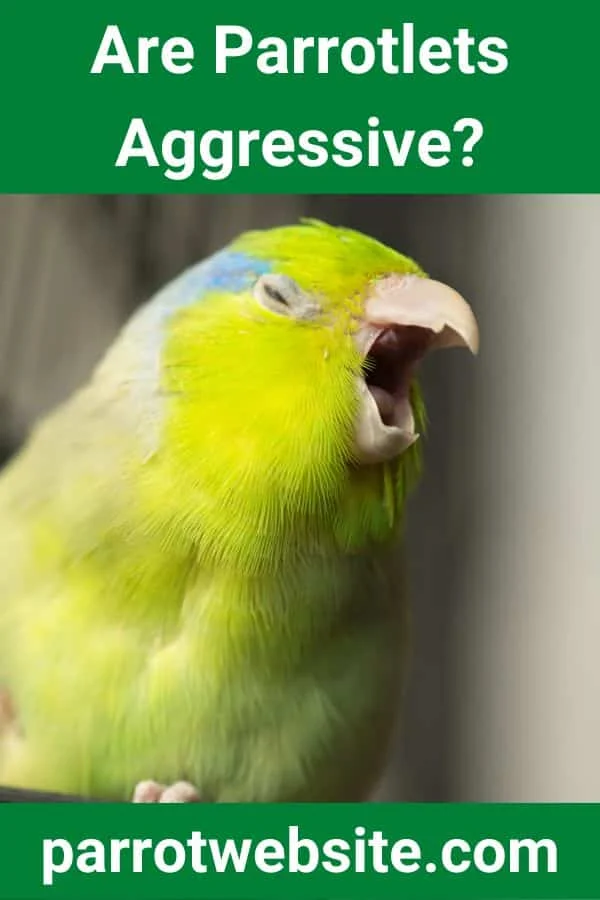
Despite their diminutive size—often weighing less than an ounce—parrotlets (Forpus) have earned a formidable reputation in the avian community. Often referred to as "pocket parrots," these birds possess a personality that far exceeds their physical stature. However, this reputation for feistiness often leaves prospective owners wondering: are they truly aggressive by nature, or is this a misunderstood behavior resulting from human error?
To understand the complex psychology of the parrotlet, one must look beyond their "cute" appearance and examine the biological and environmental factors that govern their behavior.
Main Facts: Dispelling the Myths of Small-Stature Aggression
The primary misconception regarding parrotlets is that they are naturally "mean." In reality, aggression in parrots is rarely a character flaw; it is almost always a form of communication. When a parrotlet bites, nips, or displays defensive body language, it is expressing a need, a fear, or a reaction to its environment.
The Anatomy of a Bite
While parrotlets are among the smallest parrot species, they are members of the Psittacidae family, sharing the same evolutionary traits as larger macaws and cockatoos. Their beaks are designed to crack seeds and manipulate tough materials. Consequently, even a "nudge" from a parrotlet can result in a painful pinch, and a full-force bite can easily break the skin. This physical capability makes the management of their behavior a matter of safety, particularly for households with children.
Individual Variation
It is crucial to recognize that temperament varies wildly between individuals. Some parrotlets are naturally bold and curious, while others are shy and skittish. Labeling the entire species as "aggressive" ignores the individual nuances that make every bird unique. A well-socialized parrotlet, when provided with a stable environment, can be a loving and gentle companion.
Chronology: The Developmental Stages of Behavior
The trajectory of a parrotlet’s behavior is largely determined long before it arrives in your home. The life cycle of a pet parrotlet can be broken down into three critical phases that dictate its future temperament.
1. The Neonatal and Fledgling Phase (The Breeder’s Role)
The most critical period for a parrotlet’s development occurs in the first few weeks of life. Reputable breeders understand that handling a chick—gradually introducing it to human touch and varied environmental stimuli—is essential to preventing "fear-aggression." A bird that is not properly socialized during this stage may view humans as a threat rather than a companion for the rest of its life.
2. The Weaning and Juvenile Phase
As the bird begins to transition to independent feeding, it tests boundaries. This is the stage where "nippiness" often begins. If an owner reacts with fear or sudden movements, the bird learns that biting is an effective way to control its environment. Consistent, positive reinforcement during this phase is the cornerstone of a well-behaved adult bird.
3. The Mature Adult Phase
Once a parrotlet reaches sexual maturity, its hormones can shift its behavior. During this time, previously calm birds may become territorial or moody. Understanding that these shifts are biological, rather than malicious, allows owners to adjust their interaction strategies accordingly.
Supporting Data: Factors Influencing Avian Behavior
Aggression is rarely spontaneous. Data from avian behaviorists suggests that the vast majority of "problem" birds are suffering from unmet needs or environmental stressors.
Nutrition and Metabolic Health
Diet is the silent driver of behavior. A bird fed a diet consisting only of seeds lacks the necessary nutrients to maintain hormonal balance and mental clarity. A diet rich in fresh vegetables, fruits, and high-quality pellets is essential. Deficiencies in Vitamin A or calcium, for example, can lead to lethargy, irritability, and chronic health issues that manifest as aggressive outbursts.
The Circadian Rhythm
Parrotlets are sensitive to light cycles. In the wild, they follow the rising and setting of the sun. In a domestic setting, if a bird is not provided with 10–12 hours of uninterrupted, pitch-black darkness, it can experience sleep deprivation. A sleep-deprived parrotlet is a grumpy, reactive parrotlet. Strict adherence to a bedtime routine is one of the most effective, yet overlooked, tools for curbing aggression.
Environmental Enrichment
Boredom is a significant catalyst for aggression. Because parrotlets are highly intelligent, they require mental stimulation. A cage devoid of toys, foraging opportunities, and variety will inevitably lead to a bird that uses its beak to "explore" or vent its frustration.
Official Responses and Expert Consensus
Avian veterinarians and certified animal behaviorists generally agree that the "aggressive" label is a misnomer. The consensus among professionals is that humans often fail to respect the boundaries of the bird.
The "Consent" Model
Many experts now advocate for a "consent-based" approach to handling parrots. This means not forcing a bird to step up if it displays body language such as puffing its feathers, hissing, or retreating to the back of the cage. By allowing the bird to choose when it wants to interact, owners build trust. When a bird feels it has agency, the need for defensive aggression diminishes significantly.
Veterinary Intervention
If a bird that has previously been docile suddenly turns aggressive, the first course of action should always be a veterinary examination. Birds are masters at masking illness; a sudden shift in temperament is often the only outward sign that the bird is suffering from an infection, pain, or internal health issue.
Implications: Is a Parrotlet Right for You?
The reality of owning a parrotlet is that it is a high-maintenance commitment. They are not "starter birds." Their bossy, energetic nature requires an owner who is patient, observant, and willing to invest time in training.
The Reality of Multi-Bird Households
The question of whether to keep a parrotlet with other birds is a complex one. Because parrotlets are notoriously territorial, they often do not tolerate other species. While they can bond deeply with a member of their own species, introducing a parrotlet to a different type of parrot is a high-risk endeavor that often results in injury. Many experts recommend that if you want a social environment for your bird, a bonded pair of the same species is the safest and most ethical route, though this often means the birds will prioritize each other over their human owners.
The "First Bird" Verdict
For those seeking a low-maintenance pet, the parrotlet is an unsuitable choice. Their intelligence requires constant engagement—typically 3 to 4 hours of active social time per day. If you cannot meet this requirement, the bird will likely become lonely, depressed, and eventually, aggressive.
Conclusion: The Path to a Harmonious Relationship
The "aggressive" parrotlet is largely a product of its circumstances. When we choose to view their behavior as a communication of their needs—rather than a character flaw—we open the door to a deeper bond.
To succeed with a parrotlet, potential owners must:
- Source responsibly: Choose a breeder who prioritizes early socialization.
- Respect the bird’s autonomy: Learn to read body language and never force interaction.
- Optimize the environment: Provide a high-quality diet, strict sleep schedules, and constant mental stimulation.
- Supervise interactions: Always prioritize the safety of both the bird and children.
Ultimately, the parrotlet is a big personality in a tiny package. They are capable of immense affection, loyalty, and playfulness, but they demand respect. If you are prepared to do the work, the reward is a companion that will challenge, entertain, and delight you for years to come. But make no mistake: their size is their only "small" attribute. Everything else—from their heart to their bite—is entirely, and impressively, large.