FREMONT COUNTY, Wyoming — The State Animal Health Official has officially confirmed a case of West Nile virus (WNV) in a horse located in Fremont County, Wyoming. The diagnosis, verified and disseminated through the Equine Disease Communication Center (EDCC) Health Watch network, serves as a sobering reminder of the persistent and severe threat that vector-borne pathogens pose to the region’s equine population.
While individual cases of West Nile virus surface periodically across the United States, the severity of the disease—coupled with high mortality rates and the unpredictable nature of mosquito vectors—underscores the critical need for constant vigilance among horse owners, trainers, and regional agricultural communities.
Main Facts
The confirmation of West Nile virus in Fremont County places local horse owners on high alert. WNV is a zoonotic viral disease primarily maintained in nature through a transmission cycle involving birds as primary reservoirs and mosquitoes as the vectors that spread the virus to mammalian species, predominantly horses and humans.
Key facts regarding this recent Wyoming case and the virus itself include:
- Location: Fremont County, Wyoming.
- Affected Species: Equine (Horse).
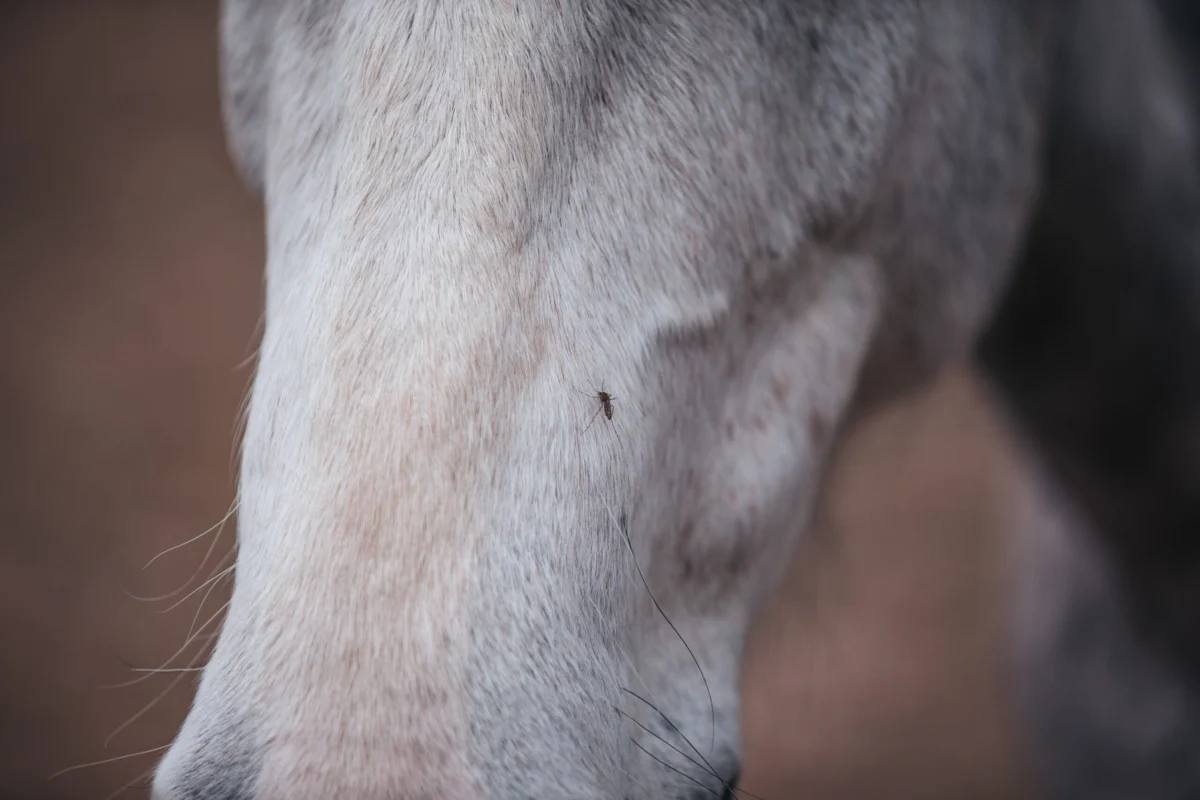
- Transmission Vector: Bites from infected mosquitoes.
- Mortality Rate: Equine mortality rates resulting from clinical WNV infections can reach between 30% and 40% among horses that develop severe neurological signs.
- Treatment Reality: There is currently no specific cure for West Nile virus. Treatment is strictly supportive, focusing on managing symptoms, reducing inflammation, and providing intensive nursing care.
- Prevention: Highly effective core vaccines are available and strongly recommended by veterinary associations nationwide.
The EDCC Health Watch—an Equine Network marketing program that utilizes verified reports from the independent nonprofit Equine Disease Communication Center—emphasizes that open access to infectious disease information is vital for protecting regional livestock. Industry donations heavily support the EDCC to ensure that timely alerts reach equestrian communities before outbreaks can spiral out of control.
Chronology of the Threat
The detection of West Nile virus in Fremont County does not happen in a vacuum; it is part of a predictable, seasonal timeline dictated by environmental factors, climate patterns, and mosquito life cycles.
Spring: The Preparatory Phase
Long before the first frost thaws or the summer heat peaks, veterinary professionals begin issuing warnings regarding WNV. In regions with prolonged mosquito seasons—such as parts of Wyoming characterized by heavy spring runoff, irrigation practices, and varying elevations—spring serves as the primary window for administering annual core vaccinations. Horses that have been previously vaccinated require an annual booster shot during this period to maintain protective antibody titers. For previously unvaccinated horses, spring marks the beginning of a strict two-shot vaccination series administered three to six weeks apart.
Summer: Peak Vector Activity and Exposure
As temperatures rise and standing water accumulates from spring rains, irrigation, and snowmelt, mosquito populations experience exponential growth. This period represents the highest window of risk for equine exposure. Mosquitoes feed on infected avian populations—which often carry high viral loads without showing clinical signs—and subsequently pass the pathogen on to grazing horses. It is during the mid-to-late summer months that sporadic cases like the one in Fremont County typically emerge, as cumulative vector exposure reaches its peak.
Fall: Extended Risks in Variable Climates
In modern veterinary medicine, the traditional "mosquito season" is no longer confined strictly to the dog days of summer. Milder autumns and extended warm periods in states like Wyoming mean that mosquito vectors remain active deep into the fall. Because of this, veterinarians in high-risk or prolonged-season areas frequently recommend a second annual booster shot in the autumn months to ensure continuous protection as temperatures gradually begin to cool.
Supporting Data and Medical Understanding
To fully grasp the gravity of a West Nile virus diagnosis, horse owners must understand how the pathogen operates within the equine body and why preventative measures are non-negotiable.
Understanding WNV 101
When an infected mosquito bites a horse, the virus enters the animal’s bloodstream and replicates. While many horses infected with WNV mount an effective immune response and remain asymptomatic, a significant percentage develop clinical disease. The virus has a distinct affinity for the central nervous system, meaning it can cross the blood-brain barrier and cause severe inflammation of the brain and spinal cord (encephalomyelitis).
Clinical signs that owners and handlers must watch for include:
- Loss of coordination (ataxia) and stumbling
- Muscle fasciculations (twitches), particularly around the face, muzzle, and neck
- Hyperesthesia (oversensitivity to touch or sound)
- Changes in behavior, such as apprehension, depression, or dullness
- Weakness in the hind limbs, sometimes progressing to recumbency (inability to stand)
- Fever (though not always present by the time neurological signs appear)
- Impaired vision or apparent blindness
- Grinding of teeth and difficulty swallowing in advanced cases
The Critical Role of Vaccination
Scientific studies and decades of field data consistently demonstrate that vaccines are remarkably effective WNV prevention tools. However, timing is everything. It takes several weeks following the administration of a complete vaccination series or a booster shot for a horse to develop a robust, protective immune response. Administering a vaccine after a horse has already been bitten and infected will not provide immediate protection.
For optimal defense, veterinarians recommend:
- Previously Vaccinated Horses: An annual booster shot. In extended mosquito regions, veterinarians may advise a biannual schedule (spring and fall).
- Unvaccinated Horses: A primary two-shot series administered three to six weeks apart, ensuring completion well in advance of peak mosquito season.
Official Responses and Environmental Management
Following the confirmation in Fremont County, state animal health officials and local veterinary practices have amplified outreach efforts. Beyond urging immediate vaccination updates, authorities emphasize that protecting horses requires a multi-layered biosecurity and environmental management strategy.
Because mosquitoes require standing water to complete their life cycle (from egg to larva to pupa to biting adult), reducing breeding grounds on and around equine properties is paramount. Official guidelines for property and vector management include:
- Eliminating Standing Water: Regularly empty, scrub, and turn over stock tanks, buckets, discarded tires, wheelbarrows, and plastic containers at least once a week. Clean out clogged gutters and ensure proper drainage around barns and pastures.
- Managing Ponds and Troughs: Stock water tanks with mosquito-eating fish (such as Gambusia affinis) or use biological larvicides (such as Bacillus thuringiensis israelensis or BTI) that are safe for livestock consumption.
- Limiting Exposure Times: Adjust turnout schedules to minimize exposure during peak mosquito feeding times, which typically occur at dawn and dusk. Keep horses inside barns, stables, or run-in sheds equipped with screens during these high-risk hours whenever possible.
- Using Mechanical and Chemical Barriers: Utilize safe, approved equine fly and mosquito repellents containing active ingredients like permethrin or DEEF. Install fans in stalls, as mosquitoes are weak flyers and tend to avoid areas with strong, continuous air currents.
- Maintaining Clear Communication: Stay informed by subscribing to disease tracking networks like the EDCC Health Watch and consulting local veterinary clinics regarding regional disease spikes.
Broader Implications for the Equine Industry
The confirmation of West Nile virus in Fremont County is more than an isolated medical incident; it serves as a critical stress-test for equine biosecurity practices across Wyoming and the wider Intermountain West.
Economic and Emotional Toll
For horse owners, the stakes are exceptionally high. Beyond the emotional devastation of managing a beloved animal through a life-threatening neurological crisis, the financial implications can be staggering. Veterinary bills associated with intensive supportive care—which may involve intravenous fluids, anti-inflammatory medications, sling support for down horses, and round-the-clock monitoring—can quickly escalate into thousands of dollars. Even for horses that survive acute WNV infection, a significant percentage may suffer from long-term neurological deficits, behavioral changes, or chronic weakness that permanently impacts their usability as riding, working, or performance horses.
Climate and Vector Shifts
Public health and animal health researchers note that shifting environmental patterns are altering the geographic range and seasonal longevity of vector populations. As winters become milder and precipitation patterns shift, vectors like mosquitoes are adapting to new elevations and northern latitudes. This reality means that regions historically considered lower-risk for mosquito-borne illnesses can no longer rely on geography alone to protect their livestock.
The Power of Proactive Education
Organizations like the Equine Disease Communication Center and programs like EDCC Health Watch play an indispensable role in bridging the gap between state laboratories, practicing veterinarians, and horse owners. By turning raw epidemiological data into accessible, actionable news alerts, these platforms empower the equestrian community to stay ahead of outbreaks.
Ultimately, the Fremont County WNV case reinforces a golden rule of modern veterinary husbandry: prevention is infinitely more manageable—and successful—than treatment. With no cure available once the virus takes hold, the responsibility falls squarely on owners to maintain rigorous vaccination schedules and proactive environmental controls. By working in tandem with state animal health officials and local veterinarians, the Wyoming equine community can safeguard its animals against the silent, persistent threat of West Nile virus.