NEW YORK — As global temperatures steadily climb and climate change reshapes ecosystems across North America, wildlife biologists are racing to understand how vulnerable species will cope. While many iconic animals face bleak futures as their traditional habitats warm and dry, a glimmer of hope has emerged from the rugged, forested terrain of New York State.
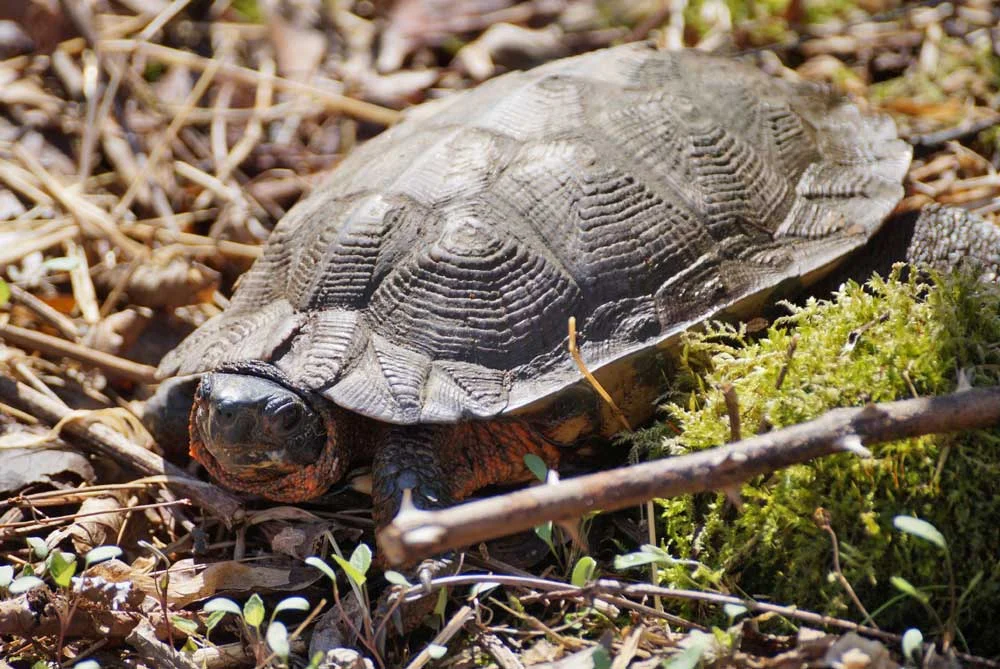
A team of researchers from the Great Hollow Nature Preserve and Ecological Research Center in Connecticut has published a landmark study revealing that North American wood turtles (Glyptemys insculpta) may find a critical lifeline at higher elevations. By documenting thriving populations in montane streams of the Catskill Mountains, the researchers suggest that these mountainous regions could serve as vital climate refuges, offering a blueprint for the future conservation of a species increasingly threatened by environmental degradation.
Main Facts
The comprehensive study, titled "High-Elevation Habitat Associations of Wood Turtles (Glyptemys insculpta) in New York’s Catskill Mountains: Conservation Implications in a Changing Climate," was recently published in the Journal of Herpetology.
At its core, the research investigates the resilience and adaptability of wood turtles in the face of shifting thermal baselines. Key takeaways from the findings include:
- Unexpected Mountain Dwellers: Researchers surveyed 28 one-kilometer stream segments across the Catskill Mountains and discovered wood turtle populations living at some of the highest elevations ever officially recorded for the species.
- Habitat Parity: Despite the steep, rocky terrain of the mountains, these high-elevation turtles occupy micro-habitats that share many of the same essential ecological features found in the lowland river systems where the species traditionally thrives.
- The Catskills as a Climate Hotspot: Habitat-suitability modeling for the northeastern United States indicates that as global temperatures rise, optimal conditions for wood turtles will increasingly be restricted to higher-elevation zones. Consequently, the Catskills are poised to become a premier climate refuge for the reptiles.
- Overlooked Populations: Historically, conservation planning has largely focused on lowland and valley ecosystems, frequently ignoring or underestimating the existence of montane populations. The new study urges a radical shift in how wildlife agencies allocate resources for reptile preservation.
- The Lowland Vulnerability: While high-elevation wood turtles are well-positioned to weather rising temperatures, lowland populations face grave risks. Their long-term survival depends heavily on whether they can migrate upward to cooler zones at a pace that matches the rapid advancement of climate change.
Chronology of the Research and Discovery
The journey toward understanding the high-elevation adaptability of wood turtles spans years of rigorous field investigation, ecological modeling, and shifting paradigms in conservation science.
Phase One: Recognizing the Threat (Pre-2020)
For decades, herpetologists have watched the North American wood turtle decline across much of its historical range, which stretches from Nova Scotia and New Brunswick down through New England, the mid-Atlantic, and into the Great Lakes region. Driven by habitat fragmentation, agricultural expansion, illegal pet trade collection, and warming weather patterns, wood turtles have seen their populations dwindle. Conservationists recognized that traditional lowland habitats—characterized by meandering streams, rich floodplains, and damp woodlands—were becoming increasingly hostile due to prolonged droughts and extreme weather events.
Phase Two: Shifting Focus to Montane Systems (2021–2023)
Recognizing that climate change would inevitably force animals to seek cooler microclimates, researchers at Connecticut’s Great Hollow Nature Preserve and Ecological Research Center turned their attention upward. While conventional wisdom suggested wood turtles were strictly creatures of lower, flatter terrain, anecdotal reports and historical notes hinted that individuals occasionally ventured into higher-altitude watersheds.
To test this hypothesis, the research team designed a systematic survey targeting the Catskill Mountains of New York. Over multiple field seasons, scientists meticulously surveyed 28 distinct one-kilometer stream segments, braving difficult terrain, fluctuating weather, and dense forest canopies to document turtle presence, population density, and habitat characteristics.
Phase Three: The Breakthrough Discovery and Publication (2024–2026)
The field surveys yielded surprising results: wood turtles were not only present in the Catskills’ montane streams, but they were established at elevations previously thought to be uninhabitable for the species.
Following data collection, the researchers ran advanced habitat-suitability models for the northeastern United States. The models confirmed that as lowland areas warm past tolerable thresholds, the Catskills and similar high-elevation ranges will become compressed islands of optimal habitat. The synthesis of these field data and predictive models culminated in their published paper in the Journal of Herpetology, instantly shifting academic discourse regarding reptile climate resilience.
Supporting Data and Ecological Context
To understand the gravity of the Great Hollow researchers’ findings, one must examine the broader ecological crisis facing chelonians (turtles and tortoises) worldwide. Reptiles are ectotherms, meaning their body temperatures and metabolic rates are directly dictated by ambient environmental conditions. Even minor shifts in temperature can have catastrophic physiological and demographic consequences.
For instance, research on reptile reproduction has repeatedly demonstrated the perils of a warming planet. Temperature-dependent sex determination (TSD)—common in many turtle species—means that incubation temperatures dictate the sex of the hatchlings. A striking example of this vulnerability was documented in a parallel study at Raine Island, where warming sands caused an alarming 99 percent of sea turtle hatchlings to emerge as female, threatening the collapse of the local breeding population.
While wood turtles do not face identical TSD pressures to the same catastrophic degree, they are deeply sensitive to thermal stress, habitat drying, and changes in the availability of basking sites, nesting substrates, and foraging resources.
The Numbers Behind the Catskill Study
- 28: The total number of one-kilometer stream segments surveyed by researchers in the Catskill Mountains.
- Record Elevations: The discovery confirmed wood turtle presence at elevations significantly higher than historical benchmarks, proving the species’ physiological plasticity.
- 100% Shift Potential: Predictive modeling suggests that optimal habitat corridors will shrink in valleys and expand upward, making vertical connectivity between lowlands and highlands the single most important metric for species survival.
The data underscores a stark biological reality: while animals like the wood turtle possess inherent behavioral flexibility, their survival is ultimately bounded by the speed of landscape-level environmental transformation and the physical availability of escape routes.
Official Responses and Conservation Implications
The scientific community and environmental protection agencies have greeted the Catskill wood turtle study with a mix of cautious optimism and an urgent call to action.
Dr. Allison Vance, a senior conservation biologist not directly involved with the study, noted that the research fundamentally alters regional wildlife management strategies. "For years, state agencies have poured conservation dollars exclusively into protecting lowland river valleys and agricultural floodplains," Vance explained. "This study forces us to look up. If the Catskills are going to serve as a vital climate ark for wood turtles, we must immediately incorporate these montane ecosystems into our regional land-use planning."
Redefining Conservation Priorities
The implications of the Great Hollow study extend far beyond New York State, offering lessons for wildlife management across the entire northeastern United States:
- Corridor Protection: Conservationists emphasize that protecting high-elevation streams is only half the battle. To save lowland populations, authorities must preserve and restore ecological corridors—unfragmented strips of forest and riparian zones—that allow turtles to migrate upward as temperatures rise. If highways, real estate development, or industrial projects block these pathways, lowland wood turtles will be trapped in a thermal dead-end.
- Combating Poaching and Habitat Degradation: High-elevation areas in the Catskills currently offer a degree of natural isolation, but increased human recreation, hiking trail expansion, and illegal wildlife trafficking remain persistent threats. Environmental groups are calling for stricter enforcement of protection laws around newly identified wood turtle strongholds.
- Climate-Informed Legislation: State departments of environmental conservation are beginning to review the study’s habitat-suitability models to update their species-of-concern listings and habitat action plans.
Broader Implications for Biodiversity in a Warming World
The plight of the wood turtle in the Catskills serves as a microcosm for a global ecological dilemma: how species will navigate the Anthropocene. As climate zones shift toward the poles and up mountain slopes—a phenomenon known as "range shifting"—montane regions are increasingly recognized as the final frontiers for biodiversity preservation.
However, scientists warn against viewing high-elevation refuges as a silver bullet. Mountain ecosystems are finite. There is a physical limit to how high a species can climb before running out of mountain—a concept ecologists refer to as the "escalator to extinction." Once species reach the highest available peaks, there is nowhere left to go as temperatures continue to rise.
Furthermore, the transition of species into novel elevations can trigger unforeseen ecological pressures. As wood turtles move into montane streams, they may encounter new competitors, novel predators, or unfamiliar disease vectors, while simultaneously altering local aquatic food webs.
Looking Ahead
The research team from the Great Hollow Nature Preserve and Ecological Research Center stresses that much work remains to be done. Future studies must directly test the migratory capabilities of lowland wood turtle populations to determine if they can physically bridge the distance to high-elevation sanctuaries before thermal stress proves fatal.
In the meantime, the wood turtles of the Catskill Mountains stand as resilient ambassadors of adaptability. Their presence in the high country offers both a warning about the fragility of traditional ecosystems and a beacon of hope, proving that with the right habitat protections, nature can find a way to weather the storm of a changing climate.
For those interested in reading the full academic paper, “High-Elevation Habitat Associations of Wood Turtles (Glyptemys insculpta) in New York’s Catskill Mountains: Conservation Implications in a Changing Climate,” it is publicly accessible via the BioOne Digital Library website.