In a move intended to bolster the regional economy and drive job creation, the state of Ohio recently finalized a significant financial incentive package for Nestlé Purina PetCare. The company’s newly operational manufacturing facility in Clermont County, Williamsburg Township, stands as a testament to the state’s commitment to attracting large-scale industrial projects. However, the $10.5 million in tax credits granted to the multinational corporation has sparked a fierce debate regarding corporate accountability, consumer transparency, and the integrity of pet food labeling standards.
As the facility ramps up production, consumer advocates and regulatory watchdogs are raising a pointed question: Should a state government provide millions in taxpayer-funded incentives to a company whose product marketing is accused of misleading the very public that is subsidizing its growth?
The Anatomy of the Incentive Package
The expansion into Clermont County was six years in the making, representing a massive capital investment aimed at increasing Purina’s production capacity for its popular dog and cat food lines. To secure this project, the state of Ohio, in coordination with local municipal partners, assembled a multi-tiered incentive package.
According to state records, the project received approximately $6.8 million in initial incentives, including contributions from Clermont County and Williamsburg Township. This was bolstered by a $1.7 million land discount provided by the county to facilitate the development. Furthermore, the Ohio Tax Credit Authority approved a 10-year, $2 million job-creation tax credit. This specific grant is tethered to a contractual commitment from Purina to create 300 full-time jobs within the region.

While local officials have hailed the project as an economic engine, the reliance on public funding has brought the company’s internal operational standards under the microscope of state regulators and consumer advocacy groups.
A Chronology of Conflict
The tension between Purina’s marketing practices and consumer transparency is not new, but the opening of the Ohio facility has brought these issues to a boiling point.
- 2002: The U.S. Food and Drug Administration (FDA) publishes findings linking the presence of pentobarbital—a drug used for euthanasia—in dog food to the use of rendered animal ingredients, specifically Meat and Bone Meal (MBM) and Beef and Bone Meal (BBM).
- 2018–2020: As Purina begins planning its Williamsburg Township site, consumer groups increase pressure on the Association of American Feed Control Officials (AAFCO) regarding the lack of transparency in "flavoring" disclosures.
- 2024: Construction on the Ohio plant nears completion, and critics highlight the discrepancy between label imagery and actual ingredient composition on Purina Dog Chow products.
- 2026: The facility begins full-scale operations, triggering renewed calls for an investigation into whether the company’s business practices align with the ethical standards expected of a taxpayer-subsidized entity.
The Discrepancy: Imagery vs. Reality
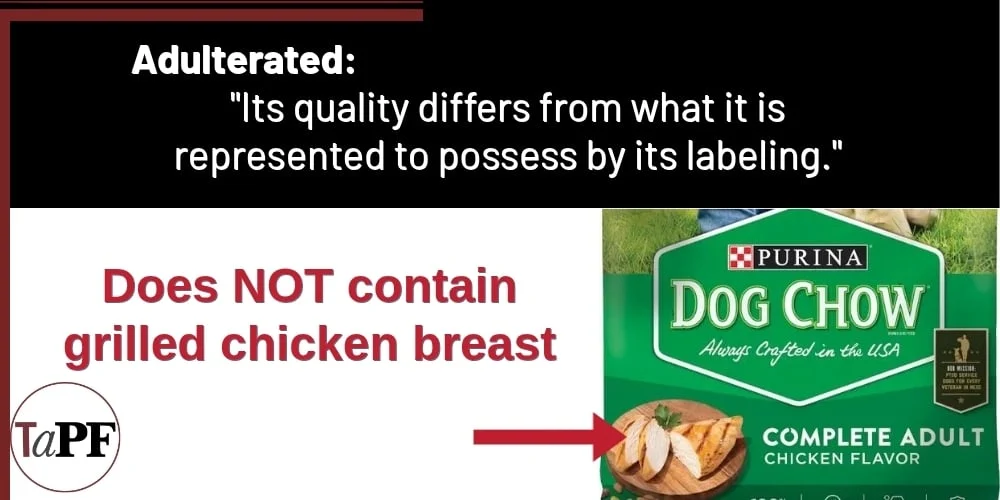
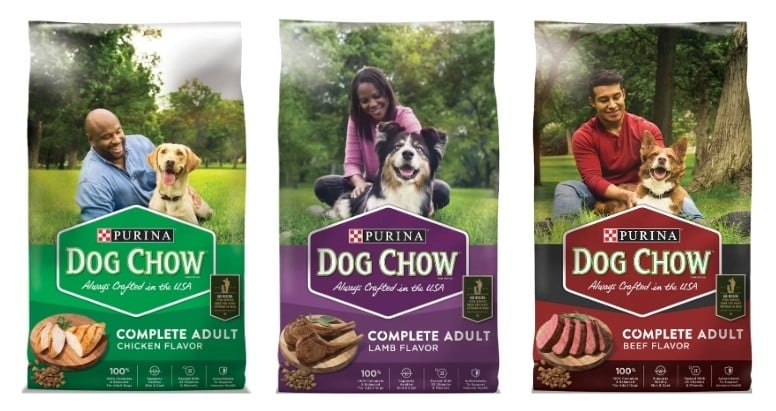
At the heart of the controversy are the labels on Purina’s flagship Dog Chow lines. Consumer advocates point out that the packaging frequently features high-definition, appetizing imagery of grilled chicken breasts, roasted lamb chops, and thick-cut steaks. For the average consumer, these images create a clear expectation: the bag contains fresh, whole cuts of meat.
However, a closer look at the ingredient lists—often tucked away in smaller print—reveals a different reality. The products do not contain the whole chicken, lamb, or beef portrayed on the front of the bag. Instead, these ingredients are present only as "flavors." The primary protein sources in many of these formulations are "chicken by-product meal" and "meat and bone meal."
The Nature of Rendered Ingredients
The shift from "human-grade" visuals to "feed-grade" reality is the crux of the consumer backlash. Chicken by-product meal is a rendered product that can include organs, undeveloped eggs, and other tissues that do not meet the standards of human consumption.
Even more concerning to critics is the broad classification of "meat and bone meal." As noted in historical FDA research, these products are rendered from animal sources that, without rigorous and transparent sourcing controls, could potentially include animals that were not slaughtered for food. While federal regulations exist to prevent the inclusion of condemned materials, the gap between the premium imagery on the label and the industrial reality of rendered by-products remains a point of contention for many pet owners who feel misled by the marketing.
Implications for Regulatory Compliance
Ohio’s own statutes provide a framework for evaluating these claims. Under the Ohio Revised Code Section 923.48, a pet food is considered "adulterated" if its composition or quality "falls below or differs from what it is purported or represented to possess by its labeling."
Critics argue that by displaying a grilled chicken breast on a bag that contains only chicken by-product meal, the manufacturer is fundamentally misrepresenting the product. If a regulatory body were to apply these rules strictly, the labeling could be viewed as a violation of state law.

The implication here is twofold:
- Legal Jeopardy: If the products are found to be in violation of labeling laws, the state could be put in the position of having to enforce regulations against a company it is currently subsidizing.
- Moral Hazard: Providing tax incentives to a company that skirts the line of consumer deception creates a moral hazard, where the government effectively rewards business practices that it is tasked with regulating.
The Call for Accountability
The current situation has led to a grassroots movement in Ohio, with consumer advocates like Susan Thixton of Truth About Pet Food urging residents to contact their state representatives. The demand is straightforward: a full, independent audit and investigation into the $10.5 million tax credit package.
Advocates argue that "enforcement discretion"—the tendency of regulators to look the other way for large employers—should not apply when public funds are involved. They are calling for:
- Increased Transparency: A requirement that manufacturers disclose whether imagery on labels represents the actual ingredients used or merely a flavoring profile.
- Stricter Sourcing Verification: Evidence that all rendered ingredients used in Ohio-manufactured products are sourced from USDA-inspected and passed animals.
- Conditionality of Grants: A policy shift that would make the continuation of tax credits contingent on a company’s clean record regarding consumer protection and labeling compliance.
Official Responses and Industry Defense
To date, state officials have remained largely supportive of the Purina project, emphasizing the importance of the 300 jobs created and the long-term economic stability the plant brings to Clermont County. Supporters of the incentive package argue that the regulatory compliance of the product itself is a matter for the Department of Agriculture and the FDA, and should be kept separate from the economic development office’s mandate to attract industry.
Purina has historically defended its labeling practices, stating that its labels are compliant with AAFCO standards and that all ingredients used are safe and nutritious for pets. The company maintains that its use of by-product meals is a sustainable practice that utilizes parts of the animal that might otherwise go to waste, thereby reducing the environmental footprint of the pet food industry.
Looking Ahead: The Future of Pet Food Regulation
The controversy in Ohio serves as a microcosm for a larger, national debate regarding the pet food industry. As more pet owners demand "human-grade" nutrition and total transparency, the chasm between legacy manufacturing practices and modern consumer expectations continues to widen.
If the state of Ohio chooses to investigate the claims against Purina, it could set a significant precedent. It would signal to corporations that government incentives are not a "get out of jail free" card and that transparency is a prerequisite for public-private partnerships. Conversely, if the status quo remains, it may fuel a growing cynicism among consumers, leading to increased pressure for federal intervention and potentially shifting the landscape of the pet food market entirely.
For now, the residents of Clermont County and the broader pet-owning public are left waiting for a definitive answer. Whether the $10.5 million in tax credits will lead to a more transparent industry or merely highlight the weaknesses in current regulatory oversight remains to be seen. What is clear, however, is that the images on the bag matter—and for many, they are worth more than the cost of the food inside.