When welcoming a conure into your home, the list of requirements for a thriving, happy bird can seem daunting. Amidst the specialized pellets, enrichment toys, and veterinary check-ups, one modest, chalky-looking object often sparks debate among new owners: the cuttlebone. Despite its unassuming appearance, the cuttlebone is a critical tool for maintaining the physical and psychological well-being of captive parrots.
Understanding the role of the cuttlebone requires a deep dive into the biology of both the cuttlefish and the parrot. For the conscientious owner, providing this simple supplement is not merely an optional extra—it is an essential component of responsible husbandry.
The Biological Foundation: What Exactly is a Cuttlebone?
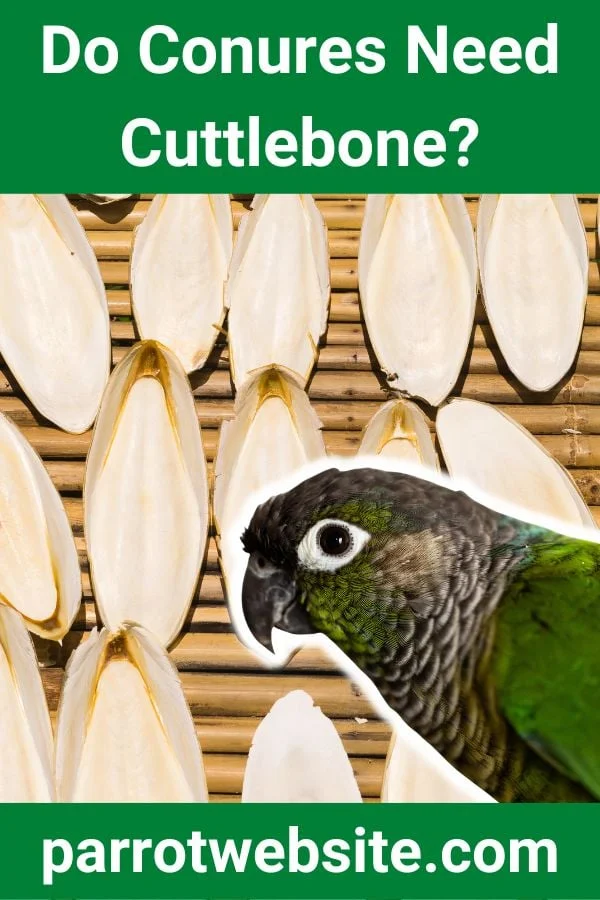
To understand why your conure requires a cuttlebone, one must first demystify the object itself. Despite the name, it is not a "bone" in the traditional sense of a vertebrate skeleton. The cuttlebone is an internal shell—a buoyant, gas-filled structure found in the cuttlefish (Sepia officinalis) and its relatives, the squid and octopuses, which fall under the taxonomic class Cephalopoda.
In the cuttlefish, this structure serves a specialized biological purpose: buoyancy control. By regulating the gas and liquid content within the chambered aragonite structure, the creature can navigate the water column with precision. Because these structures implode under the immense pressure found at depths exceeding 200 meters, cuttlefish are primarily inhabitants of shallower marine environments.
The substance of the cuttlebone is primarily aragonite, a crystalline form of calcium carbonate. This composition is what makes it so incredibly useful for both industrial and avian applications. For humans, the material has been utilized for centuries in jewelry casting, as a source of high-quality calcitic lime, and as an abrasive agent. For the domestic conure, however, it serves as a natural, readily available source of calcium and a vital tool for beak maintenance.
The Chronology of Avian Care: Why Cuttlebone Became Standard
The integration of cuttlebone into the domestic parrot’s environment did not happen by accident. As avian medicine evolved throughout the late 20th century, researchers and veterinarians began to identify a recurring health crisis in captive parrots: calcium deficiency and overgrown beaks.
In the wild, conures possess a diverse diet—foraging for various fruits, seeds, blossoms, and occasionally insects—which naturally provides a balanced spectrum of minerals. Furthermore, the constant interaction with diverse textures in the wild environment (such as wood, stone, and bark) serves to naturally abrade their beaks.
When parrots were moved into domestic settings, these natural wear-and-tear mechanisms were lost. Owners often fed birds high-fat, low-nutrient seed mixes, leading to chronic malnutrition. The introduction of the cuttlebone—a practice adopted from the poultry industry—became a standardized recommendation in the 1970s and 80s to bridge the gap between captive diets and natural nutritional requirements. Over decades, it has remained the gold standard for supplemental calcium and beak grooming, proven by its consistent use in both home aviaries and professional breeding facilities.
Supporting Data: Beak Health and Calcium Metabolism
The necessity of the cuttlebone is supported by the physiological reality of the conure’s beak. A parrot’s beak is composed of keratin, the same protein that constitutes human fingernails. Unlike the human nail, however, the beak grows continuously throughout the bird’s life.
The Mechanism of Beak Maintenance
A healthy conure must engage in "grinding" or "chewing" behaviors to manage the rate of keratin growth and to remove the outer, peeling layers of the beak. Without an abrasive surface like a cuttlebone, the beak can become overgrown, brittle, or develop uneven edges, which can lead to difficulty in eating or preening.
Calcium: The Silent Necessity
Calcium is the most abundant mineral in a bird’s body, and its importance cannot be overstated. It is vital for:
- Skeletal integrity: Preventing metabolic bone disease.
- Neuromuscular function: Assisting in proper nerve impulse transmission.
- Egg production: Female conures require significant calcium stores to form eggshells.
- Blood clotting: Calcium is a necessary catalyst for coagulation.
Because many commercial pellets or seed diets are either deficient in bioavailable calcium or poorly balanced, the cuttlebone acts as a "safety net." While the bird does not "eat" the cuttlebone in the traditional sense, they ingest fine particles while grinding their beaks. This slow-release calcium supplementation is safer than synthetic additives, as birds are generally adept at regulating their own intake based on their physiological needs.
Official Perspectives: Veterinary Consensus
Leading avian veterinarians and nutritionists emphasize that while the cuttlebone is not a substitute for a balanced, high-quality diet, it is an essential enrichment tool. There is no significant clinical literature suggesting that cuttlebone is harmful to healthy conures.
The primary concern raised by some clinicians is the potential for contaminated sources. Because cuttlebones are harvested from the ocean, owners are encouraged to purchase them from reputable pet supply manufacturers that ensure the bones are cleaned, sanitized, and free of heavy metals or salt buildup.
Veterinary behavioralists also point out that the act of chewing the cuttlebone is mentally stimulating. For a highly intelligent species like the conure, the sensory experience of destroying a piece of natural material is deeply satisfying and helps prevent the development of stereotypic behaviors—repetitive, compulsive actions often born of boredom.
The Practicalities: Proper Placement and Maintenance
For the owner, the challenge lies in proper installation. A cuttlebone left at the bottom of the cage is likely to become soiled with droppings or ignored entirely.
Strategic Installation
To maximize the utility of the cuttlebone, it should be mounted securely to the cage bars.
- Horizontal or Vertical? While either is acceptable, mounting it horizontally at a height where the bird can stand comfortably allows the conure to apply more leverage during the grinding process.
- Fastening: Use stainless steel hardware or plastic zip ties. If using zip ties, ensure the excess length is trimmed to prevent the bird from getting a toe or wing caught.
- Holes: Many commercial cuttlebones come with a plastic holder or pre-drilled holes. If not, carefully drilling a hole through the softer end of the bone is an easy fix.
Longevity and Replacement
One of the most attractive features of the cuttlebone is its durability. As a mineral-based product, it does not expire or spoil. It can remain in the cage until it has been entirely consumed or reduced to a fragile, unusable state.
Owners should monitor the state of the bone during routine cage cleaning. If the bone becomes heavily soiled, it is best to replace it. For most households, keeping a supply of three or four cuttlebones on hand ensures that the bird is never without this vital tool.
Addressing the Alternatives: Mineral Blocks vs. Cuttlebone
In the pet market, mineral blocks are often marketed as a superior alternative to cuttlebone. However, this is largely a marketing claim rather than a biological reality.
Mineral blocks are often compressed powders containing a variety of trace minerals, but they lack the specific texture and structural integrity of the cuttlebone. They are often too soft, crumbling under minimal pressure, or conversely, too hard, causing the bird to lose interest. While mineral blocks can provide a broader spectrum of trace elements, they do not match the efficiency of the cuttlebone for the specific purpose of beak grooming.
For the optimal health of your conure, a "best of both worlds" approach is recommended: provide a cuttlebone for beak maintenance and calcium, and ensure that the bird’s primary diet is fortified with a wide range of vegetables, fruits, and high-quality pellets to cover any trace mineral gaps that a simple mineral block might otherwise claim to fill.
Implications for the Future of Parrot Husbandry
As we look toward the future of avian care, the emphasis is shifting toward "naturalistic husbandry"—the idea that our domestic pets should have access to items that mimic their wild environments. The cuttlebone is a prime example of this philosophy. By providing an object that serves a dual purpose—nutritional supplementation and behavioral enrichment—we allow our conures to engage in species-typical behaviors.
The simplicity of the cuttlebone is its greatest strength. It does not require electricity, it does not rely on complex chemical formulas, and it does not demand expensive maintenance. It is a natural product that speaks to the ancestral needs of our parrots.
In conclusion, if you are a conure owner, the inclusion of a cuttlebone in your bird’s cage should be non-negotiable. It is a small, inexpensive, yet profoundly effective way to support your companion’s skeletal health, maintain their beak in prime condition, and provide a moment of tactile joy in their daily life. By ensuring this simple, calcium-rich tool is always available, you are taking a significant, meaningful step in ensuring your conure leads a long, healthy, and vibrant life.