For centuries, parrots have captivated humans with their vibrant plumage, mimicry, and profound capacity for social connection. Yet, as we deepen our bonds with these avian companions, misconceptions often arise—particularly regarding how they express emotion. Many owners, witnessing moisture around their bird’s eyes, have wondered: Do parrots cry when they are sad?
While the anthropomorphic urge to equate a bird’s tear production with human grief is understandable, the reality is rooted in complex biological functions rather than emotional release. Understanding the distinction between physiological ocular health and behavioral expressions of distress is vital for every avian guardian.
The Biological Reality: Why Parrots Produce Tears
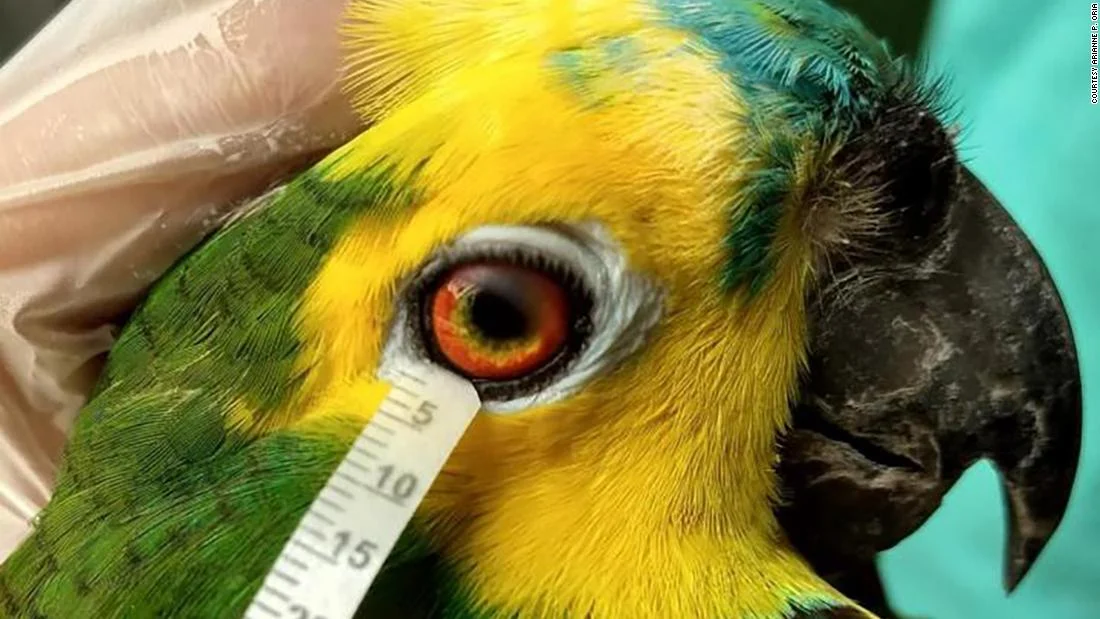
To understand why a parrot might appear to be "crying," one must first examine the anatomy of the avian eye. Parrots possess tear ducts and a specialized organ known as the Harderian gland, located on the upper surface of the eye.
The Function of the Harderian Gland
Unlike humans, who produce tears as an emotional response to sadness or frustration, parrots utilize the Harderian gland for strictly physiological maintenance. The tears produced by parrots share a remarkably similar electrolyte composition to human tears, containing a sophisticated mixture of water, sodium, calcium, urea, chloride, and proteins.
This fluid is essential for:
- Corneal Lubrication: The tear film consists of three distinct layers—mucus, water, and oil—which, when spread by blinking, maintain the integrity of the cornea.
- Debris Removal: Tears act as a self-cleaning mechanism, flushing out dust, dander, and foreign particulates that could otherwise cause infection.
- The Involuntary Reflex: The Harderian gland is highly sensitive to light and environmental stimuli. When a bird perceives a threat, an involuntary blink reflex is often triggered, causing the gland to secrete tears. This is not a conscious choice by the bird, but a protective evolutionary adaptation designed to keep the visual system clear for potential flight or defensive maneuvers.
The Language of Distress: How Parrots Communicate
Because parrots do not "cry" in the human sense, they rely on a diverse repertoire of vocal and physical cues to signal distress. As highly social, flock-oriented animals, their emotional state is deeply tied to their environment and their relationship with their human "flock."
1. Vocalization Patterns
When a parrot is upset, it will often deviate from its normal vocal patterns. While loud screams can be a natural behavior, a sudden, persistent increase in the volume or intensity of calls is a red flag. This behavior is often an attempt to alert the flock to a perceived danger or a demand for attention when the bird feels neglected or fearful. Owners should observe whether these calls are accompanied by other signs of agitation.
2. Body Language and Repetitive Movements
Parrots are masters of non-verbal communication. A bird that is distressed may engage in repetitive head movements—such as shaking the head as if saying "no" or tilting it at odd angles—to signal discomfort or anxiety. Furthermore, the way a bird holds its wings can provide significant insight into its mood.
An agitated or frightened bird will often "mantle"—holding its wings away from its body. This posture serves two purposes: it makes the bird appear larger to a perceived predator and protects the sensitive wing feathers from damage. If a parrot is puffing its feathers, raising its tail, and mantling, it is in a state of high arousal; in such cases, it is best to allow the bird space until it calms.
3. Aggression and Biting
Biting is perhaps the most misunderstood behavior in the avian world. While often labeled as "aggression," biting is usually a defensive or communicative act. It may occur when a bird feels its territory is being encroached upon, or it can be a response to overwhelming frustration caused by boredom or a lack of mental stimulation. In a mating context, mild biting can even serve as a bonding ritual, though this should never be confused with defensive biting triggered by fear.
4. Physiological Symptoms: Appetite and Feathers
A sudden loss of appetite is one of the most concerning indicators of stress. Changes in environment, such as moving to a new home or the introduction of a new pet, can trigger a "stress-fast." If a bird stops eating, it is a medical emergency that requires immediate intervention by an avian veterinarian.
Additionally, owners should inspect their bird’s feathers for "stress bars." These are horizontal black lines visible on the plumage, caused by the intermittent constriction of blood flow to the feather follicle during periods of high physiological or psychological stress. They serve as a permanent record of a bird’s past periods of instability.
Chronology of Domesticated Avian Care
The history of parrots in human households spans thousands of years, yet our understanding of their emotional needs has evolved significantly.
- Ancient Period: Parrots were prized primarily for their exotic beauty and ability to mimic, often treated as status symbols rather than social companions.
- 20th Century: The rise of avian veterinary medicine began to highlight the "intelligence gap." Researchers discovered that species like the African Grey and the Cockatoo possess cognitive abilities equivalent to that of a human toddler.
- Modern Era: We now recognize that the "lonely bird" is a clinical reality. Scientific literature has documented that separation from a bonded partner or an enriched environment can lead to genuine clinical depression in parrots, manifesting in self-mutilation (feather plucking) and extreme withdrawal.
Supporting Data: Why Environment Matters
Avian behaviorists consistently note that the majority of "bad" behaviors in parrots are actually symptoms of an unmet need. Data from organizations such as the Association of Avian Veterinarians suggests that a significant percentage of behavioral consults are resolved simply by increasing environmental complexity.
Key Environmental Factors:
- Socialization: Parrots require active engagement. Isolation is the primary catalyst for chronic stress.
- Foraging Opportunities: In the wild, parrots spend the majority of their day searching for food. Providing puzzle feeders mimics this natural instinct, reducing boredom-induced stress.
- The "Safe Zone": Every parrot requires a designated space—usually a cage or a specific perch—where they feel entirely secure and undisturbed.
Official Perspectives: The Role of the Avian Veterinarian
The consensus among avian health experts is clear: if you suspect your bird is distressed, do not attempt to "wait it out."
"Parrots are prey animals," says Dr. Elena Vance, a specialist in avian medicine. "They are evolutionarily hardwired to mask illness and severe stress until it reaches a critical point. By the time an owner notices a change in demeanor, the bird has often been struggling for some time. A professional consultation is the only way to rule out underlying physiological pathology."
When visiting a veterinarian, owners should be prepared to provide a detailed history, including:
- Recent environmental changes (new family members, furniture placement, or schedule).
- Dietary records (vitamin deficiencies can mimic behavioral distress).
- Baseline behavior (what is considered "normal" for that specific individual).
Implications for Owners
The journey of owning a parrot is a long-term commitment that requires a paradigm shift in how we view "pet" behavior. If you see your parrot with tears in its eyes, take it as a reminder of the complex, fragile, and intelligent nature of the creature in your care.
Instead of seeking an emotional equivalent to human crying, focus on the holistic well-being of the bird. A healthy, happy parrot is one that is mentally stimulated, physically active, and socially secure. By providing a stable environment, a varied diet, and consistent, gentle interaction, owners can mitigate the risks of stress-related disorders and ensure that their feathered companions live full, vibrant lives.
If your bird displays signs of persistent distress—such as self-plucking, extreme lethargy, or repetitive, frantic movements—the most responsible action is to consult an avian veterinarian. Your bird cannot tell you in words that it is struggling, but its behavior will always provide the clues you need to ensure its health and happiness.