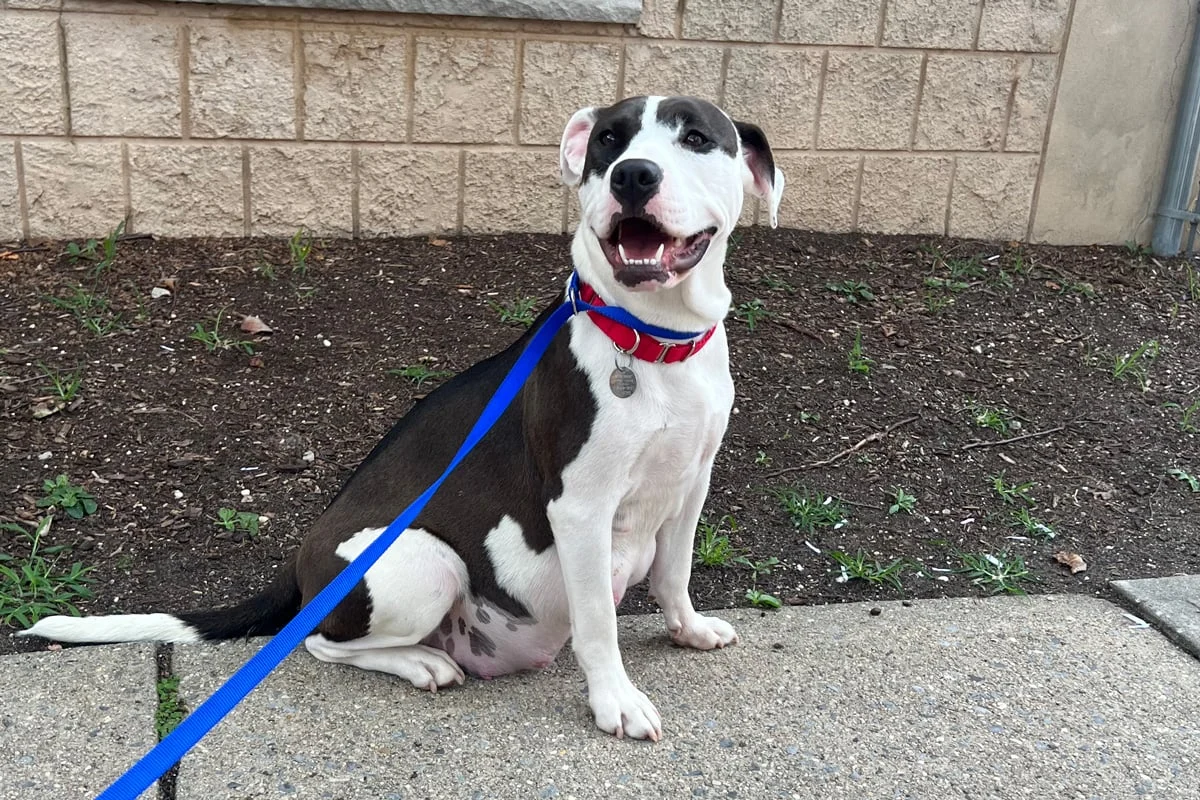
Main Facts: A Story of Survival
In the high-stakes world of animal rescue, the arrival of a pregnant dog often signals a race against time. For Jigsaw, a young canine who had already tasted the bitterness of abandonment, that race was particularly harrowing. Arriving at North Shore Animal League America in a state of profound terror and physical vulnerability, Jigsaw was little more than a puppy herself.
In many municipal shelters across the United States, resources are stretched to the breaking point. Consequently, pregnant animals are statistically among the most likely candidates for euthanasia due to the intensive space and medical requirements their care entails. Jigsaw, however, was spared this fate. Her journey—from an Alabama rescue to an Oyster Bay surrender, and finally to the safety of the Animal League America Sponsorship Nursery—serves as a poignant case study on the transformative power of institutional support and the critical role of specialized maternal care in animal welfare.
Chronology: A Path Through the Shadows
Jigsaw’s history is a sobering reminder of the instability that many rescued pets face. Her life began with a glimmer of hope when she was adopted from a rescue organization in Alabama. However, that security was short-lived. Through circumstances that highlight the ongoing challenges of pet retention, her owners eventually relinquished her to the Oyster Bay Animal Shelter.
At the time of her surrender, Jigsaw was not only homeless but pregnant. She was a vulnerable animal in a cold, unfamiliar environment, exhibiting signs of severe anxiety. The transition to Animal League America marked the turning point in her life. Upon arrival, the staff observed that while she was physically healthy enough to survive, her emotional state was fragile. She was timid, hesitant to engage with humans, and clearly overwhelmed by her circumstances.
The rehabilitation process was not instantaneous. It required a delicate balance of medical oversight and behavioral patience. Over the ensuing weeks, the staff at the Sponsorship Nursery provided the consistency Jigsaw lacked. Slowly, the walls began to crumble. Her timid demeanor gave way to playfulness; her fear was replaced by affection. The staff noted a particularly endearing transformation: Jigsaw, despite her stature, began to exhibit the classic behaviors of a "lap dog," seeking out physical closeness and reassurance from her human caregivers. This emotional thaw culminated in the safe and successful delivery of eight healthy puppies, marking the beginning of a new chapter for the entire family.
Supporting Data: The Vitality of the Sponsorship Nursery
The success of Jigsaw’s story is not an isolated incident; it is a direct byproduct of the Pet Sponsorship Program. This initiative is designed to address the specific, high-cost needs of vulnerable mothers who arrive at the shelter with nowhere else to go.
According to animal welfare data, the neonatal period is the most dangerous time for both mothers and pups in a shelter environment. The Sponsorship Nursery functions as a bridge, providing:
- Nutritional Support: Specialized diets required to support both the mother’s recovery and the rapid growth of her nursing litter.
- Medical Oversight: Constant monitoring to prevent common shelter-acquired illnesses that can be fatal to newborns.
- Behavioral Rehabilitation: A low-stress environment that allows the mother to bond with her litter without the external pressures of a loud or overcrowded kennel.
For every dollar invested in these programs, the "return" is measured in saved lives. In Jigsaw’s case, the survival of her eight puppies was contingent upon her own recovery. By stabilizing the mother, the nursery effectively secured the futures of nine animals simultaneously.
Official Responses: The Caregiver’s Perspective
The rehabilitation of Jigsaw was managed by a team of dedicated professionals who see hundreds of animals pass through their doors, yet Jigsaw left a distinct impression. Joanna Wagner, the Isolation & Rehab Manager at Animal League America, provided insight into the dog’s remarkable resilience.
"Considering how scared she was when she first arrived, the fact that she never showed any fear aggression toward us was quite impressive," Wagner stated. "It just goes to show that she really wanted love and safety."
Wagner’s reflection underscores a vital principle in animal psychology: aggression in shelters is frequently a defensive manifestation of extreme fear. By removing the threat and providing a consistent, loving environment, the staff allowed Jigsaw to bypass her "fight or flight" instincts and lean into her maternal ones. "She was a great mom," Wagner added, noting that the bond Jigsaw formed with her puppies was a testament to her inherent gentleness and the success of the rehab program.
Implications: The Broader Landscape of Animal Welfare
Jigsaw’s story serves as a microcosm for the broader challenges facing the animal rescue community. The "abandonment-to-nursery" pipeline illustrates why public support for animal welfare organizations is not merely a charitable act, but a societal necessity.
The Cost of Abandonment
When owners surrender animals, particularly those that are pregnant or geriatric, the burden of care shifts entirely to the nonprofit sector. Without specialized programs like the Sponsorship Nursery, the survival rate for these litters would plummet. The implication here is that community-based support—through donations and volunteering—is the primary factor preventing mass euthanasia in local shelters.
The Power of Advocacy
Jigsaw’s story highlights the need for continued education regarding pet ownership. The fact that she was adopted and then surrendered suggests a need for better pre-adoption counseling and post-adoption support services. Organizations are increasingly looking at "surrender prevention" as a way to keep families together, but when that fails, the existence of a high-quality "safety net" is the final line of defense.
A Multiplier Effect
The most profound takeaway from this event is the multiplier effect of compassion. By choosing to invest in the health and psychological well-being of one pregnant dog, the Animal League provided a foundation for eight additional lives to begin with a clean slate. Each of those eight puppies will eventually go to a forever home, potentially impacting the lives of eight families.
Conclusion: A Future Built on Hope
Jigsaw’s journey from an Alabama rescue to a frightened surrender, and finally to a thriving mother in the Sponsorship Nursery, is a powerful narrative of redemption. It challenges the stigma often associated with surrendered animals and highlights the incredible capacity for recovery that even the most traumatized dogs possess.
For supporters of animal welfare, Jigsaw stands as a representative for the thousands of "forgotten" mothers currently residing in shelters across the country. Her story is not just about the past—the fear, the uncertainty, and the move from home to home—but about the future. It is a reminder that with the right resources, the right people, and a commitment to animal dignity, the cycle of abandonment can be broken.
Because Jigsaw was given a chance, eight more lives have one, too. The legacy of her survival will continue to grow as her puppies reach maturity and find their own homes, proving that even in the face of overcrowded shelters and limited resources, there is always room for a story with a happy ending.
The work of the Sponsorship Nursery continues, fueled by the knowledge that every mother helped is a victory against the odds. As we look at the progress of Jigsaw and her litter, we are reminded that our collective support does more than just keep an animal alive; it provides the quiet, safe space where love can finally take root.