For many cat owners, discovering a puddle or a pile outside of the designated litter box is a moment of pure frustration. It is common to interpret this behavior as an act of rebellion, spite, or stubbornness. However, feline behavior experts emphasize that cats do not operate on human moral codes. When a cat chooses to eliminate elsewhere, they are not trying to punish their owner; they are responding to a specific, often urgent, set of environmental or physical stimuli.
Understanding the root cause of this behavior is the critical first step in restoring harmony to your home. By shifting the perspective from "my cat is being difficult" to "my cat is communicating a problem," owners can effectively identify the underlying issue and implement the necessary solutions.
The Core Facts: It’s Never Spite
The most significant barrier to solving litter box avoidance is the anthropomorphic assumption that the cat is acting out. Cats are creatures of habit and survival. They repeat behaviors that provide them with safety, comfort, or relief. If a cat is avoiding their box, it is because, from their perspective, the box has become a source of discomfort, danger, or physical impossibility.
The Biological Perspective
In the wild, cats bury their waste to avoid attracting predators or alerting potential prey to their location. This instinct remains sharp in our domestic companions. When a litter box fails to meet their standards of safety or cleanliness, they must find an alternative "safe" location. By viewing the problem as a logical, albeit inconvenient, decision made by the cat to ensure their own survival or comfort, owners can move past frustration and into problem-solving mode.
Chronology of an Investigation
When a litter box issue arises, the resolution process should follow a systematic, chronological approach. You cannot "train" a cat out of an issue caused by a medical condition, nor can you "discipline" them out of fear.
Step 1: The Veterinary Rule-Out
Before making any environmental changes, the first priority is a professional veterinary evaluation. Medical issues are frequently the primary driver for sudden changes in elimination habits. Conditions such as feline lower urinary tract disease (FLUTD), bladder infections, kidney issues, diabetes, or painful arthritis can make the act of urinating or defecating excruciating. If a cat associates the litter box with pain, they will naturally avoid it. A vet visit ensures that you aren’t ignoring a treatable health crisis.
Step 2: Evaluating the Environment
Once a clean bill of health is confirmed, the investigation turns to the home environment.
- Cleanliness Audit: Is the box being scooped twice daily? Is the litter type preferred by the cat?
- Accessibility Check: Is the box tucked into a basement or a noisy laundry room?
- Social Dynamics: Is there a tense relationship with another pet in the house?
Step 3: Implementing Systematic Changes
Once a potential cause is identified, adjustments should be made one at a time. If you change the litter, move the box, and clean the carpet all at once, you will never know which solution actually worked.

Supporting Data: Why Environment and Hygiene Rule
The feline sense of smell is significantly more acute than that of a human. A box that smells "clean enough" to a person may still be offensive to a cat.
The Science of Hygiene
Litter granules have a finite capacity for absorption. Over time, the plastic walls and bottom of the box can become permeated with odors that no amount of daily scooping can remove. Furthermore, the buildup of urine and feces on the box surface creates a bacterial breeding ground that is inherently unappealing.
Best Practices for Maintenance:
- Frequency: Scoop at least twice daily. If you have multiple cats, this frequency must increase.
- Deep Cleaning: On a regular basis, empty the entire box, discard the old litter, and wash the basin with mild, unscented soap. Avoid harsh chemicals like ammonia, which can mimic the smell of urine and further discourage the cat.
- Replacement: Plastic litter boxes are porous. Even with regular washing, they eventually develop micro-scratches that harbor bacteria and odors. Replace the actual litter box unit every 6 to 12 months.
Addressing Stress, Fear, and Conflict
In multi-cat households, the litter box is often the focal point of social tension. If one cat is being bullied or "ambushed" by another while they are in the vulnerable position of using the box, they will quickly develop an aversion to that specific location.

The "Trap" Phenomenon
Covered litter boxes, while popular with owners for aesthetics, are often perceived by cats as "traps." If a cat cannot see their surroundings while inside, they feel vulnerable. If another pet is stalking them, the lack of an escape route makes the box a dangerous place to be.
Guidelines for Multi-Cat Success:
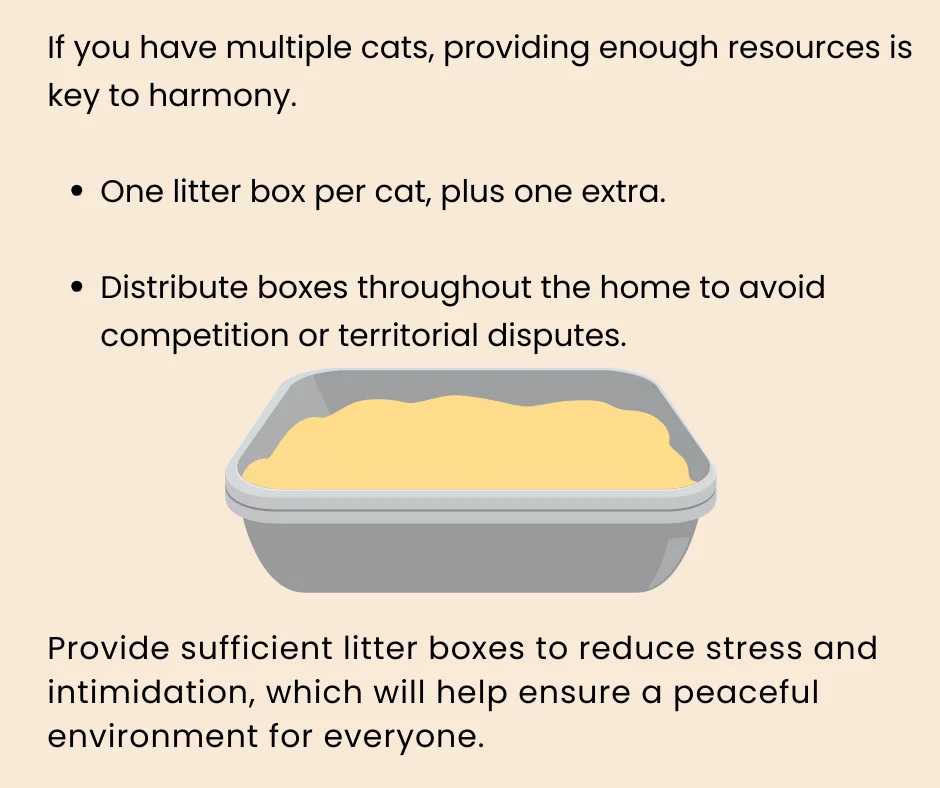
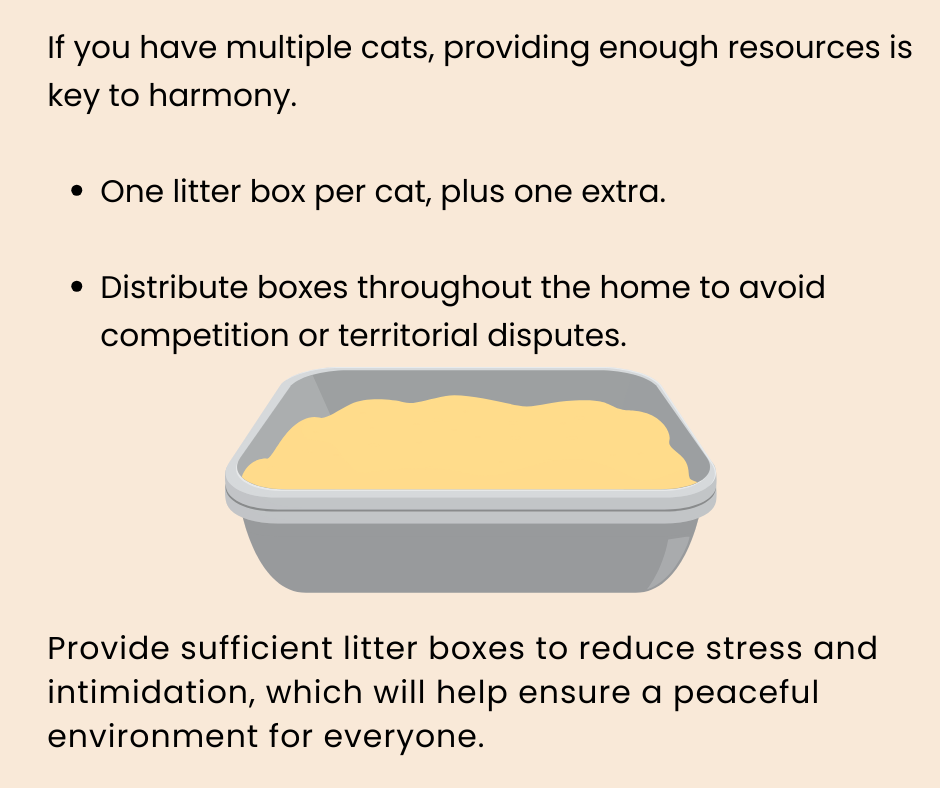
- The N+1 Rule: You should provide one more litter box than you have cats. If you have two cats, you need three boxes.
- Strategic Placement: Boxes should be placed in various locations throughout the home—never clustered in one room. This allows cats to access a safe box without having to cross "hostile" territory or navigate past an aggressive housemate.
- Open Access: Ensure that at least some of your litter boxes are uncovered. This provides the cat with 360-degree visibility, which drastically reduces anxiety and prevents the feeling of being cornered.
Implications for the Aging Cat
As cats enter their senior years, the criteria for a "good" litter box change significantly. Arthritis and joint stiffness make climbing into a high-sided box or navigating stairs to reach a basement box a significant burden.
Modifications for Senior Felines
- Low-Entry Boxes: Utilize boxes with very low sides or use a shallow tray to minimize the physical effort required to enter.
- Accessibility: If your cat lives primarily on the main floor, the litter box must be on the main floor. Do not force an aging cat to traverse long distances or stairs to reach their bathroom.
- Supportive Measures: For cats with significant mobility issues, placing absorbent pads around the exterior of the box can catch any "near misses," making the transition easier for both the cat and the owner.
Professional Insight: Looking Through the Cat’s Eyes
Expert animal behaviorists, including renowned author Pam Johnson-Bennett, stress that the "why" is almost always tied to the cat’s internal experience. When a cat eliminates on a rug or a piece of laundry, they are not acting out of malice; they are likely choosing a surface that is soft, absorbent, or in a location where they feel safe and secure.

If your cat is eliminating in the dining room, consider why that spot might be preferable. Is it quiet? Is it in an area where they can see who is coming? Does the carpet feel better on their paws than the dusty, clumping clay in the box? By analyzing the chosen "alternative" location, you can often gain a direct clue into what the cat is missing in their litter box setup.
Conclusion: A Path Forward
Litter box avoidance is not a terminal diagnosis for your relationship with your cat. It is a puzzle that, when approached with patience and an objective eye, is almost always solvable.
The process requires you to be a detective:
- Rule out the medical: Don’t skip the vet.
- Audit the hygiene: Increase cleaning frequency and replace aging boxes.
- Evaluate the social climate: Ensure every cat has a safe, private place to go.
- Prioritize comfort: Make sure the boxes are accessible and stress-free.
By addressing the root cause—whether it is physical discomfort, poor hygiene, or environmental stress—you can restore your cat’s confidence in their litter box. Remember that your cat is doing their best to navigate their environment; by working with their instincts rather than against them, you can ensure a happy, healthy, and clean home for years to come.
Disclaimer: This article is intended for educational purposes and does not serve as a substitute for professional veterinary advice. If your cat is experiencing changes in elimination habits, please consult with your veterinarian to rule out underlying health concerns.