
For many cat owners, the vision of a "low-maintenance" pet often leads to the misconception that cats are self-sufficient entertainers. We provide a basket of fuzzy mice, a scratching post, and perhaps a window perch, then assume our feline companions are content to amuse themselves while we go about our day. However, leading animal behaviorists, including renowned expert Pam Johnson-Bennett, argue that this "set it and forget it" approach is a fundamental misunderstanding of feline biology.
Interactive play—where the owner is an active participant rather than a passive observer—is not merely a bonding exercise; it is a critical physiological and psychological requirement. Without it, the domestic cat, an apex predator confined to an indoor environment, is prone to a cascade of behavioral and physical health issues.
Main Facts: The Biological Imperative
At the heart of the issue is the "predatory sequence." Cats are hardwired for a specific biological cycle: stalk, chase, catch, eat, and rest. In the wild, this sequence is repeated multiple times throughout the day and night. When a cat lives indoors, the "hunt" is often replaced by a bowl of kibble that appears without effort.
When the instinct to hunt is suppressed, that pent-up energy does not simply vanish. Instead, it manifests as problematic behaviors:
- Destructive behavior: Shredding furniture or curtains as a substitute for clawing prey.
- Nocturnal hyperactivity: The famous "zoomies" that often occur at 3:00 AM, as the cat attempts to hunt shadows.
- Attention-seeking aggression: Biting ankles or ambushing owners as they walk through the house.
- Depression and lethargy: A lack of mental stimulation can lead to a cat that feels bored, unfulfilled, and physically sluggish.
The Chronology of a Perfect Play Session
To effectively manage a cat’s needs, owners must learn to structure play in a way that respects the natural hunting cycle. It is not enough to simply wave a toy in the air for five minutes. A professional-grade play session should follow a deliberate structure to ensure the cat feels a sense of accomplishment.
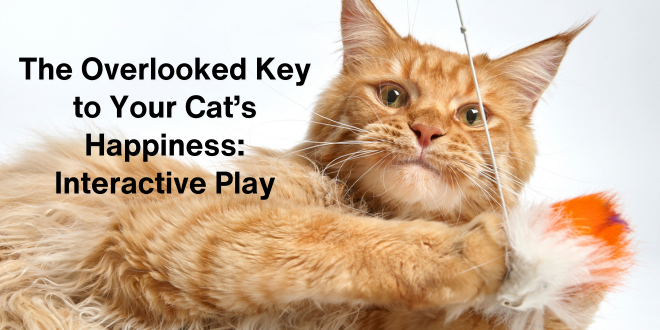
Phase 1: The Warm-Up (Stalk and Chase)
Begin the session by introducing the toy at a distance. Move it slowly, keeping it low to the ground. Mimic the movement of a mouse or a bird—darting behind furniture, pausing to "hide," and then twitching. This phase is about building anticipation. The cat should be crouching, eyes locked on the target, preparing for the pounce.
Phase 2: The Capture
The climax of the hunt is the catch. This is why interactive wand toys are far superior to laser pointers. A cat needs tactile feedback; they need to feel the "prey" under their paws and deliver a "killing bite." A laser pointer, while visually stimulating, provides no physical resolution, leading to intense frustration that can exacerbate anxiety rather than relieve it.
Phase 3: The Wind-Down
Never stop a play session abruptly. If you walk away while the cat is at peak arousal, they are left with "surplus" adrenaline. Instead, simulate the behavior of wounded or tired prey. Slow the movements down, allow the cat to make the final "kill," and gradually transition to the end of the session.
Phase 4: The Reward (Eat and Rest)
Once the play session concludes, the cycle must be closed. This is the ideal time to offer a high-value treat or a full meal. By providing food immediately after the hunt, you satisfy the biological urge to "consume the catch," which naturally triggers the cat’s parasympathetic nervous system, leading to a deep, restorative sleep.
Supporting Data: Why "You" are the Missing Component
Research into feline behavior consistently highlights that solitary play with inanimate toys cannot replace social, interactive play. While a cat might swat at a ball-in-track toy for a few minutes, it lacks the unpredictability of a living creature.

When you participate, you introduce social intelligence into the equation. You adjust the speed of the toy based on the cat’s fatigue, you offer encouragement, and you create a dynamic challenge that a stationary toy simply cannot provide. Studies have shown that households that implement two 15-minute daily interactive play sessions report significant decreases in multi-cat conflict, house-soiling (often caused by stress), and excessive meowing.
Professional Insights: Expert Recommendations
Pam Johnson-Bennett, a leading authority in cat behavior, emphasizes that the type of toy is secondary to the technique of the handler.
- Avoid the Laser Trap: While convenient, laser pointers should be avoided. If they are used, they must only be used as a "bait" to lead the cat toward a physical toy they can actually catch.
- Consistency is Key: A single 30-minute session once a week is far less effective than 15 minutes twice a day. Routine provides the cat with a sense of security and predictability.
- Tailoring to the Individual: Not every cat has the same prey drive. An older, sedentary cat may only need a slow-moving feather wand, while a young, high-energy breed like a Bengal may require more vigorous, aerial play.
Implications for Feline Health and Human-Animal Bond
The implications of ignoring this need are far-reaching. Beyond the obvious behavioral issues, sedentary cats are at a higher risk for obesity and associated conditions like feline diabetes and arthritis. By integrating these play sessions into the daily routine, owners are performing a form of preventative medicine.
Furthermore, the bond between human and cat is fundamentally altered by these sessions. In the wild, cats often hunt alone, but they share their kills or exist in social groups where play is a bonding ritual. By acting as the "prey provider" and the partner in the hunt, you are communicating with your cat in their own language. This builds trust, especially in shy or formerly feral cats who are learning to navigate a domestic environment.
Conclusion: A New Standard of Care
The goal of interactive play is not to exhaust the cat to the point of collapse; it is to engage their instincts in a controlled, satisfying, and confidence-building manner. It is a shift from viewing the cat as a passive accessory to viewing them as a complex, intelligent predator that requires a specific outlet for their natural drives.

For those looking to dive deeper into the science of feline behavior and specific techniques to manage difficult temperaments, the resources provided by experts like Pam Johnson-Bennett serve as an invaluable roadmap. By dedicating just 30 minutes a day to this pursuit, you are not just preventing boredom—you are ensuring a healthier, happier, and more harmonious life for your cat.
In a world where our pets give us so much unconditional affection, the gift of a proper "hunt" is the very least we can offer in return. It is an investment in your cat’s mental health, and for any responsible pet parent, it is a non-negotiable component of modern feline care.