
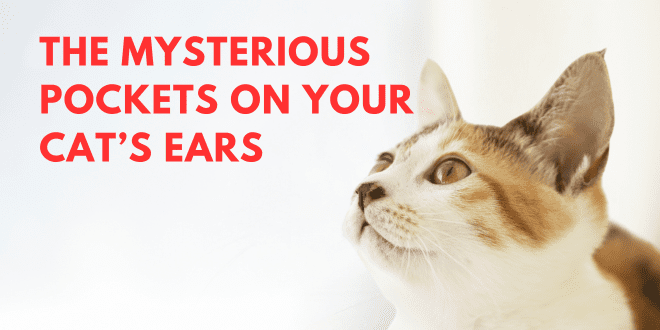
If you have ever spent a quiet afternoon grooming your cat or gently stroking their ears, you have likely encountered a peculiar anatomical curiosity: a small, skin-covered slit located at the lower base of the outer ear flap. To the casual observer, it looks like a design flaw—a tiny, misplaced fold of skin that seems to serve no immediate purpose. However, in the world of feline anatomy, this structure is a marvel of evolutionary engineering. Formally known as the cutaneous marginal pouch, it is colloquially and affectionately referred to as "Henry’s Pocket."
While its name sounds like a Victorian-era mystery, the structure itself is a subject of genuine scientific interest. As we delve into the mechanics of feline hearing and the evolutionary history of our domestic companions, we find that these small pockets are far more than just a quirky anatomical footnote.
Main Facts: What is Henry’s Pocket?
At its most basic level, the cutaneous marginal pouch is a fold of skin that forms a distinct, triangular pocket on the outer edge of a cat’s ear. It is present in all domestic cat breeds, though its visibility can vary depending on the thickness of the cat’s fur and the specific shape of the ear.
The pocket is not a wound, nor is it a sign of a developmental issue. It is a perfectly normal, healthy feature of feline anatomy. The structure consists of a thin flap of skin that creates a recessed space. While owners often worry that this looks like a "tear" in the ear, it is, in fact, a deliberate evolutionary feature that has persisted through generations of feline development.
Chronology: The History of Feline Ear Evolution
The evolutionary timeline of the cat suggests that the cutaneous marginal pouch is an ancient feature. While we cannot pinpoint the exact moment "Henry’s Pocket" appeared in the feline lineage, we know that it is shared by several species across the Felidae family.
Early Origins
The ancestors of modern cats—the small wildcats of the Near East—needed to be apex predators in dense, dark, or auditory-heavy environments. The development of the ear, arguably the most important sensory organ for a predator that hunts in low light, was critical. The pouch likely emerged as an adaptation to optimize sound reception.
Why "Henry"?
The origin of the moniker "Henry’s Pocket" remains one of the great mysteries of veterinary etymology. There is no historical record of a scientist named Henry who discovered the feature, nor is there a legendary cat named Henry associated with its first description. Some historians of biology suggest the name may have originated in 19th-century folklore or was simply a colloquialism adopted by breeders to make the clinical term "cutaneous marginal pouch" less intimidating for pet owners. It is a name that has stuck, surviving through decades of veterinary advancement, even as the specific reason for the name remains lost to time.
Supporting Data: The Biological Utility
Why would a cat need a pocket on its ear? While researchers have not reached a total consensus, several evidence-based theories explain the utility of this structure.
1. Sound Amplification and Directionality
Cats possess an incredible range of hearing, capable of detecting high-frequency sounds that are completely silent to the human ear. This is essential for detecting the ultrasonic squeaks of small rodents. The cutaneous marginal pouch is believed to act as a resonator. By altering the geometry of the ear, the pouch may help funnel specific high-frequency sound waves into the ear canal. Furthermore, it assists the cat in determining the precise location of a sound, a skill known as sound localization, which is vital for a hunter.
2. Enhanced Flexibility and Expression
Cats are masters of non-verbal communication. The ears play a primary role in signaling mood, intent, and aggression. When a cat flattens its ears—a sign of fear, anger, or defensive posturing—the structure of the ear flap must be flexible enough to fold tightly against the skull. The cutaneous marginal pouch provides an "extra" degree of skin elasticity. By allowing the ear to fold into a more compact shape, it reduces the surface area exposed to a potential attacker, protecting the delicate inner ear tissue during a conflict.

Comparative Anatomy: Is It Exclusive to Cats?
One of the most compelling pieces of evidence that this pocket serves an evolutionary purpose is that it is not exclusive to cats. Nature often repeats successful designs through convergent evolution.
- Canines: Many dog breeds, particularly those with naturally erect ears, possess a similar indentation at the base of their ear. While it is often less pronounced than in cats, it serves a similar function in terms of sound reception.
- Chiroptera (Bats): Bats, which rely on echolocation to navigate, have remarkably complex ear structures. Many species possess variations of the marginal pouch to assist in filtering and processing the complex echoes they rely on for survival.
- Mustelids: Weasels and other members of the Mustelidae family also exhibit these pouches. Given their high-speed, high-energy lifestyles and reliance on keen hearing to track prey in complex environments, the presence of these pouches suggests they provide a distinct advantage in predatory efficiency.
The Clinical Perspective: Implications for Health
While Henry’s Pocket is a natural feature, it is also a "blind spot" for pet owners. Because the pocket is small and tucked away, it can become a haven for issues that require veterinary attention.
The Hideout for Parasites
The depth of the pouch is a perfect, warm, and dark environment for pests. Ticks, in particular, are notorious for crawling into these folds, where they can latch on and go unnoticed for days. Ear mites also find these pouches to be an ideal breeding ground.
Infection and Bacteria
Because the pouch is difficult to clean, it can trap moisture, debris, and wax. If a cat suffers from an ear infection, bacteria or yeast can proliferate within the pocket, often leading to chronic inflammation that is difficult to treat with surface-level cleaning.
When to Consult a Veterinarian
If you notice your cat exhibiting any of the following, a trip to the vet is necessary:

- Frequent Scratching: If the cat is constantly pawing at the ear or shaking its head, it is a sign of irritation.
- Discharge or Odor: A foul smell emanating from the ear, or the presence of dark, coffee-ground-like debris, indicates ear mites or an infection.
- Inflammation: If the area around Henry’s Pocket appears red, swollen, or inflamed, it may be a sign of a localized infection or an embedded foreign body.
Veterinarians often use an otoscope to look deep into the canal, but they will specifically check the cutaneous marginal pouch as part of a routine physical exam to ensure no hidden parasites are present.
The Cultural and Scientific Legacy
The study of the cutaneous marginal pouch highlights a broader truth about pet ownership: the more we understand the biology of our companions, the better we can care for them. While it may seem like a triviality, the presence of Henry’s Pocket is a reminder of the cat’s lineage as a precision-engineered hunter.
For those interested in deepening their understanding of feline behavior and anatomy, experts like Pam Johnson-Bennett have provided extensive resources. Understanding why a cat moves, acts, or is built the way it is helps foster a stronger bond between the pet and the owner. Whether it is decoding the movement of an ear or understanding the function of a skin fold, every detail adds to the picture of the cat as a sophisticated, complex, and highly adapted creature.
In conclusion, Henry’s Pocket is a testament to the marvels of feline evolution. It is a bridge between the wild ancestors of the cat and the domestic pets we cherish today. While the mystery of its name may never be solved, its function as a vital component of the cat’s sensory and physical toolkit is undeniable. The next time you find yourself petting your cat, take a moment to appreciate this tiny, hidden marvel—and perhaps take a quick peek to ensure it remains clean and free of unwanted visitors.