
To the casual observer, the rhythmic vibration emanating from a cat’s chest is the ultimate signal of domestic bliss. It is the sound of a lazy Sunday afternoon, a curled-up companion, and a tranquil home. However, to the ethologist and the dedicated cat owner, the purr is a complex, multifaceted biological phenomenon that serves as a vital tool for survival, communication, and self-healing. While we often interpret this sound through the lens of human emotion, the reality is that the purr is a sophisticated mechanism that transcends the simple binary of "happy or sad."
Main Facts: Decoding the Mechanics of the Purr
At its most fundamental level, the purr is a repetitive, rhythmic sound produced by the rapid twitching of the muscles in the larynx, combined with the movement of the diaphragm. These muscles move at a rate of 25 to 150 vibrations per second. When the cat breathes, air passes over the vibrating muscles, creating the characteristic "hum."
While popular culture suggests that a purring cat is an inherently happy cat, science tells a different story. The purr is an involuntary—and sometimes voluntary—response to a variety of internal and external stimuli. It is a communication tool that acts as a social glue, a stress-reduction mechanism, and, remarkably, a physiological aid for physical maintenance.
The Spectrum of Purring
- The Contentment Purr: The most common form, usually associated with low-stress environments, grooming, and social bonding.
- The Distress Purr: Used during times of fear or physical pain. This is an evolutionary adaptation intended to self-soothe or signal to others that the cat is in a vulnerable state.
- The Solicitation Purr: A specific frequency used by cats to get their owners’ attention, often characterized by a high-frequency component that humans find difficult to ignore, similar to the frequency of a human baby crying.
Chronology: The Purr Across the Feline Life Cycle
The significance of the purr is not static; it evolves alongside the cat, beginning in the earliest, most fragile moments of life.
The Neonatal Period
Kittens are born into a world of darkness and silence, as they are both blind and deaf for the first week or two of their lives. In this state of total dependence, the mother’s purr serves as a vital navigational beacon. The vibrations allow the kittens to locate their mother for warmth and nursing. Shortly after birth, kittens begin to purr themselves—a soft, internal buzz that signals to the mother that they are healthy and well-fed. This early bonding mechanism is essential for the survival of the litter.
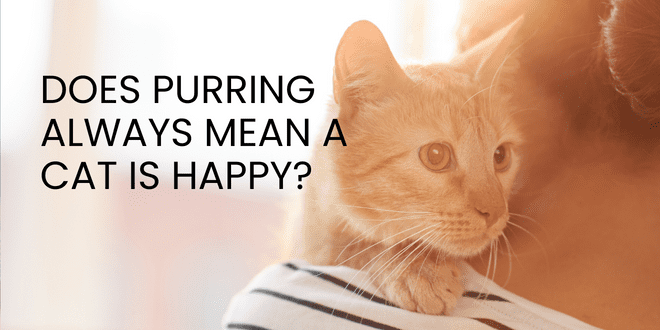
Adulthood and Social Dynamics
As the cat matures, the purr becomes a nuanced social signal. In multi-cat households, purring can be used as a "peace offering" or a sign of submission when meeting a dominant individual. By purring, a cat can effectively lower the temperature of a tense encounter, signaling that it poses no threat.
The Twilight Years
In older cats, the purr often takes on a different role. As cats age and face the aches of arthritis or reduced mobility, the purr is frequently employed as a therapeutic tool. It remains a constant companion, providing a sense of comfort during the final stages of life, proving that the behavior is as much about internal maintenance as it is about external communication.
Supporting Data: The Healing Power of Vibration
Perhaps the most fascinating aspect of feline behavior is the theory regarding the "healing purr." Scientific researchers have noted that the frequency of a cat’s purr—generally falling between 25 and 150 Hertz—is the exact range known to be therapeutic for human and animal health.
Acceleration of Bone and Tissue Repair
Studies in bio-mechanics have shown that sound frequencies in the 25–150 Hz range can improve bone density and promote the healing of tendons and muscles. This leads many experts to hypothesize that cats, who spend a significant portion of their day sleeping and inactive, use the low-frequency vibrations of their purr to keep their bones and tissues healthy and resilient. It is, in effect, a form of internal physical therapy that keeps the cat’s body ready for action, despite long periods of sedentary rest.
Pain Management and Labor
Veterinary observations confirm that female cats frequently purr throughout the labor process. While this may be viewed as an expression of distress, it is more accurately categorized as a self-soothing mechanism. By producing these low-frequency vibrations, the cat may be moderating her own pain levels, effectively using biological sound therapy to cope with the physical intensity of giving birth.

Official Perspectives and Expert Insight
For those seeking to deepen their understanding of these behaviors, the work of feline behaviorists, such as Pam Johnson-Bennett, remains the gold standard. In her extensive research, Johnson-Bennett emphasizes that we must look at the "whole cat" when interpreting a purr.
"We often anthropomorphize our pets," she notes. "We want to believe that the purr is always a ‘thank you’ for a treat or a scratch behind the ears. However, if a cat is at the veterinarian and is clearly terrified, yet still purring, that is not a sign of happiness. It is a sign of a cat trying to manage an overwhelming situation."
Expert consensus suggests that owners should observe the context of the purr. If a cat is purring while kneading, tail-flicking in a relaxed manner, and showing soft eyes, the purr is almost certainly a sign of contentment. If the cat is hunched, hiding, or panting, the purr is a desperate plea for self-comfort.
Implications for Cat Owners
Understanding that a purr is not always a positive indicator has significant implications for how we care for our feline companions.
- Increased Vigilance: If your cat begins to purr in situations where they are clearly in pain or distressed, do not assume they are "fine." Observe for other signs of illness, such as changes in appetite, litter box habits, or grooming routines.
- Respecting Boundaries: If a cat is purring while exhibiting signs of over-stimulation (such as tail twitching or ears pinned back), it may be time to stop the physical interaction. The purr in this case is a coping mechanism for the stress caused by the handling.
- Environmental Enrichment: Because purring is linked to stress management, providing a stable, enriched environment is the best way to ensure that your cat’s purrs remain, for the most part, indicators of genuine happiness.
The Uniqueness of the Individual
It is important to remember that not all purrs are created equal. Just as human voices vary, so too do feline purrs. Some cats possess a loud, rhythmic engine-like purr that can be heard across a room. Others have a "silent purr"—a vibration you can feel if your hand is on their chest, but which produces almost no audible sound. Neither is superior to the other; they are simply different expressions of the same biological marvel.

Conclusion: A Constant Companion
The feline purr remains one of nature’s most effective, albeit misunderstood, tools. It is a bridge between the physical and the emotional, a mechanism that facilitates healing, survival, and social harmony. By moving beyond the simplistic view that a purr equals happiness, we become more attuned to the subtle needs and complex internal lives of our cats.
Whether it is a tiny kitten seeking its mother, a mother cat in labor, or an elderly cat resting in a sunbeam, the purr is the constant, vibrating heartbeat of the feline experience. As owners, our job is to listen not just to the sound, but to the story the cat is telling us through that vibration.
For further reading and a deeper dive into the nuances of cat behavior, we recommend exploring the works of Pam Johnson-Bennett. Her literature offers a comprehensive roadmap for interpreting the language of cats, helping you foster a stronger, more informed bond with your feline companion.
For those interested in expanding their library of cat care knowledge, please refer to the curated list of books by Pam Johnson-Bennett available on Amazon.