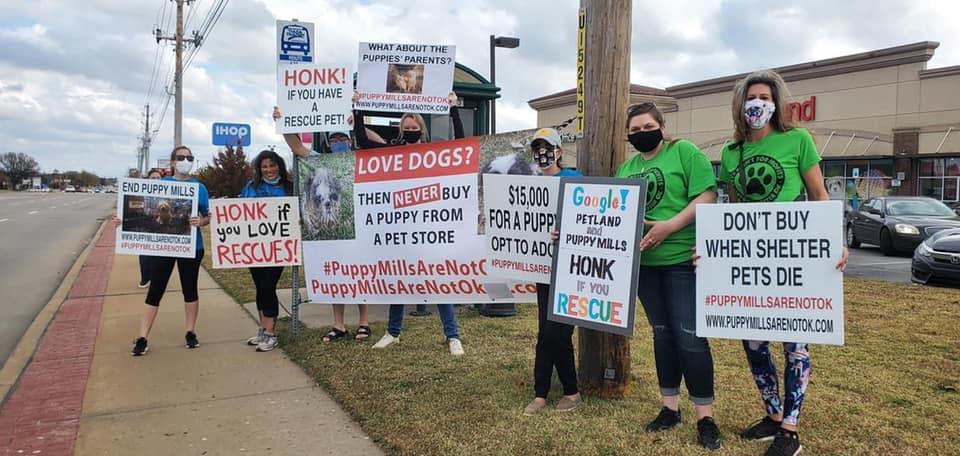
CHICAGO, IL — A coalition of prominent animal welfare organizations across the greater Chicago area has formally launched a high-stakes campaign urging national pet retailer Petland to immediately halt the sale of live rabbits. Led by the House Rabbit Society of Chicago (HRS Chicago), Red Door Animal Shelter, and It’s All About The Paws (IAATP), local rescue leaders state that commercial retail rabbit sales are directly fueling an escalating crisis of shelter overcrowding, abandoned pets, and catastrophic multi-family animal hoarding situations.
The campaign highlights a direct line between impulse retail purchases and severe community-wide animal welfare crises. Local advocates point to a recurring pattern: rabbits purchased impulsively from commercial storefronts are frequently mis-sexed by staff, leading to unsterilized pairings, exponential breeding, and eventual owner abandonment or tragic hoarding scenarios that stretch municipal and non-profit resources to their absolute limits.
Main Facts: The Retail-to-Rescue Pipeline
At the heart of the controversy is the commercial availability of small mammals in retail settings, which animal advocates argue promotes impulse buying without adequate education regarding the complex, long-term needs of domestic rabbits. Unlike cats and dogs, rabbits have delicate gastrointestinal systems, require specialized veterinary care, can live for a decade or more, and demand significant environmental enrichment.
When commercial retailers sell unsterilized pairs or misidentified genders to unprepared consumers, the biological result is rapid and overwhelming. A single pair of unspayed and unneutered rabbits can quickly multiply into dozens, shifting a household from well-intentioned pet ownership to a severe hoarding crisis in a matter of months.
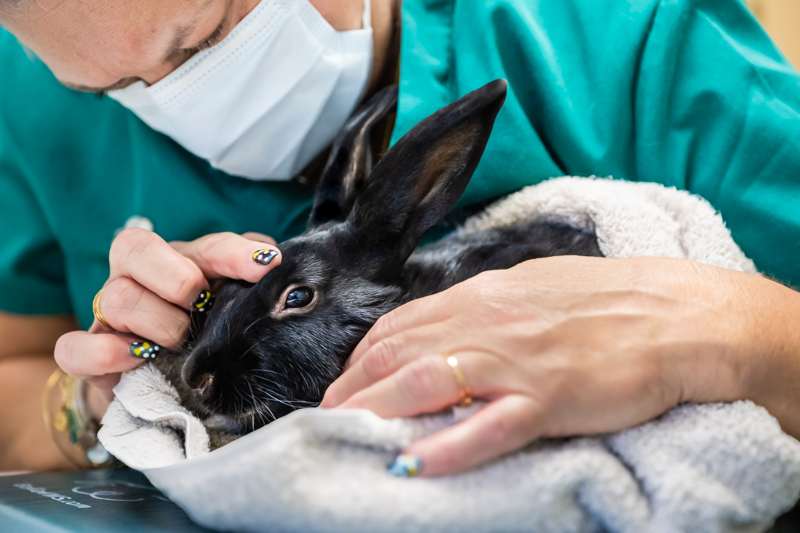
Local shelters report that their owner-surrender waitlists are at historic highs. With municipal facilities operating well over capacity, specialized rabbit rescues are absorbing the financial, physical, and emotional toll of cleaning up after commercial retail pipelines. Major national chains, including Petco and PetSmart, have long since transitioned away from selling live rabbits and other small mammals, instead partnering with local rescues to promote adoption. Advocacy groups are demanding that Petland follow suit and adopt modern, humane retail standards.
Chronology of Crisis: Two Landmark Schaumburg Hoarding Cases
The human and financial toll of this retail pipeline is starkly illustrated by two massive, resource-draining hoarding interventions in Schaumburg, Illinois, both of which trace their origins back to the same commercial storefront.
Case 1: The Extended-Stay Hotel Room Intervention (May 2021)
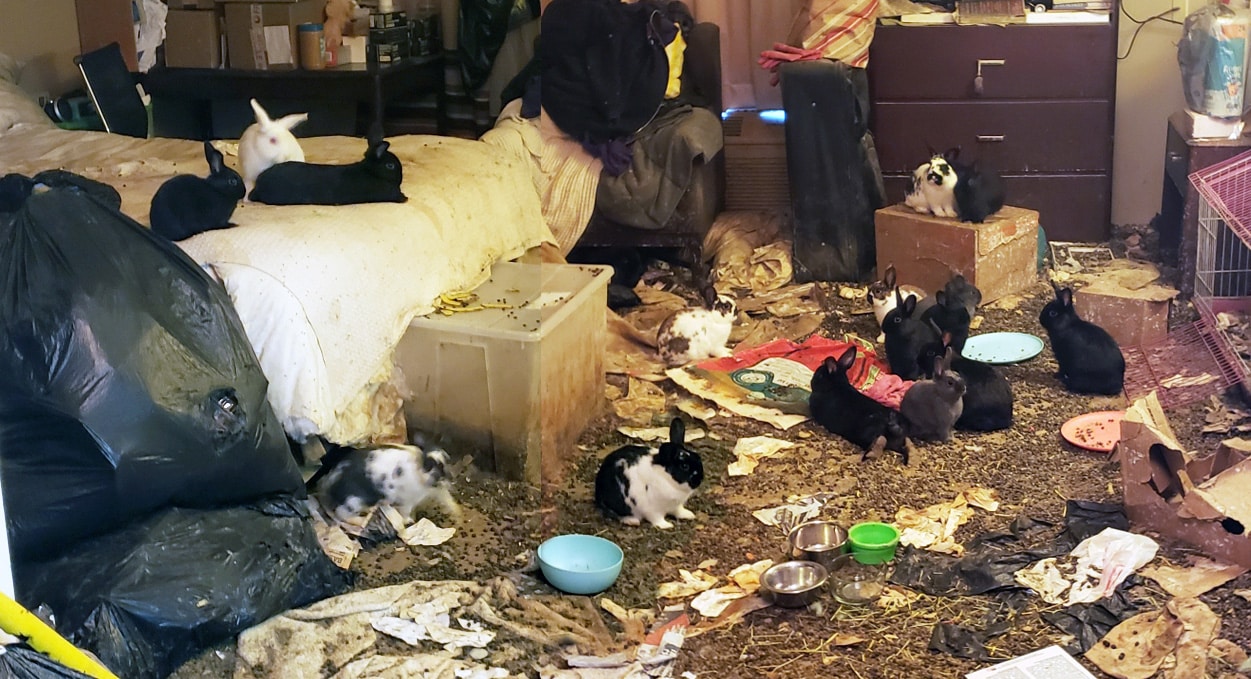
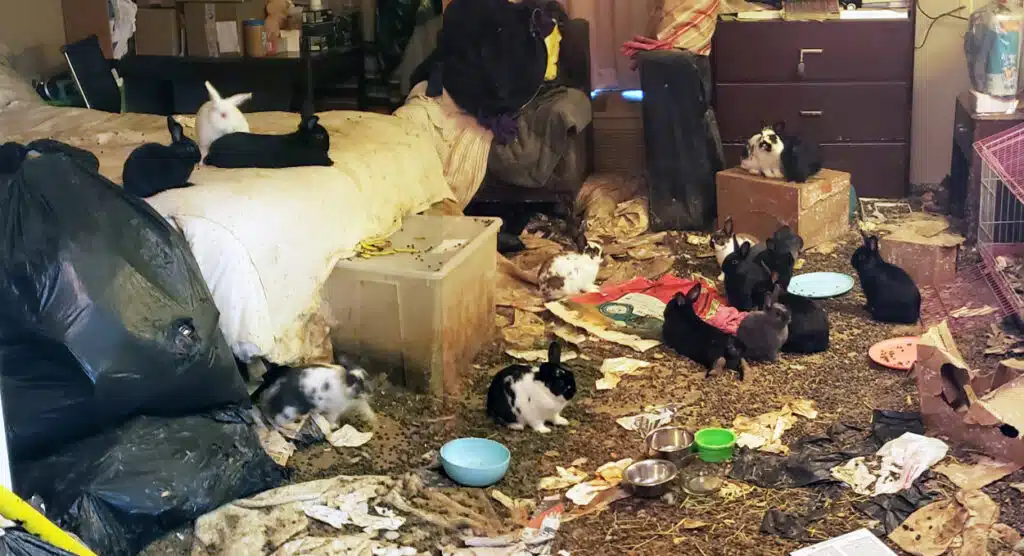
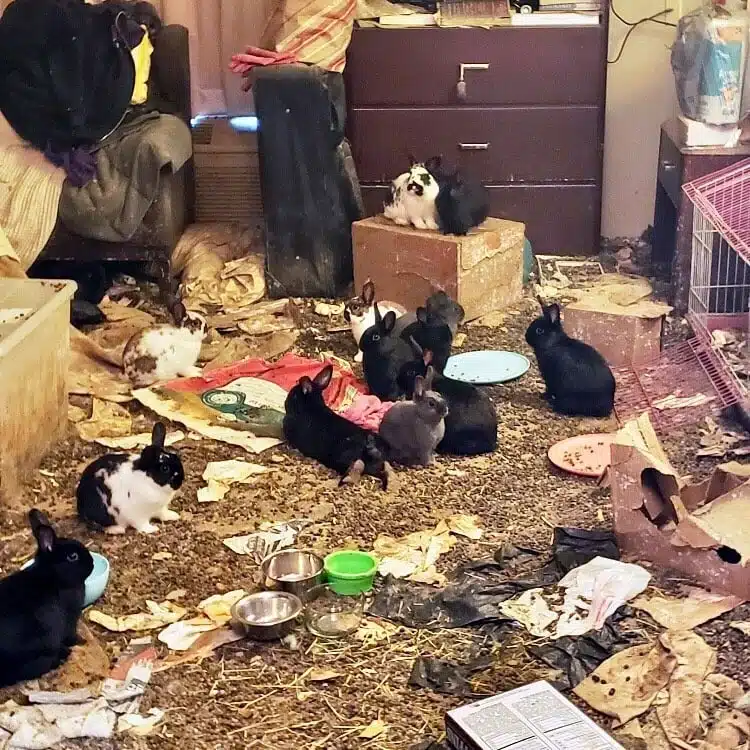
In May 2021, local animal responders faced a staggering crisis inside a long-term stay hotel room in Schaumburg. Crowded into the debris-filled space were 47 rabbits living in appalling, unsanitary conditions. Responders donned personal protective equipment—masks and gloves—to safely navigate the waste-strewn room, separate the sexes, and provide emergency food and hydration.
Of the 47 rabbits removed from the single hotel room, an astonishing 15 were pregnant. The logistical and financial burden fell heavily on regional non-profits:
Red Door Animal Shelter took in 22 rabbits, incurring immediate medical costs exceeding $7,000 to treat pregnancies, malnutrition, and behavioral issues.
DuPage County Animal Services took in the remaining 25 rabbits.
According to intake notes and statements from Red Door Animal Shelter, the caretaker of the animals reported that the entire crisis began with the purchase of the first two rabbits from Petland Hoffman Estates.
Case 2: The Single-Family Home Intervention (July 2023)
Just over two years later, history repeated itself in the same northern suburb. Animal rescue organization It’s All About The Paws (IAATP) responded to a single-family home in Schaumburg reported to be harboring dozens of rabbits.
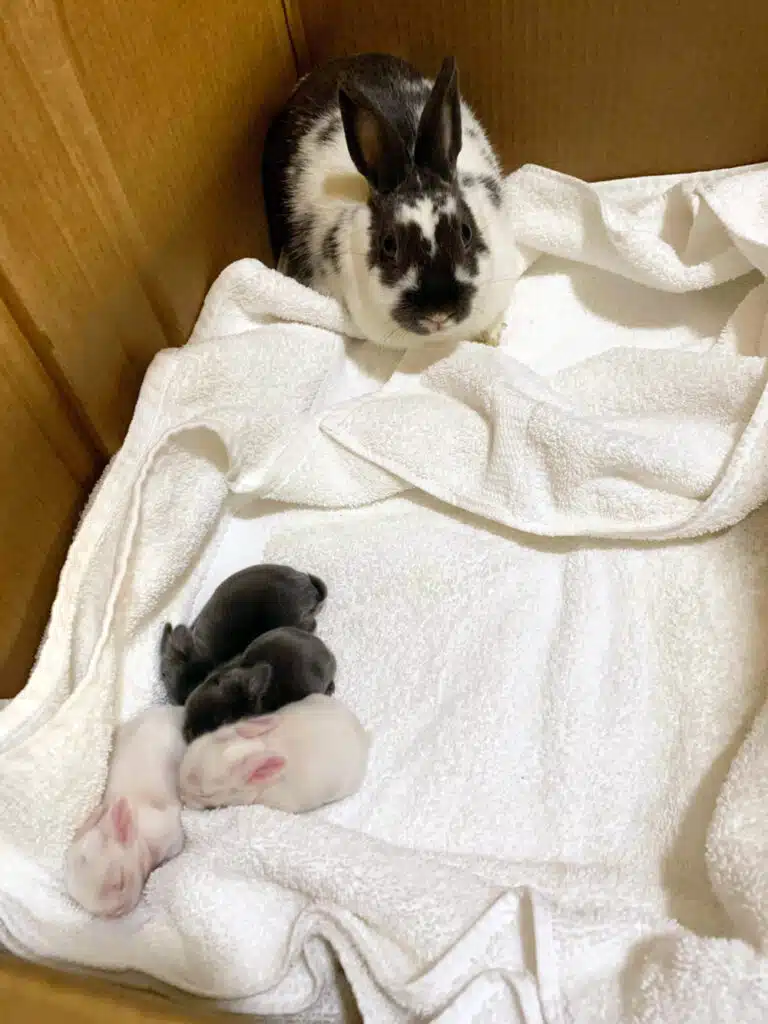
Working rapidly alongside local animal control, IAATP founder Erika Seibert and her team executed a massive removal operation. Within 24 hours, responders pulled 29 rabbits from the home, including multiple litters of vulnerable newborns. Investigators confirmed through interviews with the homeowners that the massive population explosion stemmed from an original pair purchased from the Petland Hoffman Estates location.
Recognizing the severity of the intake, IAATP coordinated an emergency multi-state and multi-agency placement network, transferring animals to HRS Wisconsin, Hoopy Haven Rabbit Rescue, and Lost Woods Animal Sanctuary to prevent euthanasia due to space constraints.
Supporting Data: The Hidden Costs of Small Mammal Retail
The quantifiable impact of these large-scale intakes on Chicagoland rescues cannot be overstated. While commercial operations profit from the upfront sale of animals, cages, and low-grade commercial feed, non-profit rescues shoulder the long-term rehabilitation expenses:
Exponential Multiplication: A single female rabbit (doe) can become pregnant as early as three to four months of age, with a gestation period of roughly 30 to 31 days. Litters typically range from 4 to 12 kits. Mis-sexed pairs sold by retail staff routinely result in generational inbreeding within months.
Skyrocketing Veterinary Bills: Routine spay and neuter surgeries for rabbits are more complex and costly than those for cats and dogs, requiring specialized exotic animal veterinarians. In major hoarding cases, medical expenditures routinely shatter non-profit emergency funds.
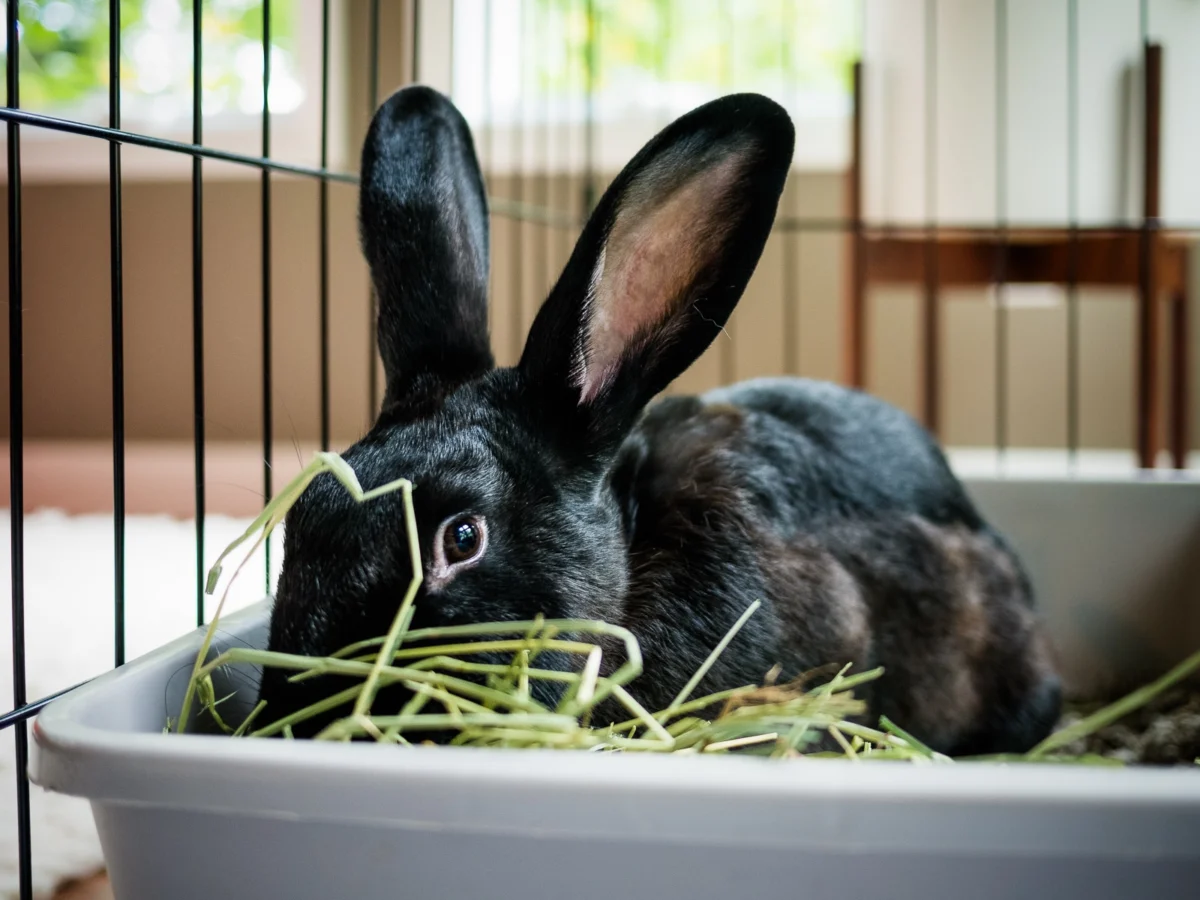
Foster and Facility Strain: Rabbits cannot be housed in standard cat or dog kennels without causing severe psychological stress. They require specialized pen setups, chew-proof housing, and specific dietary regimens consisting primarily of unlimited timothy hay and fresh greens.
Official Responses from Frontline Leaders
The leaders of Chicago’s premier animal welfare organizations have expressed deep frustration with corporate retail policies that prioritize profit margins over animal welfare.
"Petland is a major source of rabbits who later end up abandoned or in crisis… We regularly see mis-sexed pairs adopted from stores that lead to repeated litters. While Petland profits, rabbits suffer."
— Rachael Sanders, Director, HRS Chicago
Sanders emphasizes that the normalization of rabbits as "disposable" or "starter pets" in retail windows directly contributes to the cultural mindset that leads to outdoor abandonment. Domestic rabbits lack the survival instincts of wild cottontails and face almost certain death from predators, weather, or starvation if turned loose outdoors.
"We managed back-to-back mass-intake crises in Schaumburg—each beginning with owner-reported Petland-origin pairs—stretching volunteers, foster space, and medical budgets to the breaking point."
— Toni Greetis, Vice President, Red Door Animal Shelter
Gretis notes that volunteer burnout is a very real threat when shelters are forced to transition from daily adoption operations to emergency disaster-relief triage for hoarding cases on a recurring basis.
Broader Implications for Humane Reform in Illinois
The campaign against Petland’s live animal sales is part of a broader, nationwide movement toward ethical pet retail. Over the past decade, municipalities and states across the country have enacted retail pet store bans, prohibiting stores from selling commercially bred puppies, kittens, and rabbits, and instead encouraging shelter partnerships.
Animal advocates argue that the situation in Chicago serves as a microcosm of a national regulatory failure. By continuing to sell live animals sourced from commercial breeding mills, stores like Petland insulate themselves from the downstream consequences of pet overpopulation.
What the Public Can Do
Sign the Petition: Advocates have established a petition hosted on Change.org titled "Stop Rabbit Sales at Petland," aimed at gathering public signatures to demonstrate widespread community intolerance for the retailer’s current policies.
Adopt, Don’t Shop: Prospective pet owners are encouraged to visit local rescues such as HRS Chicago, Red Door, and IAATP, where rabbits are thoroughly vetted, health-checked, spayed/neutered, and socialized before adoption.
Responsible Surrender: For community members who find themselves overwhelmed with pet rabbits, local rescues urge them to contact municipal shelters or specialized exotic rescues rather than abandoning animals outdoors.
As public pressure mounts and local rescues continue to sound the alarm, the spotlight remains firmly fixed on Petland leadership to determine whether the company will modernize its business model and join the overwhelming majority of the pet retail industry in embracing humane, adoption-only practices.