Main Facts: The Rise of Pet-Friendly Campervan Travel
For generations, the classic road trip has stood as an American rite of passage. From the sun-baked stretches of Route 66 to the sweeping, pine-scented vistas of Montana, there is a profound sense of freedom that comes with watching the horizon shift through a windshield. Today, travelers are increasingly refusing to leave their most loyal companions behind. According to recent travel and pet industry metrics, an overwhelming majority of pet owners consider their dogs and cats to be full-fledged family members, prompting a massive surge in pet-inclusive tourism.
Enter the adventure van: the Goldilocks solution for modern explorers. Striking a balance between rugged tent camping and the cumbersome, fuel-guzzling reality of a full-sized recreational vehicle (RV), campervans offer an agile, highly functional alternative. These vehicles are typically built on slightly larger-than-average van chassis, making them remarkably easy to drive, maneuver, and park in tight urban or remote wilderness settings. Crucially, they provide ample storage for outdoor gear alongside comfortable sleeping quarters.
Recognizing this cultural shift toward pet-inclusive adventures, a growing number of campervan rental companies have updated their fleet policies. They now actively welcome dogs and other pets, opening up a world of possibilities for travelers seeking a seamless blend of mobility and companionship. However, successfully executing a campervan trip with animals requires meticulous planning regarding rental policies, vehicle safety, specialized packing, and campsite selection.
Chronology: Planning and Executing the Journey
Embarking on a campervan excursion with pets is an exercise in sequential preparation. A successful trip is rarely spontaneous; it requires a carefully mapped-out timeline from conception to the final mile.
Phase 1: Research and Booking (Months in Advance)
The journey begins long before the engine turns over. Travelers must first research pet-friendly rental agencies. Policies vary wildly across the industry. For instance, while companies like Escape Campervans—which operates out of hubs like Phoenix—welcome pets of all sizes and breeds, they may enforce strict seasonal restrictions. It is not uncommon for specific locations to ban pets during peak summer months (such as July, August, and September) to prevent animals from suffering heat exhaustion in vehicles parked in scorching climates. Securing a reservation outside these blackout windows, or opting for northern routes, is critical.
Phase 2: Vehicle Inspection and Packing (Days Before Departure)
Once the van is booked, travelers must audit what the rental company provides. Many adventure vans come pre-equipped with camp chairs, basic bedding, and a functioning kitchen setup (including portable propane stoves, pots, and pans). Knowing this prevents overpacking. Conversely, pet owners must meticulously assemble their animal’s gear inventory, prioritizing familiar items like favorite blankets, toys, and orthopedic bedding to help calm animals in an unfamiliar mobile environment.
Phase 3: On-the-Road Routines (During the Trip)
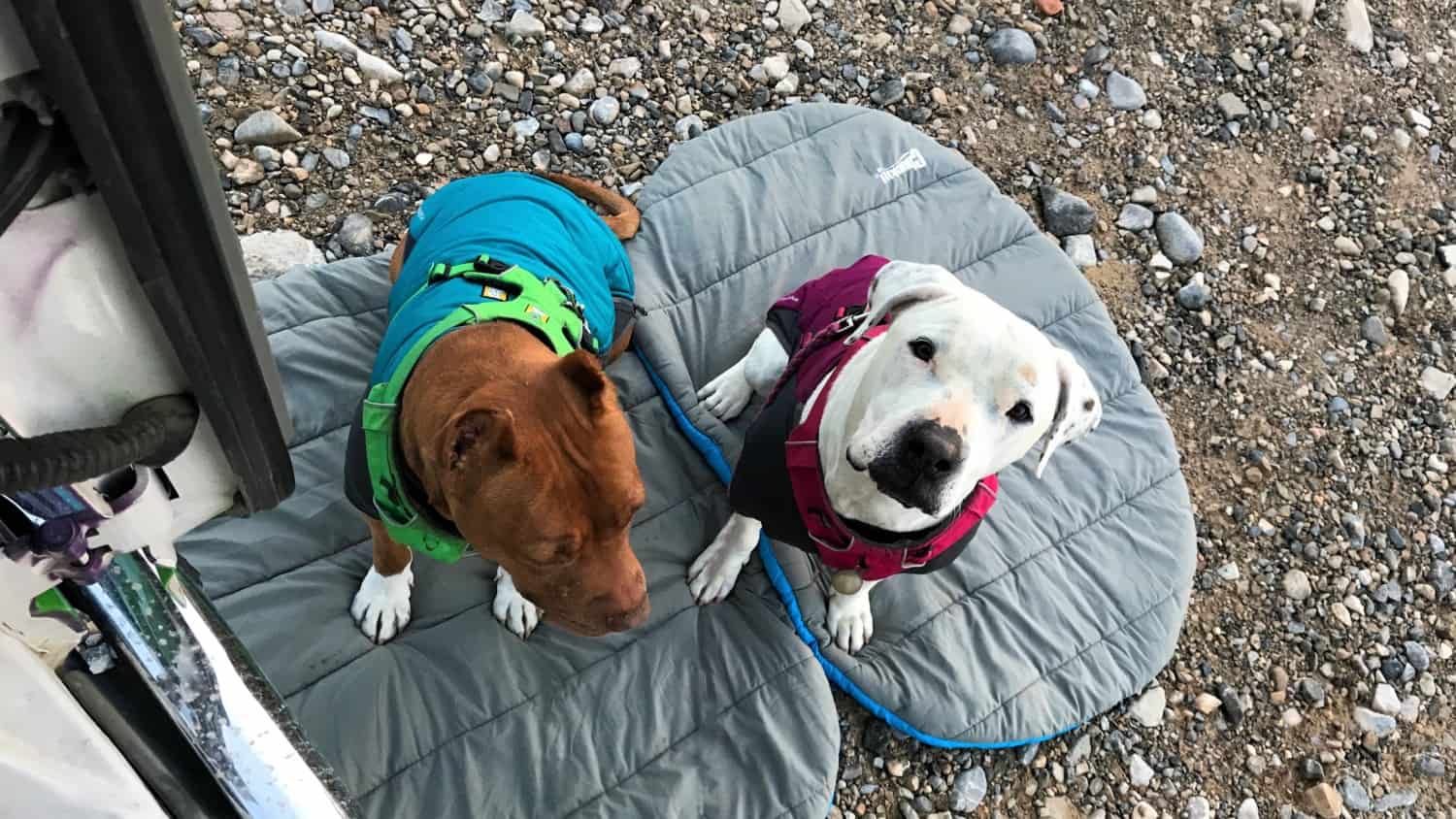
Life inside a compact van requires a strict daily rhythm. Mornings typically begin with outdoor exercise and waste management before hitting the road. Throughout the driving shifts, drivers must adhere to strict safety protocols, ensuring pets are securely harnessed or crated. Upon arriving at a campsite—whether a national forest or a private RV resort—setting up an outdoor boundary using portable mats or tie-outs establishes order in a small space.
Phase 4: Post-Trip Cleanup and Return (The Final Leg)
Returning a campervan requires returning it in pristine condition to avoid steep cleaning fees. The final day of the trip involves rigorous vacuuming, wiping down surfaces with pet-safe cleaners, and ensuring all personal and pet gear is packed away before handing the keys back to the rental agency.
Supporting Data & Logistics: Navigating Policies, Safety, and Packing
Understanding the mechanics of van life with pets involves looking closely at the logistical data points that govern these trips—from financial outlays to spatial geometry.
Policies, Fees, and Restrictions
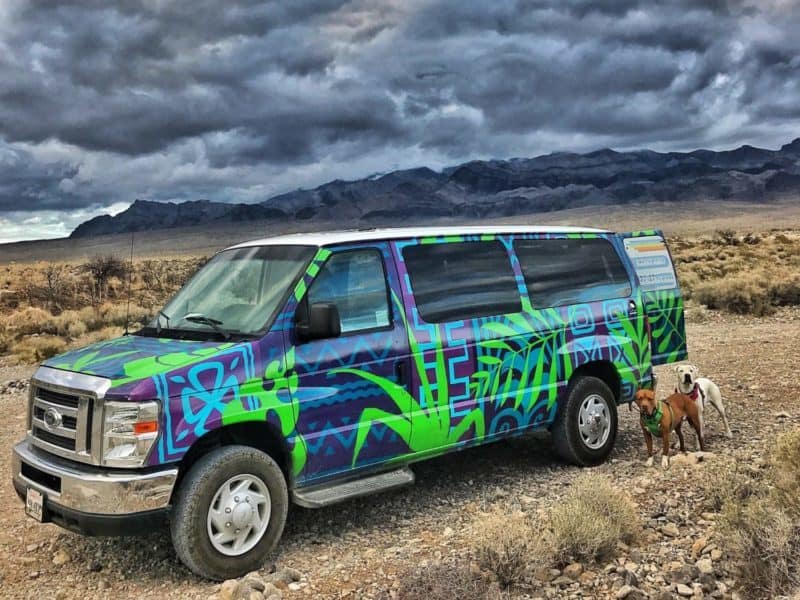
Rental agencies approach pets with caution due to potential wear-and-tear. Pet fees typically range from a one-time flat rate of $50 to $200 per rental, designed to cover specialized post-trip ozone treatments or deep cleaning. When evaluating companies, renters should directly ask specific questions:
- Are there weight or breed limitations?
- Are seasonal heat restrictions enforced at our destination?
- What are the financial penalties for pet-related damages, such as chewed upholstery?
In-Transit Safety Protocols
Safety is paramount when hurtling down a highway in a conversion van. Many campervans feature rear bench seats that cleverly convert into beds at night. During transit, these seats often double as passenger zones for pets.
However, standard vehicle seatbelts rarely fit a dog comfortably without modification. Travelers should invest in crash-tested dog safety harnesses that clip directly into standard seatbelt receptacles. Alternatively, for smaller animals, securely anchored travel kennels placed on the floor can prevent pets from becoming dangerous projectiles in the event of a sudden stop or collision.
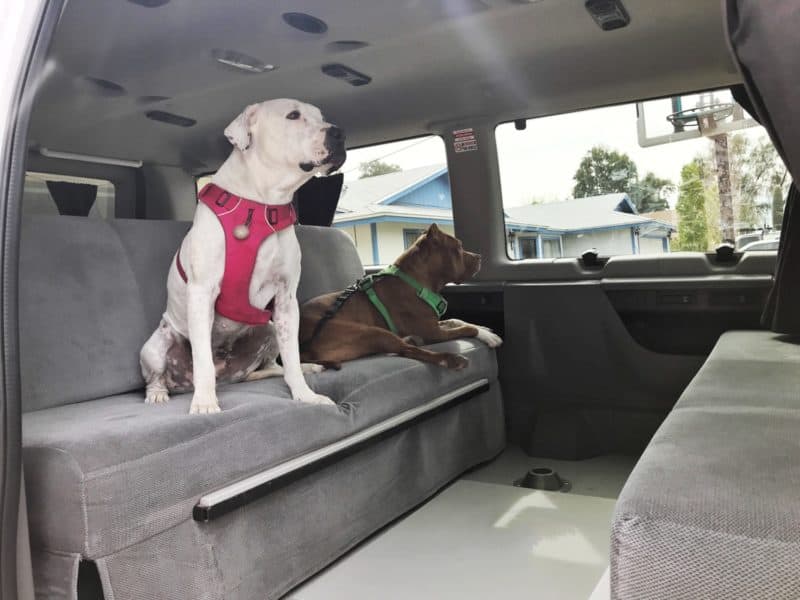
Practical spatial reality: In many compact campervans, the rear seating area can be surprisingly narrow. For travelers navigating multi-dog households (such as managing two larger breeds like a Labrador mix and a retriever), utilizing the accessible seatbelt anchors while the bed is partially configured can provide structural containment, keeping animals safely positioned without the risk of them slipping onto the floorboards.
The Essential Pet-Packing Matrix
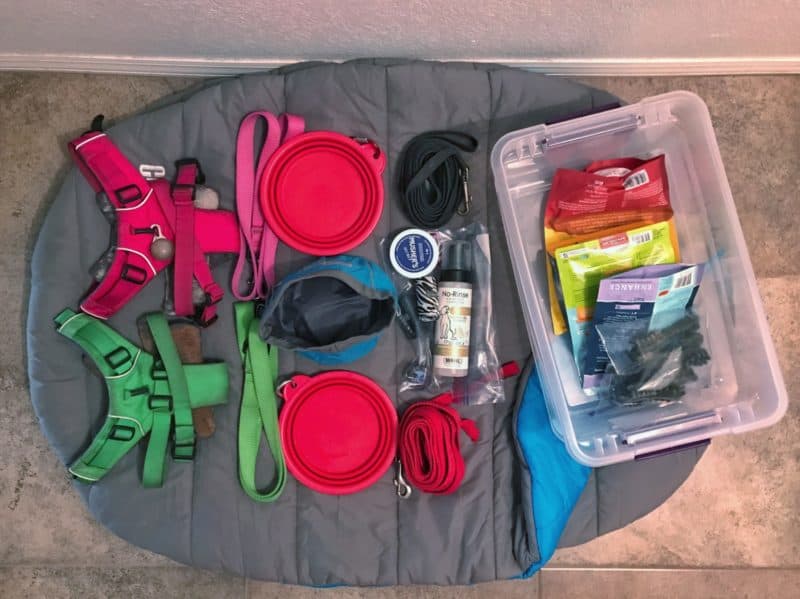
Packing for a pet in a compact van requires ruthless efficiency. Essential categories include:
| Category | Items Required | Purpose |
|---|---|---|
| Nourishment | Food, collapsible bowls, potable water, treats | Sustaining energy during hikes and travel. |
| Safety & Control | Crash-tested harness, sturdy leash, long-line | Preventing vehicle distraction and securing camp. |
| Comfort & Weather | Orthopedic dog bed, old yoga mat, raincoats, booties | Joint support, paw protection from hot asphalt, and cold-weather layers. |
| Sanitation | Paper towels, wet wipes, enzymatic cleaner, pet dry shampoo | Managing muddy paws, unexpected illness, and odors in tight quarters. |
Pro-Tip on Space Management: Utilizing 15-quart plastic storage bins keeps pet food and gear modular, dry, and secure. At night, these bins can be easily shifted to the cab’s front seats to open up the living floor plan. Additionally, repurposing an old yoga mat as an entryway doormat inside the sliding van door traps dirt and mud before it can coat the sleeping quarters.
Official Responses and Industry Perspectives
The hospitality and outdoor recreation sectors have increasingly acknowledged the economic and cultural impact of pet travelers. Campground networks, national park officials, and van rental executives have issued guidelines to balance conservation efforts with consumer demand.
National Park Service (NPS) representatives routinely emphasize that while pet access varies significantly across the federal park system—often restricted to paved areas, roads, and campgrounds to protect fragile wildlife and ecosystems—designated pet-friendly corridors are expanding. Agencies encourage travelers to consult individual park regulations (often summarized under the "B.A.R.K. Ranger" programs) before arriving.
Meanwhile, outdoor hospitality industry groups report that pet-friendly amenities are among the top filters used by consumers when booking accommodations online. Private campground owners, in particular, have responded by installing designated off-leash dog parks, pet-washing stations, and specialized waste disposal bins within their properties.
Rental fleet operators maintain that while the vast majority of pet owners are exceptionally respectful of vehicle interiors, clear communication regarding vehicle maintenance and cleanliness is essential. Industry compliance data shows that upfront transparency about pet policies drastically reduces post-rental disputes and ensures that vehicles remain available for the next wave of animal-loving adventurers.
Implications: The Future of Pet-Inclusive Outdoor Recreation
The growing intersection of campervan rentals and pet travel carries profound implications for both the tourism economy and the human-animal bond.
Economically, van rental companies and outfitters that embrace pet-inclusive policies are tapping into a fiercely loyal demographic. Pet owners are willing to invest significantly in specialized gear, higher-tier rental packages, and premium campground fees if it guarantees their animals can join the journey. This trend has catalyzed product innovation, leading to a booming market for portable pet tech, crash-tested automotive safety devices, and eco-friendly outdoor grooming supplies tailored specifically for mobile lifestyles.
Culturally, traveling by adventure van with pets redefines the concept of "getting away from it all." It encourages a slower, more grounded style of travel where itineraries are dictated not by rigid hotel check-in times or boarding facility hours, but by the natural rhythms of the outdoors. Dogs and cats act as natural catalysts for social interaction on the road, breaking the ice with fellow campers and fostering a strong sense of community around campfires and trailheads.
Ultimately, taking an adventure van out into the wilderness with a trusted animal companion proves that the best part of any journey is not merely the destination marked on a map, but the shared memories forged along the way. As infrastructure continues to adapt to this mobile, pet-friendly era, the open road is officially open to all members of the family—paws and all.