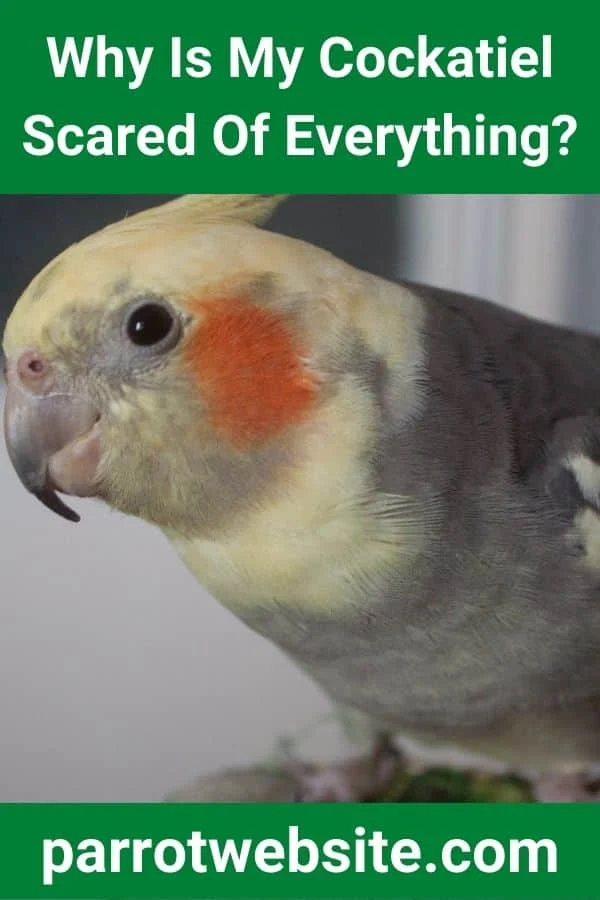
For many, the decision to welcome a cockatiel into the home is the beginning of a lifelong, rewarding companionship. These charming, crested members of the parrot family are renowned for their gentle dispositions, melodic whistling, and impressive ability to bond with their human guardians. However, the experience is not always seamless. While some owners find their feathered friends to be calm and curious, others grapple with a persistent, heartbreaking issue: a bird that seems permanently terrified of the world around it.
If your cockatiel is perpetually on edge, skittish, or visibly frightened by everyday stimuli, you are not alone. By examining the developmental, environmental, and social factors that influence avian behavior, we can better understand why these creatures develop fear-based responses and, more importantly, how to restore their sense of security.
The Foundation of Fear: Developmental and Environmental Factors
To understand why a cockatiel might be fearful, one must first look at the foundation laid before the bird ever reaches your home. Cockatiels are naturally prey animals; in the wild, their survival depends on a heightened sense of vigilance. This evolutionary "hard-wiring" means that they are perpetually scanning for threats. When this instinct is not tempered by proper early socialization, it can manifest as chronic anxiety.
The Role of Early Socialization
The most critical period in a cockatiel’s development occurs in the first few months of life. Breeders play a pivotal role here. A responsible breeder does more than provide food and water; they engage in "hand-taming" or early socialization. This process involves exposing the fledgling to various human touches, sounds, and environments in a controlled, positive manner.
If a bird is raised in an environment where it lacks consistent, gentle human interaction, or if it is subjected to sudden, traumatic stimuli during its formative weeks, it will likely develop a "fear-first" approach to the world. When a bird misses these developmental milestones, it does not simply "grow out of it." Instead, the lack of confidence becomes a personality trait, making the process of building trust as an adult owner significantly more arduous.
The Impact of Relocation
The transition from a breeder’s aviary to a new home is arguably the most stressful event in a young bird’s life. The sudden disappearance of familiar sights, sounds, and flock mates is disorienting. Even a perfectly socialized bird may exhibit symptoms of "new home syndrome"—refusing to eat, cowering in the corner of the cage, or flapping wildly when approached. Recognizing that this behavior is a response to environmental trauma rather than a "bad" bird is the first step toward rehabilitation.
The Social Dilemma: Are Cockatiels Meant to Be Alone?
One of the most frequent misconceptions regarding cockatiel care is the assumption that a single bird will naturally bond with its owner and remain content. While this can work, it ignores the biological reality of the species.
The Flock Mentality
In the wild, cockatiels live in large, complex social groups. They are never truly alone. Within these flocks, they engage in mutual preening, constant communication, and shared vigilance. By keeping a single cockatiel, the owner is effectively acting as the bird’s entire flock.
If you are not available to provide almost constant companionship, the bird will experience profound loneliness. In the avian world, isolation is synonymous with danger. A lonely cockatiel is a vulnerable cockatiel. This psychological distress often manifests as "fearfulness." When the bird feels it has no one to watch its back, every shadow, movement, or noise becomes a potential predator. If you find your bird is constantly trembling or pacing, consider whether the lack of a social partner is the root cause.
Identifying Specific Triggers and Environmental Stressors
Sometimes, a bird is not "skittish" by nature, but is reacting to a specific, identifiable stressor within its immediate environment. Cockatiels have keen eyesight and are highly observant. An object that seems innocuous to a human may be perceived as a threat by a bird.
Visual and Auditory Triggers
- Fixation on Objects: Does your bird stare at a specific lamp, a piece of art, or a fan? Cockatiels are known to develop phobias of mundane household items. If you notice your bird’s body language shift—the crest rising, the pupils pinning (dilating and contracting), or the bird attempting to flee—whenever it looks at a specific corner of the room, that object is likely the source of its fear.
- The Darkness Factor: Cockatiels are notoriously prone to "night frights." Because they are prey animals, they do not see well in complete darkness. A sudden shadow or a strange sound in the middle of the night can trigger a panic attack, leading the bird to thrash around the cage in a blind, terrified frenzy. This can result in broken feathers or physical injury. Providing a small, dim nightlight can often alleviate this anxiety instantly.
The Human Factor: Why Is My Bird Scared of Me?
If your cockatiel is specifically afraid of you, the situation requires a more surgical approach to training. This usually indicates that the bird perceives you as a predator rather than a protector.
Rebuilding the Bond
When a bird is terrified of its owner, the traditional approach of "forcing" interaction—such as grabbing the bird to hold it—is counterproductive. It confirms the bird’s belief that you are a threat. Instead, you must practice "passive companionship."
- The Drawing Board: Spend time near the cage without demanding interaction. Read a book, speak in a soft, low voice, or simply exist in the same space while doing quiet activities.
- The Power of Positive Reinforcement: Treats are the ultimate currency in avian training. Identify a high-value treat (such as a spray of millet) that the bird rarely gets. Offer it through the cage bars. Once the bird feels safe eating from your hand through the bars, you can slowly transition to offering it with the door open.
- The Patience Threshold: It is vital to understand that taming an older, fearful bird is a marathon, not a sprint. There will be days where you feel you have made progress, only for the bird to regress the following day. This is normal. Consistency is the only way to prove your reliability to a creature that has been taught to fear humans.
Professional Perspectives and Industry Standards
Veterinary behaviorists emphasize that persistent fearfulness in parrots is often a symptom of underlying health or psychological issues. If your cockatiel displays signs of severe anxiety—such as self-mutilation (plucking feathers), lethargy, or extreme aggression—it is imperative to consult an avian veterinarian.
When to Seek Help
- Medical Rule-outs: Often, a bird that seems "scared" is actually ill. Prey animals hide illness until they are extremely sick. A bird that is feeling physically weak will be naturally more prone to fear, as it knows it cannot escape danger.
- Expert Training: If you have exhausted all self-help measures, reach out to certified avian behaviorists. They can provide a professional assessment of your home setup and offer personalized training plans that go beyond general advice.
Implications of Chronic Fear
Living in a state of chronic fear has severe, long-term consequences for a cockatiel’s health. Sustained stress levels lead to the release of cortisol and other stress hormones, which suppress the immune system. This leaves the bird susceptible to respiratory infections, gastrointestinal issues, and, in extreme cases, a shortened lifespan.
Furthermore, a bird that is constantly terrified cannot thrive. The joy of having a pet bird comes from the mutual trust and the playful, inquisitive personality that emerges when the bird feels safe. If your bird is not reaching that state, you are missing out on the true experience of avian companionship, and the bird is suffering from a poor quality of life.
Conclusion: The Path Forward
The mystery of a "scared" cockatiel is rarely unsolvable, but it does require a deep commitment from the owner. Whether the issue stems from poor early socialization, a lack of flock companionship, or an environment filled with hidden stressors, the solution almost always lies in patience, observation, and positive reinforcement.
If you are struggling with a skittish cockatiel, take a step back. Assess the environment, consider the bird’s social needs, and return to the basics of trust-building. Remember that you are the giant in their world; it is your responsibility to prove that you are a safe haven, not a source of fear. With time, empathy, and consistent effort, even the most timid cockatiel can learn to shed its anxiety and become the vibrant, affectionate companion you envisioned when you first brought it home.