For many avian enthusiasts, the dream of sharing their home with a bird often hits a logistical wall: the constraints of modern apartment living. Recently, a prospective bird owner reached out with a common dilemma—he is an experienced parrot owner looking to bring an Alexandrine parakeet into a densely populated, multi-unit building. His primary concern, shared by many potential pet owners, is the noise threshold. In a space where neighbors are only a wall away, is an Alexandrine parrot a manageable companion, or a recipe for a noise complaint?
To address this, we must look at the biological, behavioral, and environmental factors that define the Alexandrine parrot’s vocal footprint.
Main Facts: Are Alexandrine Parrots Truly "Quiet"?
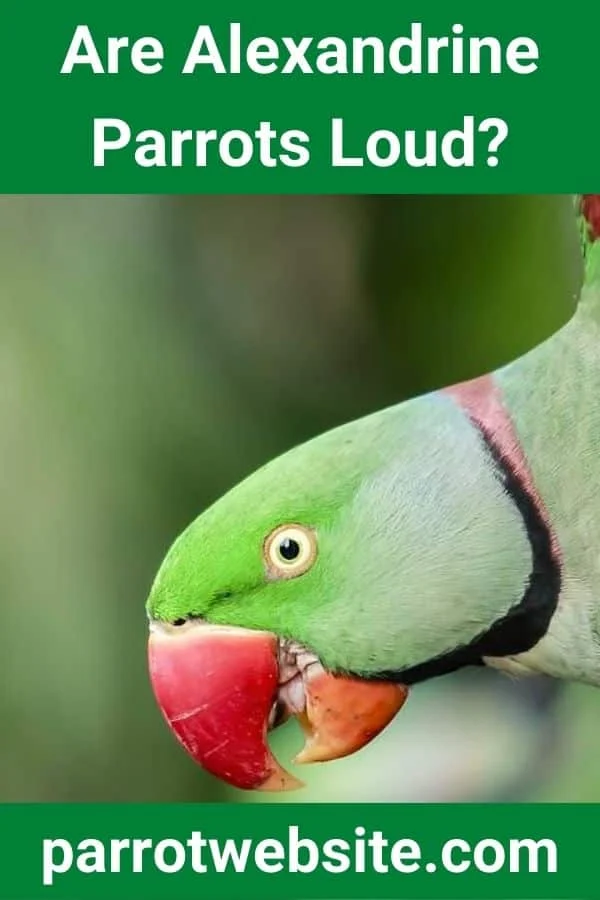
The short answer is relative. Compared to the boisterous cockatoo or the relentless macaw, the Alexandrine parrot (Psittacula eupatria) is often categorized as "comparatively quiet." However, it is essential to define what "quiet" means in the context of avian behavior.
Parrots are inherently vocal creatures. In the wild, their survival depends on their ability to communicate across distances. Consequently, no parrot is a silent pet. The Alexandrine parrot falls into the middle tier of the volume spectrum. They are significantly quieter than many high-decibel species, but they are not the "hush-hush" pets that some apartment dwellers might hope for.
They do not typically engage in day-long, unrelenting screeching. Instead, their vocalizations are often rhythmic, centered around specific times of the day. For the prospective owner, this means that while you may enjoy pockets of tranquility, you must be prepared for bursts of high-intensity vocalization that are characteristic of the species.
Chronology of Vocalization: The Rhythm of the Day
Understanding the daily cycle of an Alexandrine parrot is vital for anyone living in close proximity to others. These birds operate on a internal clock that dictates their vocal energy.
The Dawn and Dusk Chorus
In the wild, parrots use their voices to establish contact with their flock at the start of the day and to settle in for the night. This "flock call" is arguably the loudest sound an Alexandrine will produce. In a domestic setting, owners should expect a surge in noise levels during the early morning hours and again in the late afternoon. These calls are piercing and intended to carry over long distances, meaning they can easily penetrate thin apartment walls.
Mid-Day Lulls
Once the morning flock call has concluded, Alexandrine parrots often settle into a more relaxed state. They are generally much quieter throughout the mid-day hours, provided their enrichment needs are being met. This is the period when they are most likely to engage in quiet chatter, play with toys, or preen.
The Nighttime Expectation
A frequent question is whether these birds disrupt sleep. Generally, no. If an Alexandrine is kept on a consistent schedule with a proper dark-cycle routine, they will remain quiet throughout the night. However, if a bird feels insecure or is not receiving adequate attention, they may vocalize in the evening. A well-adjusted bird, however, views the night as a period of rest, not as a time for social signaling.
Supporting Data: Intelligence and the Art of Speech
Beyond mere volume, the Alexandrine parrot is celebrated for its cognitive prowess. They are highly intelligent, which makes them excellent talkers. This is a double-edged sword: while they can learn dozens of words and phrases, they are also prone to mimicking the environmental sounds of your home.
The Mimicry Phenomenon
If left to their own devices without focused training, these birds will inevitably mirror the sounds that dominate their environment. In an apartment, this often includes the mechanical hum of a microwave, the sharp beep of a smoke alarm, the distant sound of a siren, or the rhythmic beeping of a truck reversing.
Training for Controlled Vocalization
To channel their intelligence into speech rather than unwanted noise, owners should employ positive reinforcement. By dedicating time to sit and talk with the bird daily, and by rewarding attempts at human speech with treats or praise, the owner can effectively "program" the bird’s vocal habits. An Alexandrine that is engaged in learning human language is often more mentally stimulated and less prone to "boredom-induced" screaming.
Official Perspectives: Addressing Excessive Screaming
When an Alexandrine parrot begins to scream beyond the expected flock calls, experts suggest that it is almost always a diagnostic symptom of an unmet need.
Boredom and Social Isolation
As flock animals, these birds require a high degree of socialization. If they are left alone for extended periods without mental stimulation, they will use their voice to try to summon their "flock" (the owner). This is not just noise; it is a cry for help. If the bird is screaming excessively, the owner must evaluate if the cage is large enough, if there are enough varied toys, and if the bird is receiving at least several hours of direct, out-of-cage interaction daily.
Physical Health and Environment
If social needs are being met and the screaming continues, the issue may be physical. A lack of proper nutrition or, crucially, a lack of adequate sleep can make a parrot irritable and prone to vocal outbursts. If these basic environmental variables are optimized and the behavior persists, a consultation with an avian veterinarian is the professional standard. Sudden changes in vocal habits can sometimes signal stress, pain, or illness that is not immediately apparent to the human eye.
Implications for Apartment Dwellers
For the individual living in an apartment, the decision to adopt an Alexandrine parrot carries significant implications.
- Soundproofing: Even if the bird is "quieter" than a macaw, high-decibel flock calls are inevitable. Prospective owners should consider acoustic panels or heavy window treatments to dampen sound transmission.
- Lifestyle Compatibility: If your lifestyle demands absolute silence during the morning or evening, the Alexandrine may not be the right fit. Their flock call is an instinct, not a behavior that can be "trained out."
- Community Relations: Before bringing the bird home, it is often wise to speak with neighbors. Transparency can go a long way; letting a neighbor know that you have a bird that may make noise for ten minutes at sunrise is far better than having them wonder why they are being woken up by an unidentified screech.
- Commitment: Because they are highly intelligent and social, these birds require a level of commitment that goes beyond the basic care of a pet. An Alexandrine that is part of a busy, active, and affectionate household is statistically much more likely to be a "quiet" neighbor than one left in isolation.
Conclusion
The Alexandrine parrot is a magnificent, intelligent, and rewarding companion, but it is not a "low-maintenance" pet when it comes to sound. They are undeniably quieter than many other large parrot species, making them a more viable candidate for those who cannot handle the deafening volume of larger macaws or cockatoos. However, they remain loud by any objective standard.
If you are a prospective owner who values intellectual connection and can accommodate the scheduled, high-energy vocalizations of a flock-oriented bird, the Alexandrine can be a joy. If, however, your primary objective is a quiet home environment, it is best to reconsider the choice of species. Owning a parrot is an acceptance of noise; choosing an Alexandrine is simply choosing a more moderate—and highly intelligent—version of that reality.