March 30, 2026 | Science & Behavioral Analysis
For decades, the scientific understanding of animal social structures was dominated by a singular, aggressive narrative: "nature, red in tooth and claw." This perspective, often rooted in an obsession with male-dominated hierarchies and overt displays of violence, shaped how we viewed everything from primates to our own domestic dogs. However, Women’s History Month offers a vital opportunity to revisit the quiet revolution led by female scientists who challenged these biases.
While the "Trimates"—Jane Goodall, Dian Fossey, and Biruté Galdikas—are household names for their groundbreaking field work with chimpanzees, gorillas, and orangutans, two other visionaries, Dr. Jeanne Altmann and Dr. Shirley Strum, fundamentally dismantled the field’s long-standing male-centric assumptions. Their work with baboons did not just add to the body of knowledge; it fundamentally altered the lens through which science observes the natural world.
The Methodological Shift: From "Ad Lib" to "Focal"
The primary catalyst for this shift was Dr. Jeanne Altmann, whose 1974 paper, "Observational Study of Behavior: Sampling Methods," became a cornerstone of modern behavioral biology. Before Altmann, researchers predominantly utilized "ad libitum" sampling. In this approach, scientists essentially recorded whatever "drama" occurred—the fights, the displays of aggression, and the dominant posturing that captured the human eye.

Because the majority of field researchers in the mid-20th century were men, and because the human psyche is naturally drawn to high-intensity conflict, the resulting data was inherently skewed. Science was painting a picture of animal societies as perpetual battlegrounds for status.
Altmann proposed a rigorous alternative: "focal sampling." In this methodology, the researcher selects one individual and tracks their behavior in its entirety for a set duration, regardless of whether that individual is currently involved in a high-stakes conflict or merely grooming, foraging, or resting.
The results were transformative. When researchers stopped focusing solely on the "action," they discovered that male dominance hierarchies were no more inherently significant than the complex maternal strategies of females or the quiet, persistent patterns of cooperation between all members of a troop. According to the International Encyclopedia of Primatology, Altmann’s findings "profoundly changed the prevailing view of females more generally, and of mammalian females more specifically." Her work paved the way for modern research into how a mother’s environmental and social experiences can non-genetically influence the phenotypes of her offspring.
The Strum Revolution: Reciprocity in the Wild
In 1972, Dr. Shirley Strum entered the field to study baboons, entering an academic environment still entrenched in the "male-centric" paradigm. Expectations were high that her data would confirm the necessity of male aggression as the sole arbiter of social stability. Instead, Strum found that baboon societies were governed by a nuanced web of social intelligence.

Strum’s research revealed that cooperation and reciprocity were not just present; they were essential for survival. She observed that baboons employed a vast toolkit of strategies to secure safety and resources—strategies where aggression was merely one, often inefficient, option among many.
Perhaps the most famous illustration of this social complexity was her observation of male olive baboons using infants as "living shields." By carrying infants on their bellies, these males effectively disarmed potential threats, as the social norms of the troop dictated that no baboon would harm an infant. This behavior highlighted a sophisticated level of social awareness that challenged the notion of a simple, brute-force hierarchy.
Strum’s observations further documented deep, non-sexual friendships between male and female baboons. These males would frequently babysit infants while females groomed them in return, or intervene to protect their female friends from unwanted suitors. Her research provided definitive evidence that baboon societies are, in many ways, more closely aligned with the cooperative nature of human social structures than those of our closer cousins, the chimpanzees or gorillas.
Chronology of a Paradigm Shift
- 1960s: The "Trimates" (Goodall, Fossey, Galdikas) are recruited by Louis Leakey. Leakey, famously believing women possessed the patience required for long-term field observation, changes the face of primatology.
- 1968: Institutional barriers persist; women often face systemic discrimination, including the inability to hold bank accounts in their own names, mirroring the dismissive attitude toward their intellectual contributions.
- 1972: Dr. Shirley Strum begins her field studies in Kenya, directly challenging the prevailing "aggression-first" theories.
- 1974: Dr. Jeanne Altmann publishes her landmark methodology on focal sampling, providing the rigorous framework necessary to move beyond anecdotal "ad lib" reporting.
- 1970s–Present: The cumulative work of these scientists leads to a broader cultural and scientific acceptance of cooperation, reciprocity, and "nature, light blue in heart and soul" as fundamental evolutionary drivers.
Implications for Animal Behavior and Training
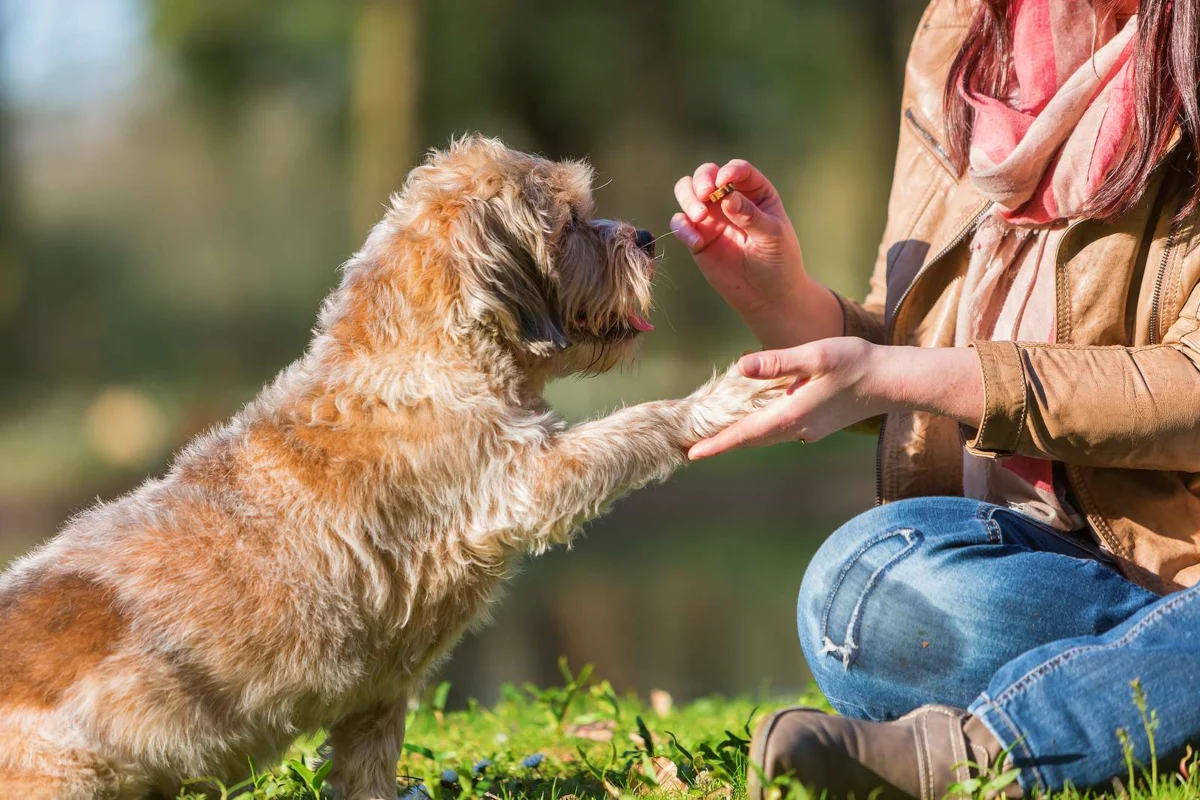
The legacy of Altmann and Strum extends far beyond the savannah. It has deeply influenced how we approach domestic animal behavior and training today. For decades, the training of dogs was heavily influenced by outdated, misunderstood concepts of "dominance." Trainers who viewed the world through the old, male-centric lens often advocated for adversarial methods, believing that the human must be the "alpha" to suppress the animal’s supposedly inherent drive for dominance.

However, just as Strum discovered that baboon survival depends on social intelligence rather than brute force, modern canine behavioral science has pivoted toward cooperation. We now understand that dogs, much like the baboons studied by Strum, rely on nuanced social communication and trust. The shift from "red in tooth and claw" to a more holistic view of animal nature has made training more effective, ethical, and grounded in the reality of how these animals actually perceive their world.
A Personal Reflection: Springtime at the Farm
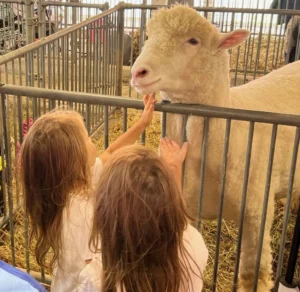
While the academic world continues to digest these shifts, the practical application of these lessons is often found in the most mundane of places—like the annual spring shearing at the farm.
The sheep, who identify one another primarily through scent, undergo a yearly ritual of social re-negotiation once their wool is removed. Watching them, one is reminded of the delicate, complex sociality inherent in nature. We see the familiar rivalries, such as the ongoing "smack down" between Snow White and Beyonce, but we also see the unexpected alliances: a smaller ewe, unrelated to Beyonce, acting as a clear protector. These behaviors are not governed by a rigid hierarchy, but by the same intricate bonds of friendship and reciprocity that Dr. Strum documented in baboons.
Conclusion: The Path Forward
The erasure of women’s contributions to science is a historical wrong that is finally being addressed. As we celebrate the progress made since the 1970s—a decade where, for many women, even basic financial autonomy was a struggle—we must also recognize that our scientific progress is tethered to our ability to see past our own biases.

Whether we are observing baboons in Kenya, managing a flock of sheep, or training a dog in the backyard, we are all richer for the work of Altmann and Strum. They have taught us that the world is not merely a place of conflict, but a place of connection. By looking closer, with more objective methods and a more inclusive perspective, we have uncovered a truth that is far more beautiful: that cooperation is not just a secondary feature of the natural world, but its very foundation.
As we move toward a future that values "light blue in heart and soul" over the outdated, aggressive metaphors of the past, we find that our understanding of nature—and our place within it—becomes deeper, kinder, and profoundly more accurate.