CHICAGO, IL — A coalition of prominent animal welfare organizations in the greater Chicago area has formally called on retail pet chain Petland to immediately cease the sale of live rabbits. Local rescue groups, including the House Rabbit Society of Chicago (HRS Chicago), Red Door Animal Shelter, and It’s All About The Paws (IAATP), point to a direct pipeline from retail storefronts to large-scale hoarding crises, overwhelmed municipal facilities, and an unsustainable surge in owner-surrender waitlists.
The campaign, amplified nationally by the Rabbit.org Foundation and its Stop Rabbit Sales Coalition, highlights a recurring cycle: impulse-driven retail purchases of rabbits—frequently sold as mis-sexed pairs—lead rapidly to accidental litters, severe medical emergencies, and, in worst-case scenarios, massive animal hoarding interventions that strain the financial and physical capacities of local nonprofits.
Main Facts
The core of the dispute centers on the downstream impacts of commercial rabbit sales. Animal advocates argue that rabbits are among the most misunderstood and improperly cared-for companion animals in the United States, ranking immediately behind dogs and cats in shelter populations yet lacking the same level of mainstream veterinary and legislative protection.
According to Chicago-area rescue directors, the sale of live rabbits in retail environments fundamentally undermines humane education. Stores frequently market rabbits as low-maintenance "starter pets" for children or simple cage animals, concealing their complex behavioral needs, delicate gastrointestinal systems, and lengthy lifespans—which can easily reach 8 to 12 years.
Furthermore, retail associates are rarely equipped to accurately determine the sex of young rabbits. This deficiency routinely results in unsuspecting buyers taking home unsterilized male and female pairs. Within a matter of months, unspayed and unneutered pairs can produce exponential litters, turning a well-intentioned household pet purchase into a sprawling population crisis.
Local advocates are urging Petland to align its business model with major national pet supply retailers like Petco and PetSmart, neither of which sell live rabbits, opting instead to partner with local rescue organizations to showcase adoptable animals in need of homes.
Chronology of Local Crises: The Schaumburg Cases
The urgency behind the Chicago coalition’s demands is underscored by two major, highly resource-intensive hoarding interventions that originated in the northwest suburb of Schaumburg. Local rescue leaders emphasize that these disasters were not isolated incidents, but rather predictable endpoints of the retail rabbit trade.
Case 1: The Extended-Stay Hotel Room Intake (May 2021)
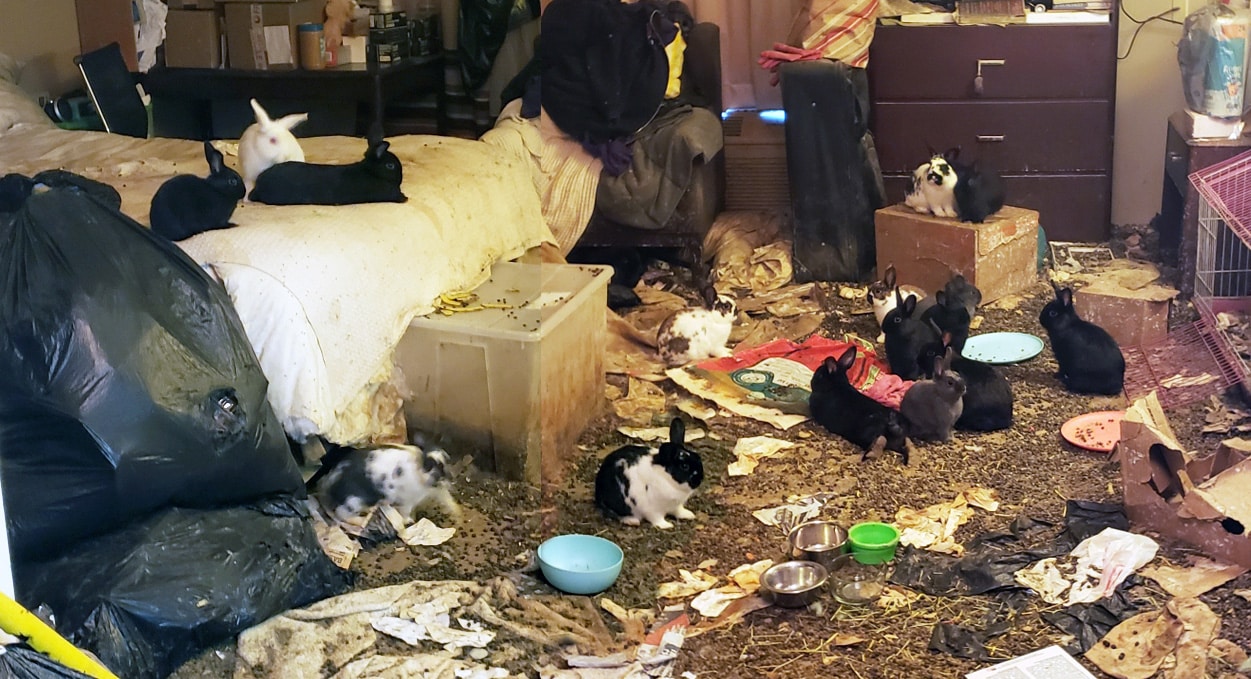
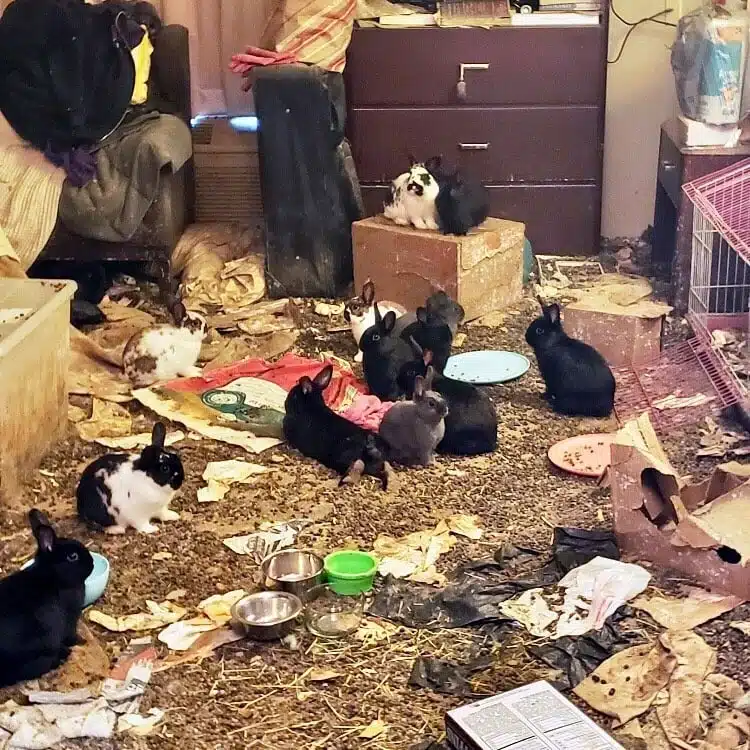
In May 2021, local animal control and rescue organizations responded to a distressing scene inside a long-stay hotel room in Schaumburg. Responders entering the debris-filled space—fully outfitted in protective masks and gloves—discovered an astounding 47 rabbits crammed into the confined living quarters.
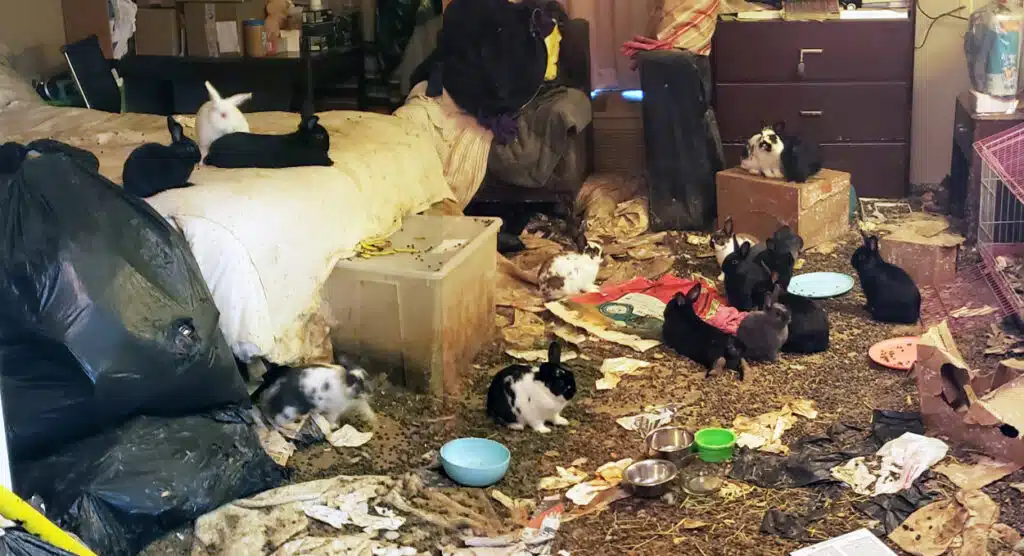
The animals were completely unaltered, leading to rampant breeding. Upon triage, rescue workers discovered that 15 of the rabbits were pregnant.
The logistical and financial burden fell heavily on local shelters. Red Door Animal Shelter took in 22 of the rabbits, absorbing medical costs that ultimately exceeded $7,000. DuPage County Animal Services accepted the remaining 25 animals. According to documentation and intake interviews conducted by Red Door, the caretaker reported that the entire population stemmed from an original pair purchased at the Petland in Hoffman Estates.
Case 2: The Single-Family Home Intake (July 2023)
Just over two years later, a nearly identical emergency unfolded in a residential neighborhood in Schaumburg. The rescue organization It’s All About The Paws (IAATP) received an urgent call regarding a private home overrun with rabbits.
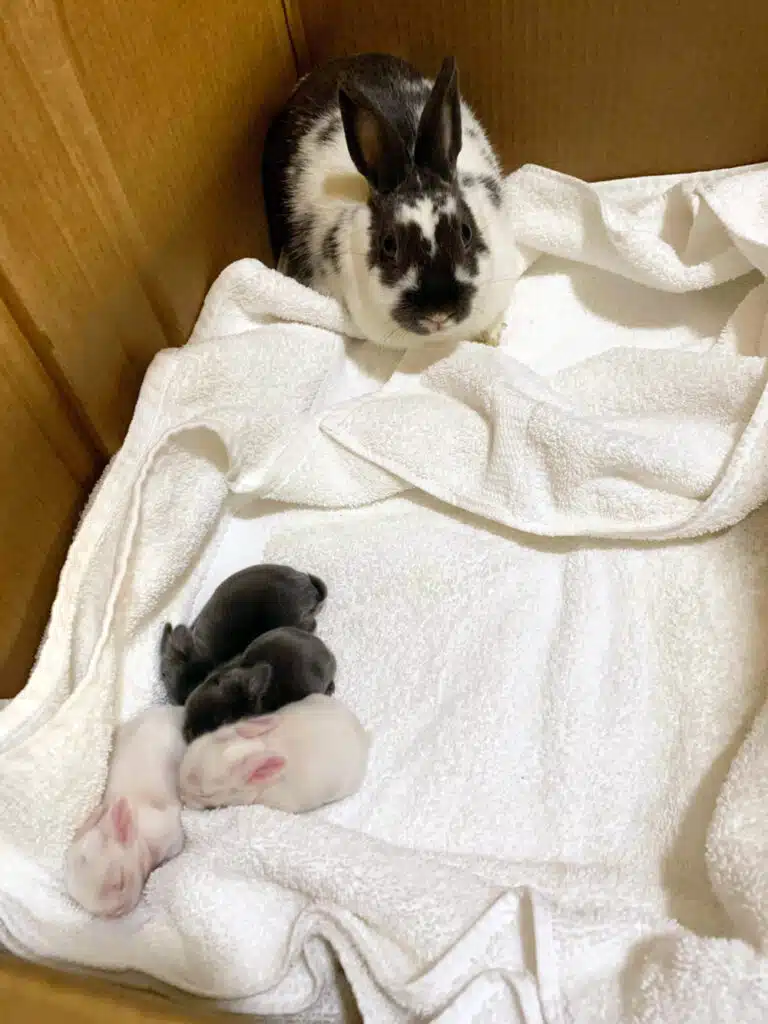
Working in tandem with local animal control, IAATP personnel descended on the property. Within 24 hours of the initial call, the rescue team removed 29 rabbits, including newborn litters, from an environment that quickly overwhelmed the homeowners.
According to IAATP founder Erika Seibert, subsequent interviews with the property owners revealed that the breeding population originated from a pair purchased from the same Petland location in Hoffman Estates. Because IAATP was swiftly overwhelmed by the influx, the organization had to coordinate emergency placements across state lines and regional networks, relying on HRS Wisconsin, Hoopy Haven Rabbit Rescue, and Lost Woods Animal Sanctuary to absorb the surplus.
Supporting Data and Systemic Impact
The mathematics of rabbit rescue operations in Chicagoland reveal a system operating well past its breaking point.
When a retail-origin hoarding case or surrender wave hits, shelters do not simply absorb a few animals; they inherit severe veterinary liabilities. Unaltered rabbits frequently arrive suffering from severe malnutrition, bite wounds resulting from territorial aggression, upper respiratory infections, ear mites, and advanced dental disease requiring specialized surgical intervention. Furthermore, the cost of emergency spay and neuter surgeries for dozens of rabbits simultaneously can cripple a non-profit’s operational budget within days.
- Intake Delays: Local shelters report that owner-surrender waitlists are at historic highs, leaving community members desperate for solutions when they can no longer care for their animals.
- Financial Strain: A single multi-animal intake can cost rescues anywhere from $5,000 to over $15,000 in immediate emergency veterinary care, diverting funds from routine adoption and community education programs.
- Foster Network Depletion: Mass intakes exhaust available foster homes across northern Illinois, leaving rescues unable to pull animals from municipal shelters facing euthanasia deadlines.
Voices from the Front Lines
Animal welfare leaders across Illinois have broken their silence, demanding corporate accountability from Petland and urging consumers to recognize the human and animal cost of retail pet sourcing.
"Petland is a major source of rabbits who later end up abandoned or in crisis… We regularly see mis-sexed pairs adopted from stores that lead to repeated litters. While Petland profits, rabbits suffer."
— Rachael Sanders, Director, HRS Chicago
The sentiment is echoed by veterinary and shelter administrators who have spent years cleaning up the aftermath of commercial pet trade practices.
"We managed back-to-back mass-intake crises in Schaumburg—each beginning with owner-reported Petland-origin pairs—stretching volunteers, foster space, and medical budgets to the breaking point."
— Toni Greetis, Vice President, Red Door Animal Shelter
Advocates stress that the issue is not merely about individual corporate policy, but about shifting cultural perceptions of exotic and small mammals. Treating sentient, delicate creatures as retail inventory inevitably leads to impulse acquisitions and subsequent neglect when the reality of their care requirements sets in.

Implications and Action Steps
The campaign against Petland’s live rabbit sales represents a broader push toward progressive animal welfare legislation and retail responsibility in the Midwest. As public pressure mounts, community members, activists, and rescue organizations are taking concrete steps to force corporate reform.
How the Public Can Participate
- Sign the Petition: Animal advocates have launched a targeted petition hosted on Change.org titled "Stop Rabbit Sales at Petland." Organizers note that every signature strengthens the collective leverage needed to demand humane retail reform.
- Choose Adoption: Consumers are encouraged to pledge to "Adopt, Don’t Shop," refusing to support pet stores that sell live animals and instead turning to reputable rescues when looking to add a companion animal to their family.
- Report Abandonment: Community members who encounter abandoned rabbits outdoors—a dangerous and unfortunately common result of impulse pet purchases—are urged never to leave them to fend for themselves, but to immediately contact local municipal animal control or specialized rabbit rescues for safe surrender options.
Quick Facts for Responsible Rabbit Care
For those considering bringing a rabbit into their home through rescue adoption, welfare organizations emphasize several critical care standards:
- Lifespan: Domestic rabbits live an average of 8 to 12 years, representing a long-term emotional and financial commitment.
- Diet: A proper rabbit diet consists primarily of unlimited fresh grass hay (such as timothy hay), fresh leafy green vegetables, and measured, high-quality pellets.
- Housing: Rabbits require indoor housing in spacious enclosures, exercise pens, or free-roam home environments. Traditional small wire cages are entirely inadequate for their physical and psychological well-being.
- Behavior: Rabbits are prey animals that require patience to build trust. They do not typically enjoy being held or carried, preferring all-four-on-the-ground interaction.
- Medical Care: Routine veterinary care must include spaying or neutering by a qualified exotic animal veterinarian to prevent reproductive cancers, reduce territorial aggression, and eliminate the risk of accidental breeding.
As the coalition continues its advocacy efforts, Chicago-area rescues remain united in their message: until commercial pet chains halt the sale of live rabbits, local shelters will continue fighting an uphill battle against preventable crises.