
For many, cats are enigmatic companions—creatures that offer profound companionship while maintaining an aura of independence. However, this independence is often misunderstood as indifference. In reality, cats are highly sensitive animals whose emotional well-being is intrinsically linked to the environment provided by their human guardians. While cats are remarkably tolerant of human foibles, there is a limit to their patience.
When domestic harmony is disrupted, it is often not due to a cat’s "bad behavior," but rather a fundamental disconnect between human expectations and feline needs. To cultivate a truly deep and resilient bond, it is essential to identify the common behaviors that inadvertently cause our feline friends distress.
The Core Facts: Understanding Feline Sensitivity
At the heart of cat-human conflict is a simple biological reality: cats are creatures of habit and sensory intensity. Their evolutionary history as both predator and prey has hardwired them to be vigilant, cautious, and highly responsive to changes in their surroundings. When humans impose their own lifestyles without considering these biological imperatives, the result is chronic stress, which can manifest as behavioral issues, litter box avoidance, or health complications.
The following analysis explores ten critical areas where human interaction often misses the mark, providing a roadmap for owners to pivot toward more respectful and harmonious cohabitation.
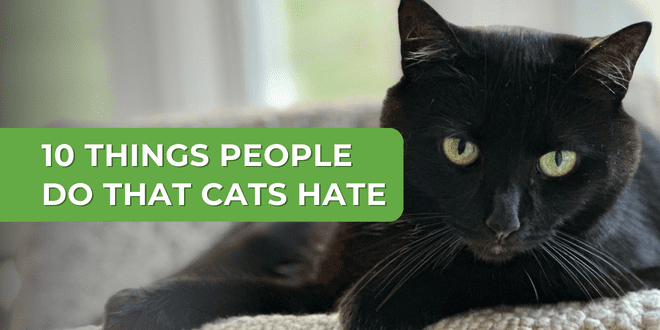
1. The Disruption of Routine (Abrupt Change)
Cats are the ultimate creatures of habit. Their daily rhythms—feeding, grooming, patrolling, and sleeping—are orchestrated around a predictable schedule. Abrupt changes, such as moving to a new home, rearranging furniture, introducing a new pet, or even switching a food brand, can trigger a "fight or flight" response.
The Implication: When a cat’s sense of environmental control is stripped away, anxiety ensues. This stress can lead to immune system suppression or the development of stress-induced cystitis.
The Solution: Whenever possible, incorporate changes incrementally. If you are moving, introduce the cat to the new space slowly using pheromone diffusers. If you are changing food, mix the new brand with the old over a period of seven to ten days.
2. Neglecting the Litter Box
While the act of cleaning a litter box is perhaps the least glamorous part of cat ownership, it is arguably the most important. A cat’s litter box is their private sanctuary. If it is unclean, it is the equivalent of a human using an unflushed toilet—a violation of both hygiene and dignity.
Supporting Data: Veterinary studies suggest that a significant percentage of inappropriate elimination cases are linked directly to poor litter box maintenance. A dirty box causes immense stress, which often results in the cat choosing carpets or laundry baskets as an alternative, cleaner bathroom.
The Protocol: Scoop the box at least twice daily. Perform a deep cleaning with mild soap and water at least once a month. Never rely on scented litter to mask odors; this is for the human’s benefit, not the cat’s, and the overwhelming chemicals can deter the cat from using the box entirely.

3. The "Belly Trap": Misinterpreting Affection
Human culture often interprets a cat exposing its stomach as an invitation for a belly rub, similar to how one might pet a dog. In the feline world, however, the belly is the most vulnerable part of their body.
The Reality: Exposing the belly is a sign of immense trust and relaxation, not a request for manual stimulation. When a human reaches for the tummy, the cat often feels forced to defend its vulnerable underside, resulting in the classic "bunny-kick" or a sharp nip. Always respect the boundaries of your cat; unless they have explicitly demonstrated a love for belly rubs, stick to the head, chin, and cheeks.
4. The Impact of Acoustic Stress
Cats possess a hearing range that far exceeds that of humans. They can detect high-frequency sounds that are completely silent to us. Consequently, a home filled with loud music, shouting, construction noise, or roaring vacuum cleaners is physically painful for a cat.
Professional Recommendation: Ensure your home has "quiet zones"—safe, elevated spaces where a cat can retreat when the environment becomes too stimulating. If you are uncertain about the noise levels in your home, use a decibel meter app. If a room is consistently loud, it is inappropriate to place the cat’s food, water, or resting spots there.

5. Forced Interaction and Agency
The cornerstone of a healthy relationship is the ability for the cat to choose when to engage. Forcing a cat to be held, petted, or introduced to visitors when they are not in the mood is a primary cause of human-feline friction.
Chronology of Interaction: When a cat approaches you, they are setting the terms. If you force an interaction, the cat learns that you are a source of pressure rather than a source of comfort. By letting the cat dictate the pace, you build confidence. If guests are over, allow the cat to observe from a distance. If they want to approach, let them do so on their own terms.
Supporting Data and Expert Perspectives
Experts in feline behavior, such as renowned consultant Pam Johnson-Bennett, emphasize that human "love" is often expressed in ways that are inherently uncomfortable for cats. Hugging, for instance, is a primate behavior—not a feline one. To a cat, being restrained is a terrifying experience that triggers their instinct to flee.
Official Stance on Training: Modern behavioral science has moved entirely away from punishment. Punishment in cats does not equate to "teaching them better." It only teaches them that the human is unpredictable and dangerous. Instead, utilize positive reinforcement. If a cat is scratching the sofa, provide an alternative scratching post and reward the use of that post with treats or praise.

Addressing Sensory Overload: Scents and Schedules
Beyond physical interaction, the olfactory and temporal environment plays a massive role in feline health.
The Olfactory Warning
Cats have a highly developed vomeronasal organ, making them extremely sensitive to scents. Strong air fresheners, essential oil diffusers, harsh chemical cleaners, and heavily scented laundry detergents can irritate a cat’s respiratory system and cause them to feel "un-homed" because their own scent marks are being obliterated. Opt for fragrance-free cleaning products whenever possible.
The Importance of Predictability
Just as with their environment, a cat’s schedule should be a metronome. Feeding, play, and bedtime should occur at roughly the same times daily. When a schedule is inconsistent, a cat lives in a state of perpetual hyper-vigilance, never knowing when their next meal or safe window for rest will occur.
Implications of Poor Feline Stewardship
The implications of failing to meet these needs go far beyond a scratched chair or a missed litter box. Chronic stress in cats is a leading precursor to:

- Behavioral Aggression: A cat that feels forced into uncomfortable situations will eventually use teeth and claws to defend itself.
- Health Deterioration: Prolonged stress affects the immune system, making cats more susceptible to viral infections and chronic inflammatory conditions.
- Bond Erosion: The relationship between a human and a cat is built on a "bank account" of trust. Every time a human ignores a cat’s body language, they make a "withdrawal." Consistent, respectful behavior is the only way to make a "deposit."
Conclusion: Toward a More Empathetic Bond
To live with a cat is to enter into a partnership with a different species that views the world through a lens of sensory awareness and caution. By mitigating loud noises, maintaining a pristine environment, respecting bodily autonomy, and adhering to consistent routines, we do more than just prevent "bad behavior." We create a sanctuary.
When a cat knows that their human is a source of predictability, safety, and respect, the bond transforms. It moves from one of convenience to one of profound mutual affection. Remember, the goal is not to mold the cat into a companion that fits our human schedule, but to adjust our own lives to honor the needs of the intelligent, sensitive, and deeply loving creatures that share our homes.
For those seeking to further their knowledge, expert literature on feline behavior remains the most effective tool in the kit of the modern cat parent. By investing time in understanding the language of the cat, you ensure a lifetime of harmony and trust.