In a recent development affecting the equestrian community in the Southwestern United States, the United States Department of Agriculture’s (USDA) Animal and Plant Health Inspection Service (APHIS) has confirmed that two equine premises in Rio Arriba County, New Mexico, are currently under official quarantine. These facilities have reported presumptive positive cases of Vesicular Stomatitis Virus (VSV), a viral disease that poses significant management challenges for horse owners and veterinary professionals alike.
The discovery of these cases underscores the persistent nature of VSV in the Western Hemisphere, particularly as seasonal conditions favor the proliferation of the insect vectors responsible for its transmission. As the Equine Disease Communication Center (EDCC) continues to monitor the situation, horse owners across the region are urged to exercise heightened vigilance regarding biosecurity and animal health monitoring.
Main Facts: The Current Situation in Rio Arriba County
The identification of presumptive positive cases in Rio Arriba County marks a critical juncture for regional livestock health. According to APHIS reports, the facilities in question were flagged following the appearance of characteristic clinical signs in resident equines. Upon notification, state and federal officials moved quickly to establish mandatory quarantine protocols to prevent the further spread of the pathogen.
Vesicular Stomatitis is a reportable disease in all 50 states. The immediate quarantine of the affected Rio Arriba premises is a standard regulatory procedure designed to contain the virus within the index facilities. Under these mandates, no horses, mules, donkeys, or other susceptible livestock may move on or off the properties until state animal health officials are satisfied that the virus is no longer active.
The quarantine process is not merely a restriction on movement; it is a collaborative effort between local practitioners and state veterinarians to ensure that every affected animal receives appropriate supportive care and that biosecurity measures are tightened to protect neighboring farms.
Chronology of the Outbreak
While VSV is often endemic to the region, the arrival of current cases follows a predictable yet concerning timeline dictated by environmental factors.
- Pre-Detection Phase: Throughout late spring and early summer, veterinary authorities in New Mexico heightened surveillance efforts, anticipating the seasonal surge of biting midges (the primary vector for VSV). Educational campaigns were launched to remind owners of the signs of the disease.
- The Identification: Within the last reporting cycle, local veterinarians observed clinical lesions consistent with VSV on horses at two separate premises in Rio Arriba County. Recognizing the severity of the symptoms, they promptly reported the findings to the New Mexico State Veterinarian’s office.
- Presumptive Confirmation: APHIS, in coordination with state labs, processed samples from the affected animals. While final laboratory confirmation for the specific strain is ongoing, the presence of vesicular lesions has led to a "presumptive positive" status, which triggers immediate regulatory action.
- Quarantine Implementation: Both premises were formally placed under quarantine. Currently, the facilities are undergoing a period of intense monitoring, during which time the EDCC continues to disseminate information to help local stakeholders identify early warning signs.
Understanding Vesicular Stomatitis: The Pathogen and Its Vectors
Vesicular Stomatitis Virus is a rhabdovirus, part of the same family as rabies, though it behaves quite differently in clinical practice. It primarily affects horses, donkeys, mules, cattle, and swine. It is arguably the most economically significant vesicular disease of livestock in the Americas, primarily due to the trade restrictions and management costs associated with outbreaks.
The Role of Insect Vectors
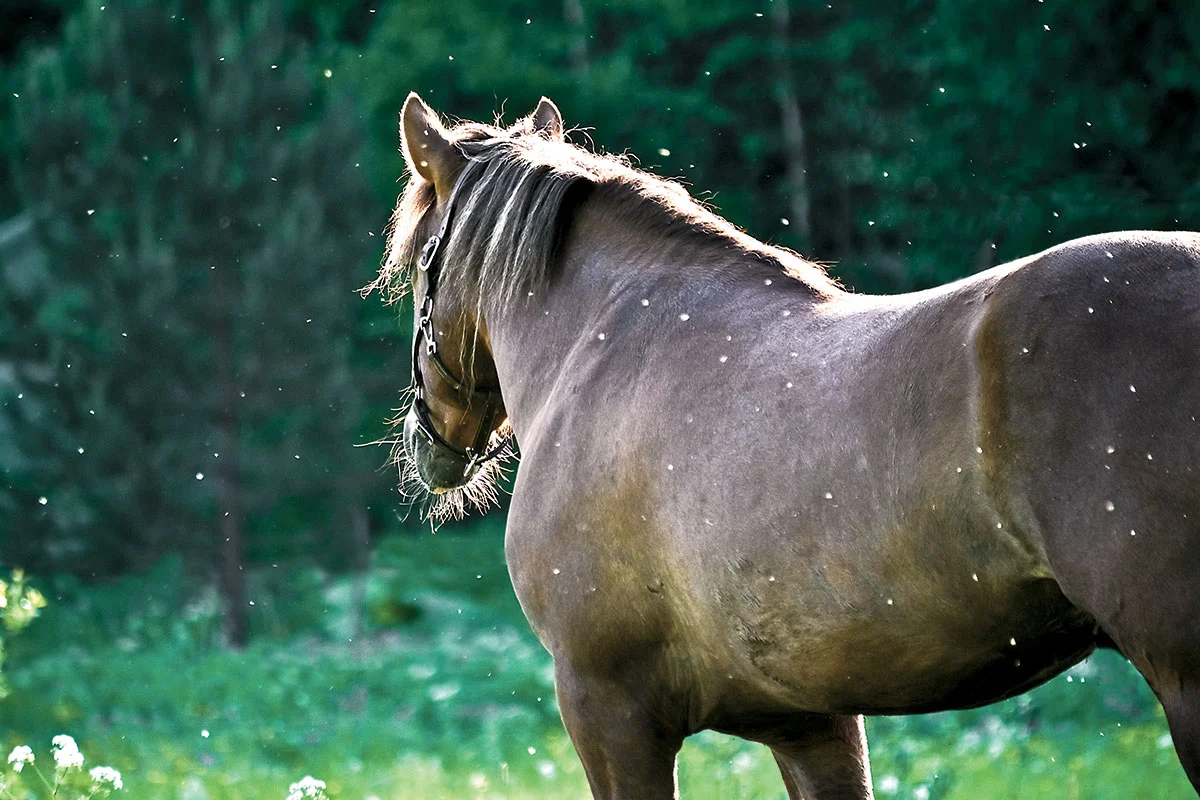
The transmission of VSV is heavily dependent on biting midges (Culicoides species), black flies, and sand flies. These insects act as mechanical vectors, picking up the virus from infected animals and carrying it to susceptible hosts. Because the lifecycle of these insects is tied to climate—specifically humidity and temperature—VSV is almost exclusively a seasonal disease. As the summer progresses and moisture levels fluctuate, the risk to livestock increases significantly.
Clinical Manifestations
The disease earns its name from the "vesicles" (blisters) that form on the skin and mucous membranes. Owners should look for:
- Oral lesions: Blisters, ulcers, or crusts on the lips, muzzle, tongue, and gums.
- Coronary band involvement: Lesions around the top of the hoof, which can lead to significant lameness.
- Soft tissue sensitivity: Crusts and ulcers on the ears, sheath, teats, or ventral abdomen.
- Systemic signs: Excessive salivation (ptyalism), refusal to eat or drink due to oral pain, and occasionally mild fever or lethargy.
Official Responses and Diagnostic Protocols
The response to the Rio Arriba County cases follows strict USDA-APHIS guidelines. The diagnosis of VSV is a multi-step process that requires the involvement of both private practitioners and government regulatory officials.
Diagnostic Verification
Initial diagnosis is based on the recognition of the characteristic vesicular lesions. However, because these symptoms can mimic other serious diseases—such as Foot and Mouth Disease (which is highly contagious and devastating to the cattle industry)—it is imperative that veterinarians distinguish between them.
Veterinarians are required by law to report any suspected case to the State Veterinarian. Once reported, state or federal officials coordinate the collection of fluid from lesions or serum samples for antibody testing. These are sent to approved regulatory laboratories, such as the National Veterinary Services Laboratories (NVSL).
Treatment and Supportive Care
It is important to note that there is no antiviral drug or specific treatment to "cure" VSV. The virus must run its course, which typically takes two to four weeks. Treatment is strictly supportive:
- Anti-inflammatories: To manage pain and reduce fever.
- Softened feed: To encourage eating despite oral pain.
- Topical care: Keeping lesions clean to prevent secondary bacterial infections.
- Hydration: Ensuring the animal does not become dehydrated from a refusal to drink.
Implications for the Equine Industry
The appearance of VSV carries significant implications for horse owners, boarding facilities, and event organizers.
The Economic Burden
The economic impact of an outbreak extends beyond the cost of veterinary care. Quarantine measures often result in the cancellation of equestrian events, such as horse shows, rodeos, and clinics. This creates a ripple effect, impacting trainers, stable hands, feed suppliers, and the broader equine economy.
Biosecurity as the First Line of Defense
The EDCC emphasizes that the best way to manage VSV is through rigorous biosecurity. During the summer and fall months, owners should:
- Reduce Insect Exposure: Use fly sheets, masks, and environmental controls like fans to keep flies away from horses.
- Manure Management: Flies breed in manure and stagnant water. Cleaning stalls and paddocks frequently is essential.
- Individual Equipment: Do not share tack, grooming tools, or water buckets between horses, as the virus can be spread via physical contact with contaminated equipment.
- Monitoring: Perform daily health checks on all equines, particularly checking the mouth and coronary bands.
Legal and Regulatory Obligations
Owners must remember that VSV is a reportable disease. Failure to report a suspected case not only puts other animals at risk but can lead to legal complications for facility owners. The quarantine process is not intended to punish, but to protect the broader agricultural health of the state. Cooperation with the New Mexico State Veterinarian is the fastest way to resolve an outbreak and lift quarantine restrictions.
Long-Term Outlook and Prevention
While the current cases in Rio Arriba County are contained, the threat remains as long as environmental conditions favor vector activity. The scientific community continues to research the potential for vaccines, though currently, there is no USDA-approved vaccine available for commercial use in the United States. This makes environmental management and physical protection the only viable defenses.
Resources for Horse Owners
For those concerned about their own herds, the Equine Disease Communication Center (EDCC) provides real-time updates and interactive maps tracking the spread of VSV. Horse owners are encouraged to:
- Visit the EDCC website for updated disease alerts.
- Consult with a licensed veterinarian to develop a property-specific biosecurity plan.
- Stay informed through local state departments of agriculture.
As the summer season continues, the situation in New Mexico remains a poignant reminder of the fragility of animal health in the face of seasonal viral outbreaks. Through vigilance, prompt reporting, and adherence to quarantine protocols, the equestrian community can work to minimize the impact of this year’s VSV cycle, ensuring the safety and well-being of the horse population.
Disclaimer: This report is for informational purposes only and is based on data provided by the Equine Disease Communication Center (EDCC) and the USDA APHIS. For specific health concerns regarding your own horses, please contact your local veterinarian immediately.