
August 17, 2026 — In the traditional lexicon of animal training, the "jackpot"—a sudden, large-scale reward for an exceptional performance—has long been a polarizing topic. For decades, practitioners have debated whether these generous payouts truly accelerate learning or merely serve as a sentimental "feel-good" gesture for the human trainer. Now, a groundbreaking study published in Science in May 2026 is providing the first robust biological framework to support what many trainers have long suspected: size matters, and the brain’s chemical response to large rewards may be the key to unlocking faster, more efficient learning.
The Science of Scale: Challenging Traditional Training Dogma
For years, the standard pedagogical approach to animal training has been rooted in the principle of high-repetition, low-magnitude reinforcement. The prevailing logic suggested that to master a behavior, a learner needs a high volume of "trials," with each trial punctuated by a small, precise reward. This methodology is often compared to a gym regimen: many small, steady reps to build muscle memory.
However, a research team led by Gong, Martell, Dudman, and Coddington has effectively turned this theory on its head. Their research indicates that by drastically increasing the magnitude of the reward—even if it results in fewer overall repetitions—learners demonstrate significantly accelerated acquisition of new skills.

The study found that "very large" rewards—quantified as one to two orders of magnitude greater than standard treats—produced a profound shift in cognitive performance. Subjects in the study did not just learn faster; they became more efficient at collecting rewards, maintained higher levels of engagement throughout the session, and exhibited superior across-session improvements.
The Dopamine Connection: The Biological Engine of "Seeking"
The central mechanism behind this phenomenon is the neurotransmitter dopamine. Often mischaracterized as merely a "pleasure hormone," dopamine is more accurately understood as the chemical mediator of "motivational salience" or "seeking" behavior.
As noted by the late neuroscientist Jaak Panksepp, whose work remains foundational in this field, dopamine is the drive that keeps an animal interested in its environment and its goals. The 2026 study offers a critical update to this understanding: large rewards trigger longer, more sustained activity of dopamine-releasing (DA) neurons during the consumption phase.

The researchers identified three pillars that dictate the efficiency of learning:
- The Learning Rate: The speed at which new information is encoded.
- Capture Efficiency: The ability to retain and carry over improvements from one session to the next.
- Sustained Engagement: The capacity to remain focused on the task without fatigue or distraction.
Large rewards, the study concludes, positively impact all three aspects. By flooding the brain with a longer-lasting dopamine signal, the reward reinforces not just the action taken, but the mental state of the learner, cementing the behavior more deeply into the animal’s cognitive architecture.
The "Jackpot" Debate: From Anecdote to Evidence
In the professional dog training community, the "jackpot" has historically existed in a gray area of anecdotal evidence. Trainers like Patricia McConnell have utilized the technique for decades, observing that dogs often respond to a sudden influx of rewards with heightened focus and an "astounded" demeanor.

"They’ll gobble one treat after another in rapid succession, then look at me with huge, wide eyes," McConnell notes. "Their body posture changes, their expressions shift—it feels as though we have tapped into something significant."
Despite the popularity of this method, skeptics have argued that there was no data to support the practice, suggesting that multiple small treats offered sequentially might be more effective than a singular, massive payout. The new Science findings offer a potential vindication for the "jackpot" approach, suggesting that the physiological impact of a large reward creates a distinct neurochemical event that smaller, repetitive rewards simply cannot replicate.
However, the question remains: Can this translate directly from laboratory mice to the domestic canine? The research community is now calling for a replication of these findings specifically with dogs, a study that could serve as a vital dissertation topic for students of animal behavior.

Implications for Specialized Training and Beyond
The implications of this research extend far beyond basic obedience. In fields where food reinforcement is not the primary motivator—such as advanced herding or complex search-and-rescue tasks—the concept of the "jackpot" may be even more relevant.
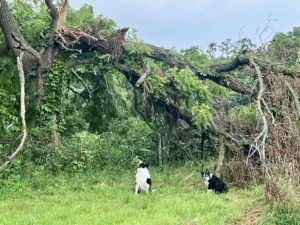
Many master trainers of Border Collies have long practiced a form of "jackpotting" through task complexity. By alternating between challenging maneuvers and simple, high-reward tasks, and ending a session with a long, uninhibited "outrun and fetch," they are effectively providing a psychological jackpot. This allows the dog to engage in the work for an extended period without human interference, reinforcing the behavior through the sheer satisfaction of the task itself.
Is this, essentially, the same as a food-based jackpot? The biological evidence regarding sustained dopamine activity suggests that it might be. If the "joy of the work" produces a similar neurochemical reward as a massive food payout, it would explain why these high-engagement activities are so effective at building long-term competence in working breeds.

Summer Reflections: A Moment of Pause
While the scientific community debates the neurochemical implications of rewards, the human side of the experience serves as a reminder of the importance of engagement and "the big picture."
This past August, a journey across the Great Lakes—specifically the vast, sprawling expanse of Lake Michigan, known to the Ojibwe as Michigami ("Great Water")—offered a stark contrast to the intensity of laboratory research. Traveling via the historic SS Badger and the modern Lake Express ferry, one gains a perspective on scale. Much like the difference between a small treat and a jackpot, there is a fundamental difference in the "magnitude" of the experience when one chooses the slow, contemplative path versus the rapid, efficient one.
From the Petoskey breakwall, where local youth dove fearlessly into the depths of the lake, to the bustling South Haven marina, the trip underscored a simple truth: the most memorable experiences are often those that command our full, undivided attention—much like the dopamine-fueled focus of a dog receiving a jackpot.

Moving Forward: The Future of Reward-Based Learning
The 2026 study in Science marks a significant milestone in behavioral psychology. It suggests that we may have been underestimating the power of the "big win." By shifting our focus from the quantity of repetitions to the quality and magnitude of the reward, we may be able to unlock new levels of potential in our animal companions.
As the discussion continues, trainers and behaviorists are urged to consider how they can integrate these findings into their own practice. Whether it is through an extra-large reward during a training session or a "jackpot" of freedom and play at the end of a long day of work, the evidence suggests that giving more—when the moment is right—may be the key to better, faster, and more sustained learning.
The scientific community now looks toward the next frontier: a formal study on canine subjects to bridge the gap between rodent-based data and the real-world application of dog training. Until then, the "jackpot" remains a powerful, albeit scientifically evolving, tool in the trainer’s repertoire.

Do you utilize jackpots in your training? How do you adapt your rewards for complex tasks? Join the conversation and share your experiences as we continue to explore the fascinating intersection of neuroscience and animal behavior.