In the quiet, observational world of ethology, few questions stir as much debate—or as much delight—as the possibility that our canine companions possess a sense of humor. While the image of a dog "telling a joke" might sound like the setup for a cartoon, recent discourse among animal behaviorists and trainers suggests that the capacity for humor in dogs is not only possible but observable. By examining the intersection of play, social cognition, and emotional intelligence, we are beginning to uncover a sophisticated layer of canine behavior that transcends basic survival instincts.
The "Felony Trot": Defining Canine Humor
The discussion was recently ignited by a thought-provoking interview with New York-based dog trainer Jess Erace, who posits that dogs not only "get" jokes but actively initiate them. Erace recounts a recurring scenario involving a dog that would deliberately seize a potholder while the family was seated for dinner. With his head held high and a jaunty, exaggerated gait—a behavior she affectionately labels the "Felony Trot"—the dog would parade past the dining room table, fully aware that the resulting laughter from his human audience was the intended payoff.

This behavior, characterized by the intentional violation of a household rule to solicit a specific social reaction, fulfills the essential criteria for a joke: an act designed to provoke a response. When the dog repeated this performance throughout his life, it became clear that he was not merely acting out of confusion or defiance, but rather engaging in a recurring social ritual that provided him with a clear, positive feedback loop.
A Historical Perspective: From Darwin to Modern Ethology
The inquiry into animal humor is not a modern fad; it is a subject that has intrigued naturalists for centuries. In his seminal 1872 work, The Descent of Man, Charles Darwin provided one of the earliest academic observations of this phenomenon. Darwin noted that dogs often engage in "practical jokes," such as feigning interest in a stick, only to snatch it away at the last second, inviting the master to chase them. Darwin concluded that this behavior was distinct from mere play—it was a calculated maneuver performed with a clear sense of enjoyment, suggesting that the dog was aware of the "game" being played.

Merriam-Webster defines a joke as "something said or done to provoke laughter," a definition that modern ethologists are increasingly applying to non-human species. If we move beyond the requirement for oral communication, the "Felony Trot" and Darwin’s "stick-snatching" qualify as structured, non-verbal narratives with a humorous, climactic twist.
The Physiology of Laughter in Animals
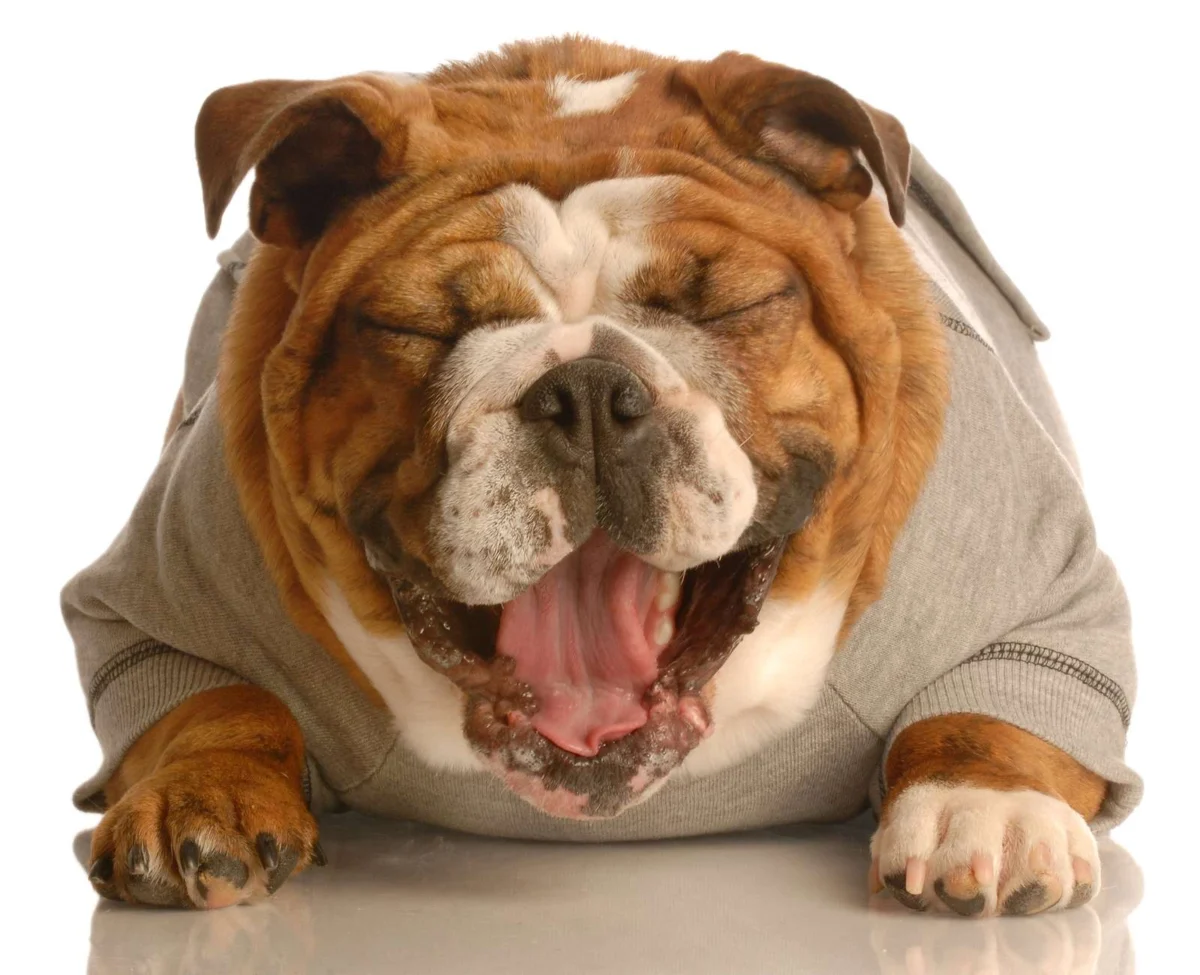
The question of whether dogs actually laugh—in the auditory or physical sense—remains a subject of intense scientific scrutiny. Nobel Prize-winning ethnologist Konrad Lorenz famously argued that dogs exhibit a form of laughing during play. He described a specific facial expression: slightly opened jaws revealing the tongue, with the corners of the mouth tilted upward, stretching almost from ear to ear. This "smile," combined with the excited, breathless panting that follows an invitation to play, serves as a powerful indicator of positive affect.

Furthermore, researcher Patricia Simonet has documented "laughing" in dogs through the lens of acoustics. Her studies suggest that dogs emit short, forced exhalations during play that act as a signal to other dogs. When these sounds are recorded and played back in shelters, they have been shown to reduce stress and induce playful behavior in other dogs. Stanley Coren, a professor of psychology and canine expert, has even attempted to replicate these sounds to engage his own dogs. By making a breathy "hhuh-hhah-hhuh-hhah" sound with a relaxed, smiling mouth, Coren observed his dogs approaching him with increased interest, suggesting that these vocalizations serve as a bridge between human and canine communication.
The Cognitive Requirements for Humor
For a dog to be "funny," it must possess a level of social intelligence that allows it to understand its audience. This involves several complex cognitive processes:

- Theory of Mind: The dog must recognize that the human has a different perspective and that the human’s emotional state (laughter) is a direct result of the dog’s action.
- Contextual Awareness: The dog must distinguish between a "serious" environment and one where rule-breaking is met with amusement rather than correction.
- Predictive Reasoning: As seen in the "keep away" game described by Erace, the dog anticipates the human’s reaction and adjusts its behavior to maintain the game, treating the human’s mock-indignation as part of the performance.
However, researchers remain cautious. Is a child holding a toy out and then pulling it back really "joking," or is it a display of possessiveness? The distinction often lies in the social contract: the joke is not the behavior itself, but the shared understanding between the participants that the interaction is a game.
The Ethologist’s Toolkit: Identifying Amusement
How do we scientifically distinguish between a dog that is "amused" and one that is simply excited? Ethologists point to several indicators:

- Body Posture: The dog should be loose, relaxed, and bouncy. A "stiff" or "tense" dog is likely experiencing anxiety or high-arousal stress, not humor.
- Facial Expressions: The "side-eye" glance or a relaxed, open-mouthed expression often correlates with playful intent.
- Social Feedback: If the behavior ceases when the human stops laughing or reacting, it suggests the dog was specifically targeting the social feedback of the human.
A Personal Reflection: Life at the Farm
While the science of animal behavior is rigorous, it is deeply informed by daily, anecdotal experiences. On the farm, the rhythms of life—from the changing of the seasons to the health of our animal companions—provide the necessary context for observing these behaviors.
Recently, the household has been navigating the health challenges of Maggie, a nearly 13-year-old dog. Dealing with chronic conditions like kidney disease, compounded by a recent bout of digestive distress, serves as a sobering reminder of the fragility of our pets. When a dog who has been "full of zest" for over a decade suddenly appears "diminished," it highlights how essential their playful, humorous nature is to our bond with them. Even in the face of medical uncertainty and the emotional toll of caring for an aging animal, the search for joy remains paramount.

Whether it is watching the monarch caterpillars on our butterfly weeds or working with a young, exuberant dog like Skip on a local sheep farm, these moments of connection are the bedrock of our understanding of animal intelligence. The beauty of an ancient oak tree or the simple pleasure of an off-leash walk in the woods reminds us that we are not just observing subjects; we are participating in a shared life.
Implications and Future Directions
If dogs do possess a sense of humor, it necessitates a shift in how we approach animal training and welfare. It suggests that our pets are not merely reactive creatures driven by basic operant conditioning, but proactive social partners.

Moving forward, the field of anthrozoology must prioritize longitudinal studies on canine emotional states. By integrating acoustic analysis of "laughter" with longitudinal observation of social play, we may be able to map the development of humor in dogs as they mature.
Ultimately, the quest to understand if dogs "tell jokes" is less about anthropomorphizing our pets and more about acknowledging the depth of their cognitive and emotional lives. Whether they are performing a "Felony Trot" or simply offering a playful glance, our dogs are communicating with us in a language that, while non-verbal, is undeniably rich with meaning. As we continue to study these animals, we must remain open to the idea that joy is a universal language, one that we are lucky enough to speak with our dogs every single day.