
Every cat owner has, at some point, peered closely at their feline companion and marveled at the intricate details of their anatomy. Among the most curious features are the delicate, wispy hairs sprouting from the inner ears and the dramatic, pointed spikes adorning the tips. While they certainly add to the aesthetic charm of our pets—giving them a look that ranges from sophisticated to wild—these features are far from mere decoration.
To the evolutionary biologist, these are precision-engineered tools. Known as "ear furnishings" and "ear tufts," these specialized hairs are vital components of a cat’s sensory and protective apparatus. Understanding them provides a deeper appreciation for the feline’s survival instincts and the remarkable way their bodies have adapted to the world.
Main Facts: The Science Behind the Scruff
At their core, ear furnishings and ear tufts are modified guard hairs. They are not random growths; they are part of a sophisticated sensory network that helps cats navigate their environment.
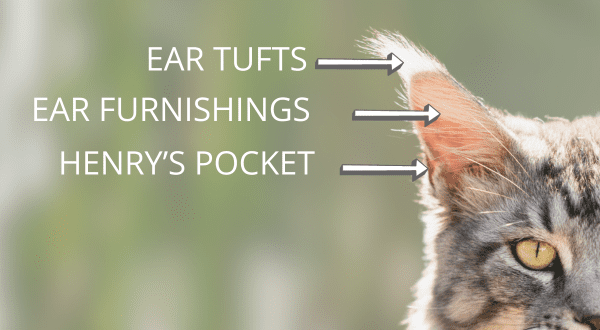
Ear furnishings refer to the tufts of hair growing inside the pinna (the external ear). These vary significantly from cat to cat; some may have dense, long clusters, while others have subtle, sparse hairs. Regardless of density, their primary function is defensive. They act as a physical filtration system, trapping dust, debris, pollen, and even mites before these irritants can settle deep into the sensitive ear canal.
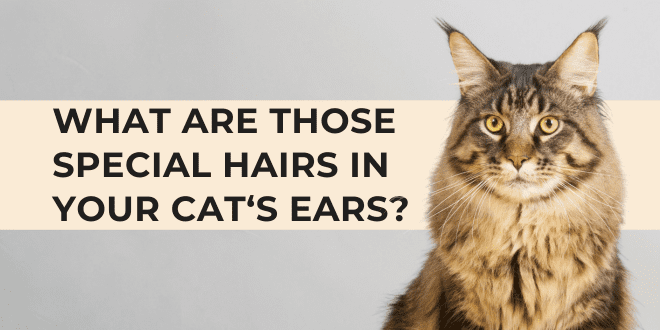
Ear tufts, often referred to as "lynx tips," are distinct from furnishings. These are the long, prominent hairs that extend from the very tips of the ears. Most famously associated with breeds like the Maine Coon, the Norwegian Forest Cat, and, of course, their wild cousin the Lynx, these tufts serve as acoustic antennas. They catch sound vibrations and funnel them directly into the ear canal, amplifying the cat’s already legendary hearing.
Chronology: An Evolutionary Perspective
The development of these features can be traced back to the wild ancestors of our domestic cats. Millions of years of evolution in varying climates—from the snowy forests of Siberia to the arid scrublands of Africa—have necessitated specialized adaptations.
- Pre-Domestication (The Wild Era): For wild felids, ear tufts and thick internal furnishings were essential for survival. In deep snow, tufts helped keep ears warm and protected, while dense internal hairs acted as a barrier against windblown snow and dirt.
- The Transition to Domesticity: As cats moved closer to human settlements, their reliance on these physical adaptations shifted. While the domestic house cat no longer needs to hunt in the tundra, the genetic blueprint remains.
- Selective Breeding: Over the last few centuries, humans have intentionally selected for these traits in specific breeds. The "wild look" became a mark of beauty, leading to the preservation and exaggeration of tufts in breeds like the Maine Coon, where they are now a standard-setting feature.
Supporting Data: Why Anatomy Matters
Beyond aesthetics, the importance of these hairs is rooted in biological efficiency. According to veterinary anatomical studies, a cat’s ear is one of its most sensitive organs. The anatomy is structured to funnel sound waves with high precision, allowing a cat to detect the ultrasonic frequency of a rodent’s squeak.
The Acoustic Advantage
Research indicates that the orientation of the ear pinna, combined with the presence of ear tufts, allows cats to locate the source of a sound with pinpoint accuracy. The tufts act as a "sound scoop," particularly for high-frequency noises. When a sound hits the tuft, it creates a subtle vibration that the cat’s nervous system interprets, helping them triangulate the distance and direction of the prey or potential threat.

The Hygiene Barrier
A cat’s ear canal is L-shaped, making it notoriously difficult for the animal to clean manually. Unlike a human, a cat cannot stick a finger into its ear. Instead, they rely on the "trapping" mechanism of ear furnishings. When debris enters the ear, it gets tangled in these hairs. As the cat grooms, it swipes at its ears, effectively pulling the debris out along with the loose hairs. Without these furnishings, foreign bodies would migrate deeper into the canal, significantly increasing the risk of otitis externa (ear canal inflammation) and bacterial infections.
Official Perspectives and Veterinary Insight
Veterinarians emphasize that while these hairs are beneficial, they are also a point of clinical focus. Because they trap debris, they can sometimes trap too much if a cat is prone to wax buildup or ear mites.
"It is a delicate balance," notes feline behaviorist and author Pam Johnson-Bennett. "We often see owners worrying about the ‘messiness’ of these hairs, but it is important to remember their protective role. Unless there is a sign of infection—such as foul odor, excessive head shaking, or redness—these hairs are doing exactly what they were designed to do: keeping the ear canal clear."
Veterinary dermatologists suggest that while grooming is essential, owners should avoid trimming these hairs unless specifically instructed by a veterinarian. Clipping them can remove the first line of defense against environmental pollutants.

The "Henry’s Pocket" Connection
No discussion of cat ears is complete without mentioning the cutaneous marginal pouch, colloquially known as "Henry’s Pocket." This small, slit-like fold of skin at the base of the outer ear remains one of the most debated features in feline biology.
While its exact purpose is still being researched, the prevailing theory is that it helps the cat detect high-frequency sounds by allowing for greater flexibility in the ear’s movement. It may also play a role in the precise muscular control the cat uses to rotate its ears toward a sound. It is a perfect example of how the entire ear assembly—from the pouch at the base to the tuft at the peak—works in unison to provide the cat with a superior auditory experience.
Implications for Owners: What Should You Do?
Understanding these features changes how we care for our cats. It shifts the focus from "grooming for looks" to "maintaining for health."
- Observation is Key: Pay attention to your cat’s ears during your regular grooming sessions. If you notice a sudden buildup of dark, coffee-ground-like debris in the furnishings, it may be a sign of ear mites, not just trapped dust.
- Respect the Anatomy: Never attempt to pluck or aggressively shave the internal ear hairs. You are not only removing a sensory receptor but also creating a pathway for bacteria to enter the canal.
- Encourage Natural Grooming: If your cat has exceptionally long ear tufts or furnishings, ensure they have adequate space and stimulation to groom themselves. A healthy cat is usually quite capable of maintaining its own ears.
- Consult Professionals: If you are concerned about the amount of debris caught in your cat’s ears, consult a veterinarian for a gentle, feline-safe ear cleaning solution rather than attempting to clean deep into the canal yourself.
Conclusion: A Masterpiece of Evolution
The domestic cat is a masterclass in biological optimization. Every feature, from the pads on their paws to the whiskers on their faces, serves a purpose. Ear furnishings and ear tufts are no exception. They represent a bridge between the wild, predatory past of the cat and its comfortable life in our homes.
By acknowledging the function of these hairs, we move past seeing them as merely "cute" or "scruffy" and begin to see them as evidence of the cat’s enduring nature as an apex survivor. The next time you find yourself petting your cat and notice those wispy, wild hairs, remember: you are looking at a highly evolved sensory tool that has kept their ancestors safe for millennia. Respect the tuft, admire the furnishings, and appreciate the incredible design of your feline companion.
For more in-depth insights into feline behavior, health, and the nuances of cat ownership, explore the comprehensive resources provided by experts like Pam Johnson-Bennett. Understanding your cat is the first step toward a more harmonious and informed relationship with your pet.