

To the casual observer, a cat’s ears are merely expressive instruments—swiveling antennas that betray their curiosity, irritation, or focused intensity. However, beneath the velvet surface of the pinna lies a marvel of evolutionary engineering. Among the most intriguing, yet often overlooked, features of feline anatomy are the delicate wisps of hair known as "ear furnishings" and the dramatic, wild-looking "ear tufts." Far from being mere aesthetic accessories, these structural elements serve vital biological, sensory, and protective functions that have allowed domestic cats to thrive as apex predators.
Main Facts: Decoding the Feline Ear
At the core of feline ear health and performance are two distinct features: ear furnishings and ear tufts.
Ear furnishings refer to the dense, often lengthy hairs that grow within the inner ear canal. While their thickness and length vary significantly from cat to cat—with some individuals sporting a subtle fuzz and others a prominent "beard" of fur—they are present in nearly all domestic feline breeds.
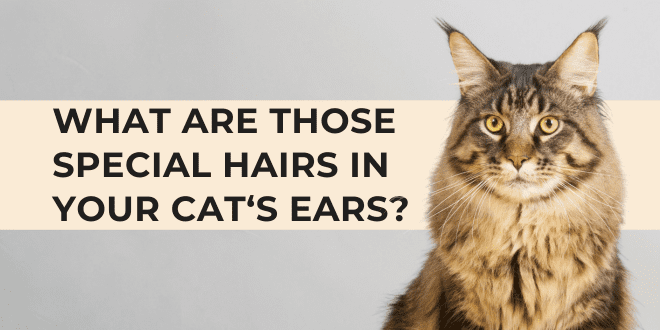
In contrast, ear tufts—often referred to as "Lynx tips"—are specialized clusters of hair that sprout from the very tips of the ear. These are particularly iconic in breeds like the Maine Coon, the Norwegian Forest Cat, and the Siberian. While these features contribute to the cat’s "wild" appearance, they are, in fact, highly specialized tools designed for environmental navigation and physiological protection.
Chronology of Evolutionary Development
The development of these features is deeply rooted in the evolutionary history of the Felis catus. Millions of years ago, the ancestors of the modern domestic cat occupied environments ranging from dense forests to arid plains. In these diverse biomes, hearing was the primary tool for both hunting and survival.
- Prehistoric Adaptation: As wild cats evolved, the need to filter out environmental noise while amplifying high-frequency sounds became paramount. Ear tufts likely evolved as a mechanism to "catch" sound waves and funnel them into the auditory canal, providing an acoustic advantage.
- The Protective Barrier: Simultaneously, the evolution of internal ear furnishings acted as a primary defense system. In the wild, cats face a constant barrage of dust, insect larvae, and microscopic parasites. The furnishings evolved to create a physical lattice, or "sieve," that traps these foreign objects before they can reach the delicate, sensitive tissue of the eardrum.
- Domestication Transition: Throughout the process of domestication, while the cat’s lifestyle shifted from the wild to the hearth, these anatomical features remained largely intact. Unlike other traits that were selected for by human breeding programs, ear furnishings and tufts have been preserved by the necessity of their function, confirming their role as essential biological assets.
Supporting Data: The Science of Sensory Precision
The efficacy of these hairs is backed by biological observation. A cat’s hearing is among the most acute in the animal kingdom, capable of detecting ultrasonic sounds up to 64,000 Hertz.
The Acoustic Funnel
Research into the mechanics of the feline ear suggests that the geometry of the pinna, combined with the placement of ear tufts, acts as a biological sound-gathering system. By filtering sound waves downward, ear tufts allow the cat to localize prey with pinpoint accuracy. When a cat moves its ears, it is not just shifting its focus; it is adjusting the angle of this "funnel" to isolate specific vibrations in the environment.
The Biological Filter
From a dermatological and hygiene standpoint, the interior ear canal of a cat is a moist, warm environment—an ideal breeding ground for bacteria and yeast. Without the barrier provided by ear furnishings, the ear canal would be significantly more susceptible to environmental debris. These hairs act as a secondary skin, catching particulate matter that would otherwise lead to inflammation or infection.

Meticulous Grooming Dynamics
Cats are famously fastidious, yet the interior of the ear is a "blind spot" for the cat’s tongue. By trapping debris in the furnishings, the cat allows the dirt to migrate toward the outer reaches of the ear. From there, the cat can easily swipe the accumulated matter away with its paws during its daily grooming ritual, effectively "cleaning" the internal filter.
Official Perspectives and Expert Insights
Veterinary behaviorists, such as renowned expert Pam Johnson-Bennett, emphasize that these features are indicators of a cat’s overall health and natural history. Experts generally agree that owners should never attempt to trim or remove these hairs.
"Everything on the cat is optimized for efficiency," notes Johnson-Bennett. In the professional community, the presence of these hairs is viewed as a natural deterrent against common otological issues. When owners mistakenly trim these hairs, they effectively remove the cat’s natural defense system, which can lead to increased occurrences of otitis externa (ear canal inflammation) and ear mite infestations.
Furthermore, these features are linked to a deeper understanding of feline morphology. For instance, the presence of "Henry’s Pocket"—the cutaneous marginal pouch at the base of the ear—is another structural curiosity that works in tandem with the ear’s overall design to allow for greater flexibility and sound localization.

Implications for Feline Ownership
Understanding the purpose of ear furnishings and tufts carries significant implications for cat owners, particularly regarding routine care and grooming.
1. The "Hands-Off" Policy
The most important implication for owners is the necessity of a "hands-off" approach. Many owners, seeing the hairs, may feel the urge to "tidy up" their pet’s appearance. However, doing so disrupts the biological integrity of the ear. The hairs should be allowed to grow naturally, as they are part of a self-maintaining system.
2. Monitoring for Abnormalities
While the furnishings act as a trap for debris, they also provide a visible indicator of potential problems. If an owner notices excessive buildup on the furnishings, it is often a sign of an underlying issue, such as mites, yeast, or an allergic reaction. The hairs act as a "canary in the coal mine," alerting the owner to potential health concerns before they escalate into deep-seated infections.
3. Respecting the "Wild" Ancestry
Recognizing these features as functional assets rather than aesthetic flaws encourages a better appreciation for the cat as an apex predator. Whether a cat has the dramatic, Lynx-like tips of a Maine Coon or the subtle, internal fuzz of a domestic shorthair, these features are remnants of a wild heritage that has served the species for millennia.

Conclusion: A Masterpiece of Evolution
The feline ear is a testament to the power of natural selection. By integrating a complex array of internal furnishings and external tufts, the cat has developed a highly efficient sensory and protective apparatus that is as impressive as it is subtle.
When observing your cat, take a moment to look closely at those inner hairs. They are not merely "cute" or "messy"; they are the result of millions of years of refinement, designed to keep your companion safe, healthy, and hyper-aware of the world around them. As we continue to learn more about the complexities of feline anatomy, we gain a greater respect for the "little tigers" living in our homes.
For those interested in delving deeper into the nuances of cat behavior and the biological imperatives that drive them, further resources—such as those provided by Pam Johnson-Bennett—offer invaluable insights into the lives and needs of our feline companions. By understanding the "why" behind their anatomy, we can provide better, more empathetic care for the animals that share our lives.