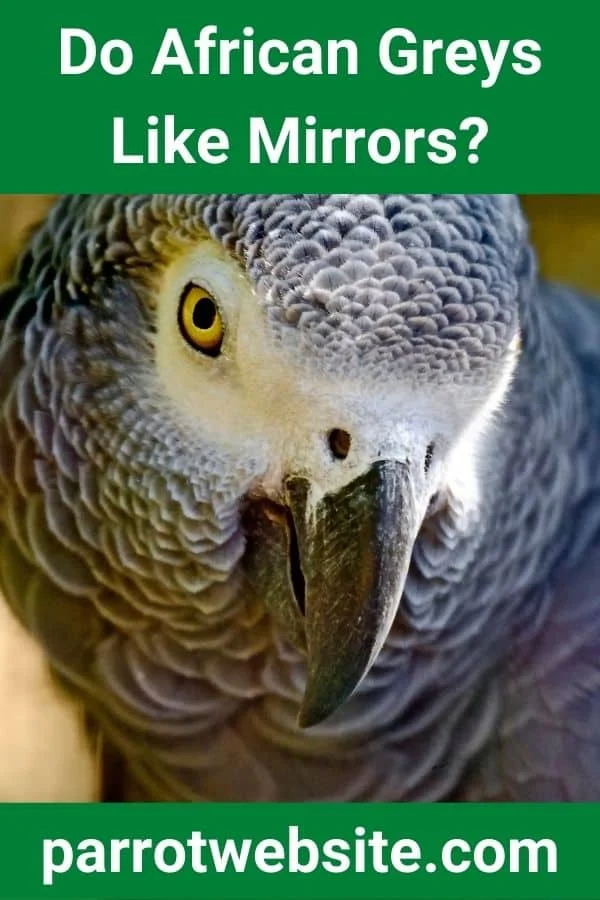
For many avian enthusiasts, the quest to enrich an African Grey’s environment is a constant pursuit. These highly intelligent, cognitively advanced parrots require significant mental stimulation to remain healthy and well-adjusted. Among the myriad of enrichment tools available on the market, the humble mirror is perhaps the most debated. Should a piece of glass be a staple in your African Grey’s cage, or is it a psychological hazard waiting to happen?
To answer this, we must look beyond the simple question of "do they like it" and examine the intricate behavioral, psychological, and evolutionary factors at play.
Main Facts: The Cognitive Reality of Parrots and Reflections
At the heart of the debate is the concept of "self-recognition." In the scientific community, the gold standard for testing self-awareness is the "mirror test," where a mark is placed on an animal’s body that can only be seen via a reflection. If the animal touches the mark on its own body, it demonstrates self-awareness. While some species, like magpies and great apes, have passed this test, the data on psittacines—the parrot family—remains inconclusive.
The primary fact for owners to digest is this: There is no peer-reviewed, definitive scientific research confirming that African Greys possess self-recognition. Because we cannot ask them, we must rely on observational data from behaviorists and long-term owners. This lack of certainty is precisely why the "mirror issue" remains a point of contention in the aviculture community.
Chronology: The Evolution of the "Mirror Trend"
The introduction of mirrors into bird cages is a relatively modern phenomenon, gaining traction in the mid-20th century as mass-produced pet toys became accessible.
- The Early Phase (1970s–1990s): Mirrors were marketed as a "cure for loneliness" for single-housed parrots. The logic was simple: a mirror provides a visual companion, keeping the bird from becoming depressed.
- The Behavioral Shift (2000s–2010s): As our understanding of avian psychology deepened, experts began to realize that "loneliness" in birds is a complex social construct. Simply providing a reflection failed to replicate the social bonds required by the highly gregarious African Grey.
- The Current Consensus (Present Day): Modern avian behaviorists now emphasize active social interaction over passive environmental stimulation. The current view is that while a mirror might provide fleeting interest, it is not a substitute for the human or avian companionship that these birds biologically crave.
Supporting Data: Why "Mirror-Induced Aggression" Occurs
To understand why some African Greys thrive with a mirror while others become volatile, one must look at the bird’s natural territorial instincts. In the wild, African Greys are social but highly protective of their nesting sites.
The Territorial Trigger
When a bird views its reflection, it does not necessarily see "me." Instead, it often sees a perpetual, silent, and potentially mocking intruder. In a confined cage environment, a bird cannot "chase off" this intruder. This creates a state of chronic frustration.
- The Aggressive Response: A bird may bob its head, fluff its feathers, or even attack the mirror, attempting to engage with the reflection.
- The Fixation Response: Some birds develop an unhealthy obsession with the mirror, spending hours staring at it. This can lead to a decrease in healthy behaviors, such as foraging, climbing, or vocalizing with their human companions.
- The Social Void: If an African Grey is single-housed and relies on a mirror for social cues, it may fail to develop the necessary social skills to interact with humans, potentially leading to increased biting or screaming.
Expert Perspectives and Official Guidelines
While no "official" regulatory body mandates the use of mirrors, the consensus among organizations like the Association of Avian Veterinarians (AAV) focuses on the quality of life and the avoidance of "learned helplessness" or behavioral pathologies.
The Expert View
Most avian behaviorists suggest that if a mirror must be used, it should be treated as a "novelty item" rather than a permanent fixture. Dr. Sarah Jenkins, a noted avian behaviorist, notes: "The danger of a mirror isn’t necessarily that the bird is ‘scared’ of it; the danger is the potential for the mirror to become an object of obsession, which stunts the bird’s cognitive development and social integration with its owners."
The Role of Personality
Every African Grey is an individual. A bold, confident parrot may simply tap the mirror, lose interest, and move on to a shredding toy. A more anxious or hormonal bird, however, may interpret the reflection as a mate or a rival, leading to "mating behavior" (regurgitation, tail-fanning) or aggressive posturing.
Implications: Making the Decision for Your Bird
If you are considering adding a mirror to your bird’s environment, you must approach it with a structured methodology.
1. The Trial Period
Never place a mirror in a cage and walk away for the day. Introduce it while you are present. Monitor the bird for at least three to four hours. Does the bird become excited, aggressive, or unusually quiet? If the bird attempts to feed the mirror (regurgitation), remove it immediately, as this indicates a hormonal fixation.
2. The "Distorted" Alternative
Some experts suggest that if you want to use a mirror, choose one that is slightly distorted or made of polished steel rather than high-clarity glass. A distorted reflection is less likely to be mistaken for a "real" bird, which may mitigate the risk of the parrot perceiving the reflection as a genuine threat or rival.
3. Enrichment Alternatives
If your goal is to "spruce up" the living space, remember that mirrors are the lowest form of enrichment. African Greys are master problem-solvers. They thrive on:
- Foraging Toys: Devices that require the bird to manipulate a mechanism to get a treat.
- Textural Variety: Different diameters of perches and varied materials (wood, rope, sisal) that allow for natural foot health.
- Cognitive Challenges: Puzzle boxes that reward the bird for specific actions.
What to Do If Things Go Wrong
If you have introduced a mirror and noticed a decline in your bird’s demeanor—manifested through excessive screaming, feather-plucking (a sign of stress), or increased aggression toward you—the protocol is clear:
- Immediate Removal: Do not wait to see if the bird "gets used to it." The stress is already impacting the bird’s cortisol levels.
- Environmental Reset: Rearrange the cage after removing the mirror. This helps "break" the association with the previous intruder.
- Increased Interaction: Dedicate extra time to out-of-cage training or gentle socialization. Redirect the energy that was being wasted on the mirror toward positive reinforcement training.
- Veterinary Consultation: If the bird continues to show signs of distress, such as pacing or self-mutilation, consult an avian veterinarian. Behavioral issues in parrots are often the first sign of underlying health problems.
Conclusion: The Final Verdict
Are mirrors good for African Greys? The professional, evidence-based answer is: Probably not.
While they are not inherently "dangerous" in a physical sense, they offer little in the way of true cognitive or social enrichment. For a species as intelligent and emotionally complex as the African Grey, a mirror is a hollow substitute for the dynamic interaction provided by toys, foraging opportunities, and human engagement.
If you choose to experiment with a mirror, do so with extreme caution, and treat it as a temporary toy rather than a permanent cage accessory. Ultimately, your African Grey’s mental health is far better served by a challenging puzzle or a shared session of target training than by a reflection of themselves. Prioritize the real over the virtual, and you will ensure a much happier, better-adjusted companion for years to come.