
By Paige K Parsons | Edited by Our Think Tank
UNITED STATES — In the modern American household, the hierarchy of pets has steadily expanded beyond the traditional dominion of dogs and cats. Alongside the reptiles, birds, and pocket pets, one long-eared mammalian companion has quietly hopped into the hearts—and living rooms—of millions.
As we look across the pet landscape in 2025, a persistent question arises among animal advocates, veterinarians, and urban homesteaders alike: Just how many pet rabbits are there in the United States today?
According to the most recent data released by the American Veterinary Medical Association (AVMA), approximately one million U.S. households—representing roughly 0.7% of the population—live with at least one pet rabbit. While this reflects a recalibration from previous years, the broader cultural footprint of the companion rabbit remains deeper and more complex than raw percentages suggest.
Thanks to decades of tracking by organizations like the AVMA, the American Pet Products Association (APPA), and grassroots archiving groups such as RabbitWiki, we now have a remarkably detailed picture of how the American rabbit population has evolved over the last thirty years.
Main Facts: The Current Landscape of U.S. Rabbit Ownership
Pinpointing the exact census of domestic animals is notoriously difficult, but comprehensive industry surveys offer a compelling snapshot of the current rabbit population in America.
In May 2025, the AVMA updated its public statistics page utilizing its extensive Pet Ownership & Demographics data. The figures point to roughly one million households currently housing rabbits, translating to a 0.7% household penetration rate.
However, looking backward just a few years highlights the dynamic nature of these populations. The AVMA’s comprehensive 2022 U.S. Pet Ownership & Demographics Sourcebook noted that 1.2% of households—roughly 1.5 million homes—owned rabbits, translating to an estimated population of 2.2 million individual pet rabbits nationwide.

Simultaneously, the APPA’s landmark Pet Owners Survey underscores that rabbits comfortably maintain their reign as the most popular "small animal" pet in the country. Within a broader small-animal ownership pool spanning 6.7 million households, rabbits hold a commanding share of the spotlight.
Perhaps most notably for the future of the species, demographic shifts are heavily favoring exotic and non-traditional pets. Reports from financial and lifestyle publications like Forbes indicate that younger generations—specifically Millennials and Gen Z—are driving a massive surge in the popularity of rabbits and other pocket/exotic pets. These younger pet owners often view rabbits not as "starter pets" for children, but as free-roaming, indoor companion animals deserving of the same specialized care, environmental enrichment, and emotional commitment typically reserved for cats and dogs.
+-----------------------------------------------------------------------------------+
|                        CURRENT U.S. RABBIT SNAPSHOT (2025)                        |
+---------------------------------------------------+-------------------------------+
| Metric                                            | Data Point                    |
+---------------------------------------------------+-------------------------------+
| Estimated U.S. Households with Rabbits (AVMA)     | ~1,000,000 households (0.7%)  |
| Previous Household Ownership Peak (2022 AVMA)     | 1.5 million households (1.2%) |
| Estimated Total Pet Rabbit Population             | 2.2 million                   |
| Small Animal Market Dominance (APPA)              | Top "Small Animal" Pet        |
| Key Demographic Drivers                           | Millennials & Gen Z           |
+---------------------------------------------------+-------------------------------+
Chronology: Three Decades of Pet Rabbit Statistics
To truly understand where the American rabbit population stands today, one must trace its historical trajectory. Over the past thirty years, pet rabbit ownership has fluctuated in response to economic shifts, changing public education regarding animal care, and the rise of specialized rescue organizations.
The 1990s: Establishing a Baseline
At the dawn of the 1990s, reliable data on exotic and small mammals was sparse. By 1991, historical tracking recorded roughly 1.4 million households owning rabbits, accounting for 1.5% of overall households. By the middle of the decade—specifically in 1996—that number crept upward to 1.9 million households, boasting a total rabbit population estimated at 4.9 million, with households averaging around 2.63 rabbits each. By 2000, the total population peaked near 5.3 million spread across 2.2 million households.
The 2000s: Surpassing Traditional Small Pets
The turn of the millennium marked a cultural turning point for lagomorphs. In 2002, a U.S. Department of Agriculture (USDA) report corroborated that 5 million rabbits were living as pets across 2.2 million households.
By the mid-2000s, survey data from Gallup and the AVMA consistently showed that roughly 1% to 1.62% of American households shared their living spaces with bunnies. Crucially, mid-decade APPA surveys revealed a monumental milestone: rabbits officially surpassed hamsters to become the most popular small animal pet in the United States, cementing their status as the third most popular companion mammal overall, trailing only dogs and cats.
By 2007, both the AVMA and the APPA estimated a robust total pet rabbit population of 6.1 million individuals, with an average of 3.3 rabbits per owning household—suggesting that many owners kept bonded pairs or small groups.
The 2010s: Market Corrections and Acquisition Shifts
The early 2010s saw some of the highest recorded numbers of pet rabbits in American history. The 2009-2010 APPA Pet Owners Survey noted that out of 15.9 million small animal pets in the U.S., a staggering 42% were rabbits, putting the total population at an all-time high of 6.6 million.
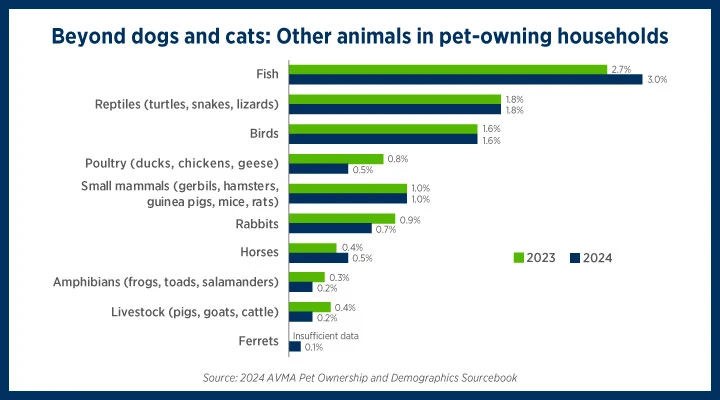
However, subsequent years revealed a contraction. The 2012 AVMA survey calculated that 1.2% of American households (roughly 1.2 million homes) housed about 3 million rabbits. By 2017, AVMA metrics stabilized household ownership at 1.5 million, with a total estimated population holding steady at 2.2 million.
The 2020s: The Modern Era
Entering the current decade, the pandemic-era pet boom initially spiked interest in home companionship, but post-pandemic economic realities and changing veterinary landscapes have led to the current 2025 estimate of approximately 1 million rabbit-owning households.
Supporting Data: Historical Summary Table
Below is the consolidated historical data tracking U.S. rabbit ownership metrics compiled from AVMA, APPA, USDA, and historical archives preserved via RabbitWiki:
| Metric | 2022 | 2017 | 2012 | 2010 | 2007 | 2002 | 2001 | 2000 | 1996 | 1991 |
|---|---|---|---|---|---|---|---|---|---|---|
| Households Owning Rabbits | 1.5M | 1.5M | 1.4M | — | 1.9M | 2.2M | 1.8M | 2.2M | 1.9M | 1.4M |
| % Overall Households | 1.2% | 1.2% | 1.19% | — | 1.62% | — | 1.70% | 1.6% | 1.90% | 1.50% |
| Average Rabbits / Household | — | — | 2.28 | — | 3.3 | — | 2.7 | 2.4 | 2.63 | 3.22 |
| Total Rabbit Population | 2.2M | 2.2M | 3.2M | 6.6M | 6.1M | 5.0M | 4.8M | 5.3M | 4.9M | 4.6M |
(Note: Blank entries indicate years where specific sub-metrics were not independently surveyed or published by reporting bodies.)
Official Responses and Changing Acquisition Trends
Beyond sheer population numbers, how people acquire their rabbits has undergone a profound transformation.
Historically, rabbits were frequently impulse-purchased around springtime holidays from commercial breeders or traditional pet stores. However, consumer habits have shifted drastically due to education campaigns by house-rabbit societies and animal welfare organizations.
Data from the APPA’s 2013-2014 survey illuminated a crucial shift in sourcing:
- 25% of all pet rabbits were obtained via adoption from shelters or rescue groups.
- 14% were purchased directly from traditional pet stores.
- The remaining majority came from private parties, breeders, or rescue networks.
Most telling was the steep decline in commercial retail channels: between the 2011-2012 and 2013-2014 cycles, the number of rabbits purchased at traditional pet stores dropped by 42%. This sharp downturn reflects the success of "Adopt, Don’t Shop" initiatives, municipal bans on retail rabbit sales in major cities, and an increased public awareness regarding the abandonment rates of Easter pets.

Implications: What the Numbers Mean for the Future of Rabbit Welfare
While the numerical data provides a fascinating look at consumer trends, these statistics carry profound implications for veterinary medicine, animal shelters, and public policy.
1. The Veterinary Access Crisis
Unlike dogs and cats, rabbits are classified as exotic pets. Consequently, finding a veterinarian with specialized training in lagomorph medicine can be exceptionally difficult. With over a million households housing rabbits, the demand for qualified exotic animal veterinarians vastly outstrips the supply. Veterinary associations face mounting pressure to expand exotic animal medicine curricula to ensure these prey animals receive appropriate preventative and emergency care.
2. The Shelter Burden and Abandonment Cycle
Because rabbits are often misunderstood as "easy" or "low-maintenance" cage animals, they suffer from high rates of impulse acquisition followed by surrender. Shelters frequently experience surges in abandoned rabbits in the months following Easter. The fact that adoption accounts for a quarter or more of all acquired pets highlights the vital, yet often overwhelmed, role played by rabbit-specific rescue networks across the country.
3. Indoor Housing and Behavioral Enrichment
The historical shift from keeping rabbits strictly outdoors in hutches to housing them indoors as free-roaming, litter-box-trained house pets has radically improved their quality of life. As younger generations—Millennials and Gen Z—continue to embrace rabbits as primary companions, expectations around rabbit welfare, specialized nutrition (such as unlimited timothy hay and fresh greens), and safe, bunny-proofed living environments will continue to rise.
Conclusion
Rabbits have journeyed a long way from their agricultural roots and misunderstood status as backyard livestock. Today, they occupy a secure, if specialized, place in the American home. While the raw population numbers fluctuate with economic and demographic tides, the cultural appreciation for the sentient, social, and intelligent nature of the domestic rabbit has never been stronger. As data collection methods improve and veterinary care adapts, the future for America’s millions of companion bunnies looks increasingly bright.