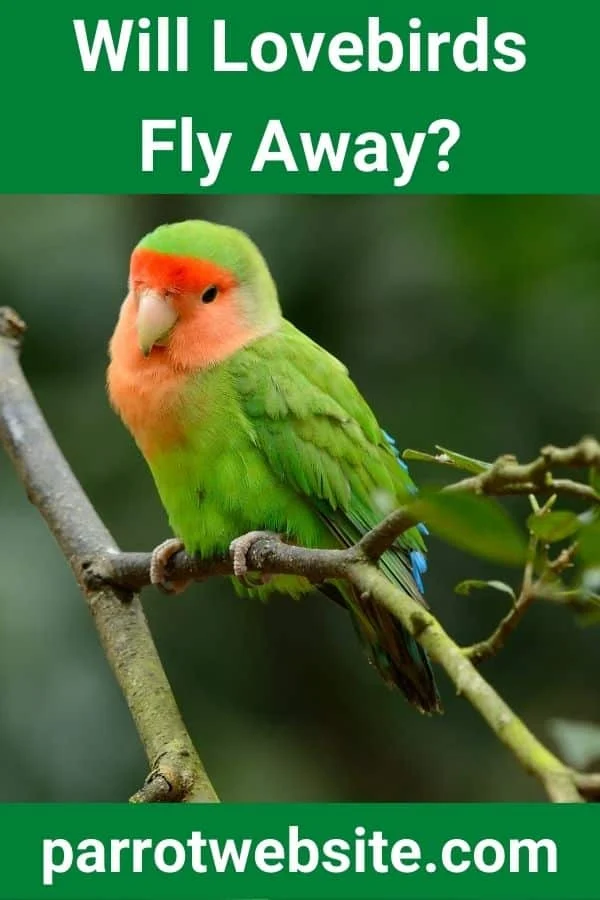
For many avian enthusiasts, the companionship of a lovebird is a source of immense joy. These small, vibrant parrots are celebrated for their affectionate nature and energetic personalities. However, even the most well-adjusted pet bird lives in a world governed by ancient biological imperatives. Owners often find themselves wondering: If I provide my bird with a life of luxury, will it truly want to leave? And more importantly, what happens when the instinct to fly clashes with the safety of a domestic environment?
The Core Conflict: Instinct vs. Domestication
The fundamental misunderstanding many bird owners share is the belief that a well-cared-for lovebird will prioritize its "home" over its biological programming. The reality is that for a lovebird, the impulse to fly is not an act of defiance or a rejection of their owner—it is a physiological necessity.
When a lovebird takes flight through an open window or an unlatched door, it is rarely executing a grand escape plan. Instead, it is following an evolutionary blueprint. In the wild, lovebirds are highly active creatures that spend their days surveying vast territories. This "surveying instinct" does not disappear simply because the bird lives in a living room. When presented with an open space, the bird’s brain triggers an immediate response to explore, test its wings, and reach higher vantage points.
It is critical to understand that this behavior is reflexive. The bird is not contemplating the consequences of leaving, nor is it weighing the loss of its food bowl against the freedom of the sky. It is simply acting upon a natural drive that has been honed over millennia.
Chronology of an Escape: From Flight to Recovery
When an escape occurs, the timeline of the event dictates the likelihood of a successful recovery. Understanding these stages can help an owner transition from panic to effective action.
Phase 1: The Initial Disorientation (Minutes 0–60)
Immediately upon escaping, most domestic lovebirds experience a state of acute shock. They are suddenly confronted with a sensory overload: wind, traffic noise, predators, and a vast, open landscape that bears no resemblance to their cage. During this phase, the bird is often too frightened to fly far. They typically land in the nearest available high point—a nearby tree, a gutter, or a lamppost—and stay frozen.
Phase 2: The Search for Familiarity (Hours 1–24)
Once the initial shock begins to subside, the bird’s survival instincts kick in. It will feel hungry and thirsty, and it will naturally look for the environment that provided those comforts. If the bird has been raised in a stable home, it will likely circle back toward the general area of its cage. This is the "golden window" for recovery, where the owner’s active intervention is most effective.
Phase 3: The Survival Crisis (Day 2 and Beyond)
If the bird is not recovered within the first 24 to 48 hours, the situation shifts from a search-and-rescue mission to a life-or-death struggle. Without the ability to forage or identify local water sources, a domestic lovebird’s health will rapidly decline due to stress, exposure, and dehydration.
Prevention: The Gold Standard of Care
The only way to guarantee a lovebird’s safety is to eliminate the opportunity for escape. Professional avian behaviorists emphasize a "fail-safe" approach to housing and interaction.
Structural Security
- Window and Door Management: Never assume a bird will "stay put" on a shoulder or perch near an open window. Screens should be double-checked for tears or loose edges.
- Cage Integrity: When taking a cage outside, ensure it is locked with a secondary carabiner or security clip. Many escapes occur not because the bird flies out of the cage, but because the cage is tipped over during transport, forcing the door open.
- The "Inside-Out" Strategy: If your bird desires fresh air, leave them in their secure, indoor environment and open a window with a sturdy, intact screen. This provides the sensory stimulation of fresh air without the risk of an unmonitored flight.
Crisis Management: What to Do When the Bird Is Gone
If your lovebird has successfully flown away, the primary rule is to suppress the panic response. A calm, methodical approach is the bird’s best chance for survival.
Step 1: Immediate Containment of the Environment
Place the bird’s cage outside in a prominent, visible location near the area of escape. Place its favorite high-value treats—millet, fresh fruit, or specific seeds—in and around the cage. The sight of their home base acts as a visual landmark for a disoriented bird.
Step 2: The Acoustic Search
Use familiar sounds to guide your pet back. This can include playing recordings of your own voice, the chirping of other birds in the house, or music the bird frequently listens to. Lovebirds possess a strong auditory memory; familiar sounds can pierce through the chaotic noise of the outside world and provide a "homing beacon."
Step 3: Community Engagement
Do not hesitate to involve neighbors. Post fliers, notify local animal shelters, and use social media platforms to alert the community. A bird that has been in a home is often easily spotted by neighbors who are not used to seeing tropical birds in their gardens. If someone sees the bird, ask them to keep it in their line of sight rather than trying to chase it, which may frighten the bird into flying further away.
The Harsh Reality of the Wild
It is a common, yet dangerous, misconception that a pet bird can "revert" to the wild. Domestic lovebirds are biologically and psychologically distinct from their wild counterparts. They lack the specialized knowledge required to identify local predators, find clean water, or forage for safe food.
Furthermore, the psychological toll of the outdoors is immense. In the wild, everything is a potential threat. For a bird accustomed to the predictable rhythm of a domestic life, the outside world is a high-stress environment that can trigger fatal levels of cardiac stress. According to avian veterinary experts, the mortality rate for escaped pet parrots is alarmingly high, with the majority succumbing to exposure or predation within the first week.
Supporting Data: Understanding Navigation
Why do some birds come back while others vanish? The answer lies in navigation. While lovebirds possess an internal compass, they do not have a "map" of your home from the air. When a bird is indoors, it learns the layout of a room from the ground up. It has never seen the roof of your house, the layout of your street, or the configuration of your neighborhood from an aerial perspective.
If a bird flies away, it relies on "visual landmarks" to find its way back. If it cannot identify a familiar shape or structure from above, it will likely fly in an erratic, straight line until it becomes exhausted. This is why placing the cage outside is so vital—it serves as the most important visual landmark the bird has.
Implications for Owners
The takeaway for any bird owner is clear: responsibility is a continuous process. Lovebirds are not "property" that stays where it is placed; they are living, breathing creatures with an ancient urge to take to the skies.
Owning a lovebird means acknowledging that their flight is a beautiful, natural function that—in the wrong context—becomes a dangerous liability. By investing in secure enclosures, remaining vigilant during cage transport, and preparing a rapid-response plan for potential escapes, you can ensure that your lovebird’s life is defined by the safety of your home rather than the harsh uncertainty of the wild.
Ultimately, while the instinct to fly is something that can never be "trained" out of a bird, it is a risk that can be successfully managed through caution and foresight. Keep your windows shut, your locks secure, and your focus on the safety of your companion. When you manage the environment, you protect the bond you have built with your pet, ensuring they stay exactly where they belong: with you.