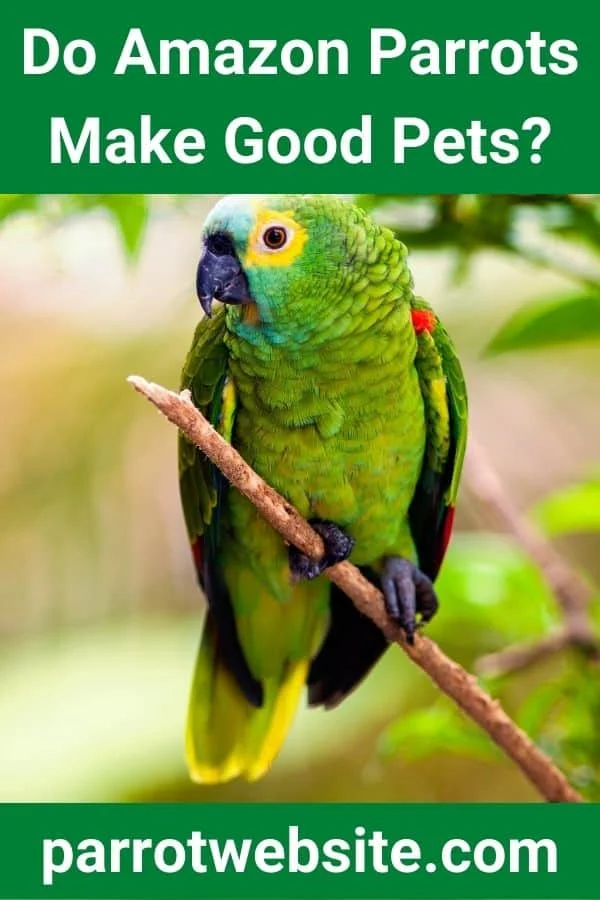
The prospect of bringing an exotic bird into one’s home is an endeavor that captures the imagination of many animal lovers. Recently, a common inquiry has surfaced among prospective pet owners: Do Amazon parrots—renowned for their vibrant plumage and gregarious personalities—make suitable companions for the average household?
While these birds are undoubtedly charismatic, the reality of parrot ownership is often romanticized, masking the profound logistical and emotional commitment required to maintain their well-being. This report delves into the behavioral traits, financial implications, and long-term responsibilities associated with welcoming an Amazon parrot into your life.
Main Facts: Understanding the Amazon Parrot
Amazon parrots, belonging to the genus Amazona, are among the most popular psittacines in the pet trade. Known for their high intelligence, complex social structures, and impressive vocal mimicry, they occupy a unique niche in the avian world.
At their core, Amazon parrots are flock animals. In the wild, they thrive on constant social interaction and mental stimulation. When brought into a domestic setting, they require an environment that mimics this level of engagement. They are not "ornamental" pets to be kept in a cage; they are active, sentient companions that demand significant daily time, patience, and resources. While they can be affectionate, funny, and deeply bond-oriented, they are also prone to behavioral issues if their needs for stimulation and structure are not consistently met.
Chronology: The Journey from Breeder to Home
The trajectory of a successful parrot ownership experience begins long before the bird arrives at your residence.
The Critical Foundation
The process starts with the selection of a reputable breeder. This is the most crucial step in ensuring the long-term success of the pet. A responsible breeder focuses on early socialization, exposing the fledgling to various human interactions, noises, and environments. This early stage is biologically critical; if an Amazon parrot is not properly tamed or desensitized during its formative months, it can develop behavioral patterns—such as biting or extreme skittishness—that may persist for decades.
The Adjustment Period
Once the bird is brought home, the "taming" process continues. Even a well-socialized parrot will be disoriented by a change in territory. Owners must dedicate substantial hours during the first few weeks to build trust. This is not merely about feeding the bird; it is about establishing a social hierarchy and a bond of mutual respect. Unlike domesticated animals like dogs, which have been bred for thousands of years to follow human cues, parrots retain much of their wild, instinctual behavior.
Supporting Data: Addressing Common Concerns
1. Are Amazon Parrots Suitable for Beginners?
Comparatively speaking, Amazon parrots are often cited as being more manageable than larger species like Macaws or Cockatoos. However, the term "beginner" is relative. If you have never owned a bird before, an Amazon parrot is a significant leap in difficulty compared to a hamster or a fish. They require a rigorous understanding of avian health, diet, and behavioral psychology.
2. The Question of Aggression
A prevalent myth suggests that Amazon parrots are inherently aggressive. The reality is more nuanced. Aggression in parrots is almost always a symptom of an underlying issue rather than a personality trait.
- Environmental Triggers: Lack of sleep (Amazons require 10–12 hours of darkness), improper diet, or lack of exercise can lead to irritability.
- The "Taming" Gap: As noted previously, birds that were not socialized properly in the nest are more prone to biting.
- Hormonal Cycles: During breeding seasons, even the friendliest Amazon can become protective or "moody."
Prospective owners must be prepared to read the bird’s body language—a skill that develops over months of consistent interaction.
3. The Decibel Reality: A Noisy Companion
If silence is a priority in your household, an Amazon parrot is likely the wrong choice. They are, by definition, one of the loudest species in the avian kingdom. Their vocalizations include high-pitched whistles, squawks, and, occasionally, human speech.
Amazon parrots are prolific talkers. While this is an endearing trait, it also means they will mirror the sounds they hear most often. If your household is chaotic or loud, your parrot will reflect that energy. Owners must accept that daily noise is an immutable feature of the species.
Official Perspectives: The Veterinary and Behavioral Consensus
Veterinarians and avian behaviorists consistently highlight that the primary reason parrots are surrendered to rescues is not the bird’s behavior, but the owner’s lack of preparation.
According to avian medical experts, the "hidden" costs of parrot ownership often take owners by surprise. A standard wellness exam for an exotic bird is significantly more expensive than a routine cat or dog check-up, as it requires an avian-certified veterinarian. Furthermore, their dietary requirements—which should consist of high-quality pellets, fresh vegetables, and fruits—far exceed the cost of standard pet kibble.
Experts also emphasize the "flock" mentality. While Amazon parrots are more independent than other species and can technically thrive without another bird, they cannot thrive without the owner acting as their flock. Leaving an Amazon alone for 8–10 hours a day on a regular basis is a recipe for psychological distress, which often manifests as self-mutilation or feather plucking.
Financial Implications: The Cost of Care
Prospective owners often focus on the sticker price of the bird, which ranges from $400 to over $1,000 depending on the subspecies and rarity. However, the initial purchase is a fraction of the total cost.
- Annual Maintenance: Budgeting between $200 and $300 annually for basic care (food, toys, perches) is a conservative estimate.
- Emergency Expenses: An unexpected veterinary emergency can easily cost upwards of $500–$1,000.
- Equipment: High-quality, large-scale cages, enrichment toys (which must be replaced frequently as birds destroy them), and specialized lighting add significant upfront costs.
Over a lifespan that can reach 40 to 60 years, an Amazon parrot is a generational investment, not a short-term hobby.
Implications: The Long-Term Commitment
The decision to bring an Amazon parrot into your life is a decision to adopt a permanent, high-needs family member.
The Lifestyle Shift
You must be willing to adjust your lifestyle. This includes:
- Chemical Sensitivity: Amazon parrots have extremely sensitive respiratory systems. The use of non-stick cookware (Teflon), scented candles, air fresheners, and cleaning chemicals must be strictly managed or eliminated.
- Time Management: Can you commit to 2–4 hours of out-of-cage, interactive time every single day for the next several decades?
- Future-Proofing: Because these birds live so long, owners must have a plan for their care in the event of their own illness or passing. This often involves creating a trust or identifying family members willing to take over the responsibility.
The Reward of the Bond
If the implications sound daunting, it is because they are. However, for those who are prepared, the rewards are unparalleled. Amazon parrots are deeply intelligent and capable of forming complex, long-term bonds with their human guardians. They are playful, inquisitive, and bring a unique vitality to a home. They are not merely "pets"; they are intelligent entities that provide companionship, laughter, and a profound sense of connection to the natural world.
Conclusion
Amazon parrots make wonderful companions for the right owner—someone who is dedicated, research-oriented, and patient. They are not suitable for those looking for a low-maintenance pet or those who are easily frustrated by noise and mess.
Before making the final decision, spend time volunteering at a local avian rescue or spend time with someone who already owns one. If you can honestly commit to the decade-spanning responsibility, the intellectual engagement, and the financial requirements, an Amazon parrot may prove to be one of the most enriching additions to your life. Success with these birds is not determined by luck, but by the depth of your preparation and the consistency of your care.