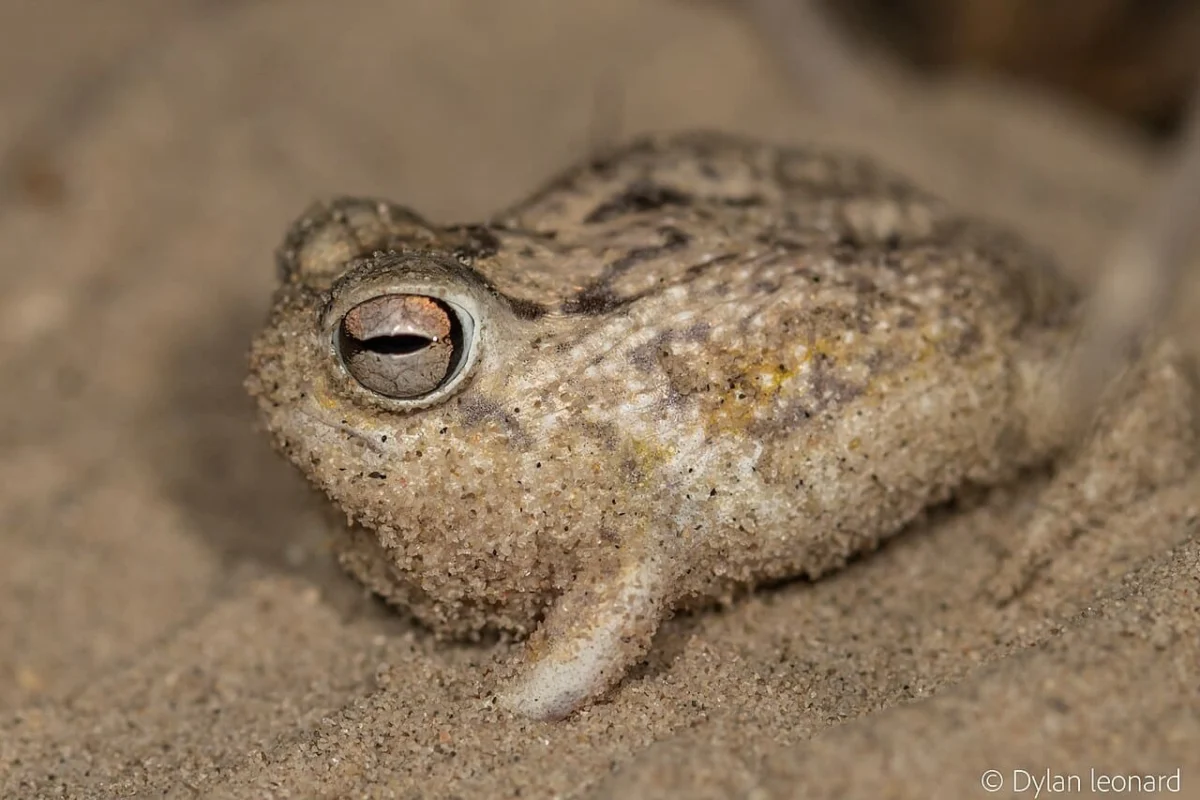
The desert rain frog (Breviceps macrops), an amphibian once celebrated across social media for its rotund, sand-dusted appearance and distinctively high-pitched, squeaky vocalizations, is facing a stark reality. In a sobering update released on July 9, 2026, the International Union for Conservation of Nature (IUCN) announced that the species has been officially reclassified from "Near Threatened" to "Vulnerable" on the IUCN Red List of Threatened Species.
This reclassification serves as a grim indicator of the mounting pressures facing one of Africa’s most specialized amphibians. Caught between the encroaching tide of industrial expansion and the unpredictable stressors of a changing climate, the desert rain frog—once considered a resilient survivor of the harsh Namib and South African coastal dunes—is now teetering on the edge of a significant population collapse.
The Anatomy of an Icon: Understanding Breviceps macrops
To understand the severity of this reclassification, one must first understand the unique biology of the desert rain frog. As the only member of the Breviceps genus to carry the "desert rain frog" moniker, this creature is a marvel of evolutionary adaptation. Belonging to the family Brevicipitidae, which encompasses 21 known species, B. macrops has evolved specifically to thrive in the arid to semi-arid coastal climates of southwestern Africa.
Unlike many of its amphibian cousins that require permanent bodies of water for breeding, the desert rain frog is entirely terrestrial. Its physical form—round, balloon-like, and equipped with spade-like feet for efficient burrowing—is designed for life in soft, shifting sands. They emerge from their subterranean retreats primarily after rainfall or during periods of high fog to forage for a diverse diet that includes ants, termites, beetles, moths, woodlice, and juvenile millipedes.
Their reproductive cycle is equally tethered to the ephemeral moisture of the desert. However, this specialized lifestyle makes them highly sensitive to environmental disruption. Because they are adapted to a very specific, narrow ecological niche, they possess little capacity to migrate or adapt when their habitat is physically destroyed or ecologically altered.
Chronology of a Crisis: From Viral Stardom to Vulnerable Status
The narrative arc of the desert rain frog over the last 15 years is a cautionary tale of how fame can inadvertently fuel ecological decline.
- 2013: The Viral Threshold: The species gained global notoriety following the circulation of a viral video that showcased its "fubugly" (affectionately described as simultaneously ugly and cute) face and its surprisingly high-pitched, squeaky call. While the video brought much-needed awareness to the existence of the species, it also catalyzed an unintended consequence: a surge in demand for the frog as an exotic pet.
- 2014–2025: The Industrial Creep: Throughout the early 21st century, the coastal dunes of Namibia and South Africa became prime real estate for industrial development. Diamond mining operations and energy infrastructure projects began to carve into the fragile dune ecosystems where these frogs reside.
- 2026: The IUCN Reclassification: Following years of monitoring, the IUCN concluded that the cumulative impact of habitat loss, climate-induced stress, and the persistent, if quiet, pressure of the pet trade necessitated an upgrade in the species’ threat level.
Supporting Data: The Mechanics of the Decline
The IUCN’s decision to move B. macrops to "Vulnerable" is supported by projections that suggest a 20 percent decline in the total population within the next two decades if immediate, robust conservation measures are not implemented. The data highlights a three-pronged assault on the species’ survival.
1. Industrial Encroachment
The most immediate threat is the physical destruction of habitat. Large-scale mining operations and energy infrastructure development are actively degrading the coastal dunes. The IUCN press release identifies that within the next 20 years, these industrial activities are projected to negatively impact one-third of the desert rain frog’s range in South Africa and a staggering two-thirds of its range in Namibia.
2. The Green Energy Paradox
A particularly poignant irony highlighted by the report is the impact of green hydrogen projects. While these initiatives are critical for the global transition toward sustainable energy, their footprint in the Namibian desert is creating significant habitat fragmentation. The infrastructure required for these projects—pipelines, roads, and processing facilities—often bisects the very dunes the frogs rely on for survival, effectively isolating populations and limiting genetic flow.
3. Climatic and Environmental Stressors
Beyond physical habitat destruction, the species is struggling against the invisible pressures of climate change. Heat stress is a major concern for an amphibian that relies on specific subterranean moisture levels. Furthermore, the acidification of the coastal environment—a consequence of broader ecological shifts—is beginning to alter the quality of the sand and the availability of prey, placing additional metabolic strain on a species already pushed to its physiological limits.
The Shadow of the Illegal Pet Trade
While habitat loss is the primary driver of the population decline, the IUCN has flagged the illegal wildlife trade as a significant exacerbating factor. Since the 2013 viral video, there has been a suspected increase in the demand for Breviceps macrops in the international pet trade.
Conservationists emphasize that the desert rain frog is entirely unsuited for captivity. They are strictly wild-caught; there are no established, documented, or successful breeding programs for this species in Europe, Asia, or elsewhere. Because they are so highly adapted to the unique moisture-retention properties of specific coastal dunes, they fail to thrive—or even survive—in standard terrarium environments. Keeping them as pets is not only unethical but essentially a death sentence for the individual animal, contributing to the depletion of wild populations without any corresponding conservation benefit.
Official Responses and the Call for Conservation
The international scientific community has reacted to the IUCN’s update with a renewed sense of urgency. Experts are calling for a multi-national approach to management, noting that because the frog’s range straddles the border of two countries, conservation efforts must be harmonized between Namibian and South African environmental agencies.
The IUCN’s recommendations include:
- Habitat Protection Zones: Establishing "no-go" areas within the coastal dunes that are strictly off-limits to mining and energy development.
- Strategic Environmental Assessments: Requiring that future green hydrogen and industrial projects undergo rigorous, frog-specific ecological assessments before permits are issued.
- Trade Enforcement: Increased monitoring and enforcement at customs and international borders to curb the illegal export of the species.
- Climate Resilience Research: Investing in studies that monitor how these amphibians respond to shifting heat profiles in their native dunes.
Implications: A Canary in the Coal Mine
The reclassification of the desert rain frog is more than just a change in status; it is a signal that the coastal ecosystems of southwestern Africa are undergoing a period of profound instability.
If a species as specialized and seemingly abundant in its range as Breviceps macrops can be pushed to "Vulnerable" within such a short timeframe, it suggests that the ecosystems supporting it are also deteriorating. The frog acts as a biological indicator—a "canary in the coal mine"—for the health of the Namibian and South African coastlines.
The struggle to save the desert rain frog highlights the tension between economic development and biodiversity preservation. As governments in the region push for industrial growth and energy independence, the fate of this small, squeaking amphibian poses a difficult question for policymakers: can we achieve sustainable development without sacrificing the unique, fragile inhabitants that share our planet?
Without a drastic shift in how these industrial projects are planned and executed, the desert rain frog risks becoming a relic of the dunes, remembered only by the viral videos that once captured the world’s imagination. Conservationists remain hopeful that the new IUCN designation will provide the political leverage needed to prioritize the protection of these habitats before the 20-year decline projection becomes a reality.
For now, the desert rain frog remains a symbol of the wild, stubborn beauty of the desert—a creature that asks for nothing more than a bit of sand, a bit of fog, and a future free from the machinery of industry. Whether humanity can grant it that much remains to be seen.