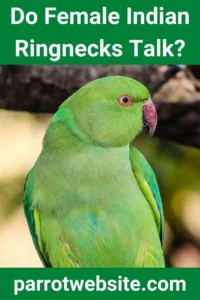
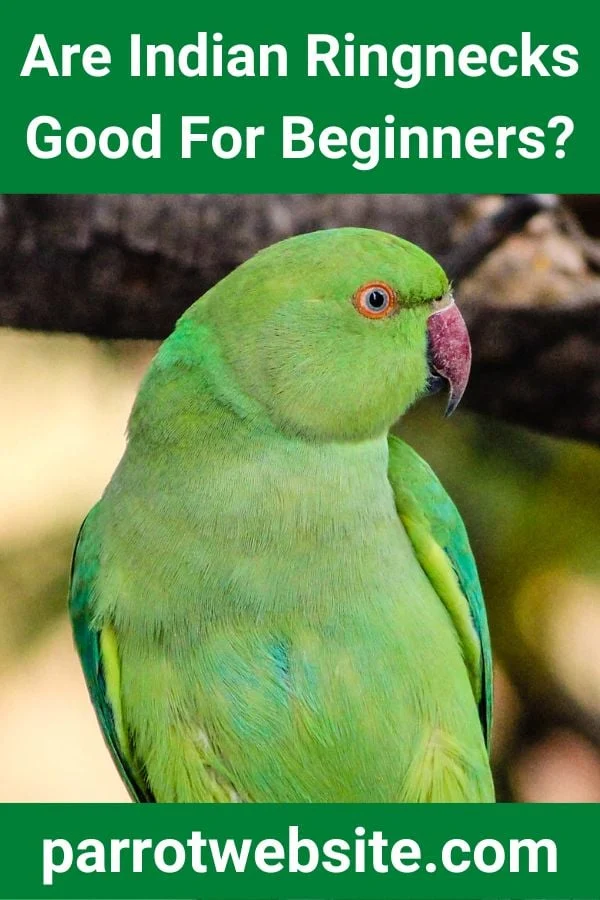
The Indian Ringneck Parakeet (Psittacula krameri) is a bird of striking beauty. With their vibrant emerald plumage, graceful long tails, and the distinctive "ring" that marks the adult males, they are undeniably one of the most visually arresting avian species in the pet trade. Yet, beneath this aesthetic appeal lies a complex, highly intelligent, and occasionally challenging creature. For prospective bird owners, the question of whether an Indian Ringneck is suitable for a beginner is one that requires careful consideration. While they are rewarding companions, avian experts and experienced keepers generally agree: the Indian Ringneck is not a bird for the novice.
Main Facts: Understanding the Species
The Indian Ringneck is a member of the Psittaculidae family, originating from parts of Africa and the Indian subcontinent. In the wild, they are gregarious, highly social, and thrive in large flocks. This evolutionary history dictates their behavior in captivity. They are not "passive" pets that sit quietly in a cage; they are active, vocal, and intellectually demanding.
The core reality for any potential owner is that a parrot is fundamentally different from a dog or a cat. While mammals may be domesticated over millennia, parrots are essentially wild animals living in our homes. An Indian Ringneck requires specialized nutrition, a high level of environmental enrichment, and a commitment to daily socialization that can last for the bird’s lifespan—which, in captivity, can exceed 25 to 30 years.
Chronology: The Developmental Stages of a Ringneck
Understanding the lifecycle of an Indian Ringneck is vital for managing expectations.
The Hatchling and Weaning Phase
Most reputable breeders will hand-rear Indian Ringnecks, a process that involves intensive human interaction from a young age. This is the "Golden Window" for taming. During this period, the bird learns to associate human touch and presence with safety and food.
The "Bluffing" Stage: A Critical Period
Perhaps the most daunting hurdle for a new owner is the "bluffing" phase, which typically occurs during the bird’s sexual maturation, often between four and nine months of age. During this time, a previously sweet and docile chick may become hormonal, territorial, and surprisingly aggressive. They may bite, lunge, or become aloof.
For the uninitiated owner, this behavior can be terrifying. Many novice keepers interpret this as the bird "turning on them" or "becoming mean," leading them to retreat from interaction. This, however, is a mistake; the bird is merely testing boundaries and navigating hormonal shifts. If handled incorrectly—either with fear or physical punishment—the bond can be permanently severed, leading to a bird that remains fearful or aggressive throughout its adulthood.
Supporting Data: Why They Are Considered "Difficult"
The classification of Indian Ringnecks as "difficult" for beginners is supported by several behavioral traits that require advanced handling skills.
1. High Maintenance Socialization
Unlike some species that are content to sit on a perch, the Ringneck is an active explorer. They require hours of out-of-cage time daily. If they are neglected or left in a cage for long periods, they do not simply become sad; they often develop destructive behavioral issues, including feather plucking, incessant screaming, or extreme biting.
2. The Bite Reflex
While they are small, their beaks are designed to crack seeds and nuts. An adult Indian Ringneck can deliver a bite that easily draws blood. In a household with children, this presents a significant safety concern. Children often lack the subtle non-verbal cues (such as a pinned eye or a slight shift in posture) that a bird gives before biting, leading to frequent accidents.
3. Intellectual Needs
These birds are problem-solvers. They require a rotation of complex foraging toys. If a bird is given the same toy for months, it will become bored. A bored Ringneck is a destructive one, likely to chew on furniture, baseboards, or electrical cords if not properly supervised and engaged.
Official Responses and Expert Consensus
Avian behavioral consultants often point out that the "difficulty" of the Indian Ringneck is frequently a reflection of the owner’s lack of preparation. The consensus among experts, such as those affiliated with the World Parrot Trust, is that prospective owners must undergo a "reality check" before purchase.
"The biggest mistake a new owner makes is assuming the bird will adapt to their schedule," says Dr. Aris Thorne, a specialist in avian behavior. "The bird will not adapt to you; you must adapt to the bird. If you work nine to five and have no time for training, the Indian Ringneck is not for you. They require an owner who understands positive reinforcement, the importance of diet, and the necessity of flight exercise."
Experts also emphasize the "niche" nature of the species. They are not like Cockatiels or Budgies, which are generally more tolerant of handling errors. A Ringneck is a "thinking" bird that demands respect for its autonomy. If you treat a Ringneck like an object, it will behave like a wild animal.
Implications: Can They Ever Be Good Pets?
Despite the warnings, the conclusion is clear: Indian Ringnecks are, in fact, spectacular pets for the right person.
The Rewards of Ownership
For those with the experience to handle the bluffing phase and the dedication to provide for their needs, these birds are incredibly rewarding. They are renowned for their talking ability, often developing impressive vocabularies and mimicking sounds with startling clarity. They are also highly playful, often performing acrobatics that provide endless entertainment for their owners.
The Importance of Bonding
Bonding with a Ringneck is a slow, earned process. It is built on trust, not command. Owners who spend time talking to their birds, teaching them tricks via clicker training, and allowing them to participate in family activities find that the birds become deeply attached to them. This bond is not passive; it is a collaborative relationship.
The "Two-Bird" Dilemma
A common question is whether owning two birds is easier than one. While it is true that two birds can keep each other company, it does not halve the work. In fact, it often doubles it. If two birds are kept together, they may bond with each other rather than the owner, making them harder to tame. Furthermore, you must still maintain the same level of cleanliness, diet, and veterinary care for both.
Practical Guidance for Prospective Owners
If you are determined to bring an Indian Ringneck into your life, follow these professional recommendations:
- Seek Experience First: If you have never owned a parrot, start by volunteering at an avian rescue center. You will see firsthand the challenges of caring for high-maintenance birds and learn to read their body language.
- Research the Diet: A diet of only seeds is lethal to a Ringneck. They require a diverse intake of fresh vegetables, high-quality pellets, and occasional fruits. Nutritional deficiencies are the leading cause of health issues in these birds.
- Prepare the Environment: Ensure your home is "bird-safe." This means no Teflon-coated cookware (which releases toxic fumes to birds), no toxic houseplants, and no open water sources.
- Find a Mentor: Connect with an experienced breeder or a local bird club. Having a mentor to call when your bird starts "bluffing" can be the difference between a successful, long-term relationship and the heartbreak of having to rehome the bird.
Conclusion
The Indian Ringneck is a bird of extraordinary personality, intelligence, and grace. However, the path to a harmonious life with one is paved with challenges that can easily overwhelm an inexperienced keeper.
They are not "starter" pets. They are not accessories. They are complex, high-energy beings that demand a significant investment of time, patience, and financial resources. For the seasoned owner, an Indian Ringneck can be a life-long companion that brings joy and fascination into the home. But for those who are merely drawn to their beauty without the requisite experience, the reality of ownership can be a difficult, and often painful, lesson.
Before making the commitment, ask yourself: Are you looking for a bird, or are you looking for a challenge? If you are ready for the challenge, the Indian Ringneck will be a rewarding addition to your life. If not, consider a more docile species, and leave the Ringnecks to those prepared for the unique, spirited nature of this remarkable bird.