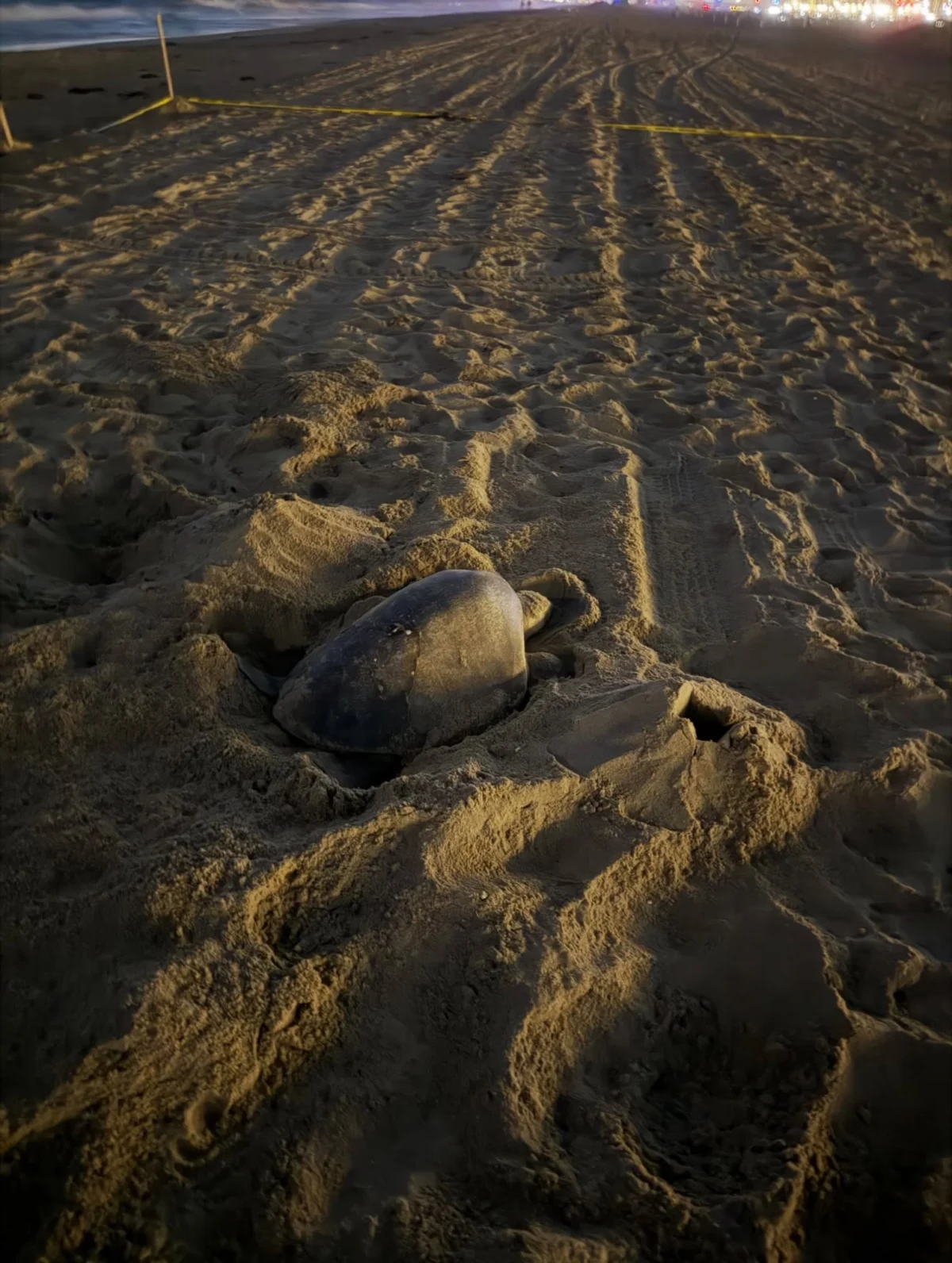
ORANGE COUNTY, CALIFORNIA — In what marine biologists are calling a watershed moment for West Coast marine ecology, NOAA Fisheries West Coast announced a pair of unprecedented wildlife events on September 22. An olive ridley sea turtle (Lepidochelys olivacea) was documented digging a nest and depositing her eggs on the sands of Surfside, California.
Remarkably, this occurrence did not stand alone for long. Just three days later, officials confirmed a second, separate nesting event a few miles down the coast in Huntington Beach, near the city’s world-famous pier, executed by an as-yet-unidentified sea turtle species.
These occurrences mark the first-ever recorded sea turtle nesting events of any species on the Pacific coastline of the United States. As local, state, and federal agencies scramble to establish protective perimeters, scientists are left pondering the broader environmental shifts that may have coaxed these tropical mariners far north of their traditional nesting bounds.
Main Facts: A Historic First for the U.S. Pacific Coast
The confirmation of sea turtle nesting in Southern California shatters decades of biogeographical assumptions regarding where these marine reptiles reproduce.
- The Primary Subject: An adult female olive ridley sea turtle was observed hauling herself ashore in Surfside, CA, to construct a nest and lay eggs.
- The Secondary Event: Merely 72 hours later, a second nesting event occurred in Huntington Beach near the municipal pier, involving a sea turtle whose species identity remains unconfirmed at this time.
- Geographical Significance: These represent the absolute first documented sea turtle nesting events on the entire United States West Coast.
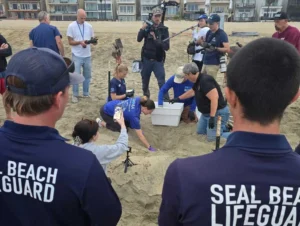
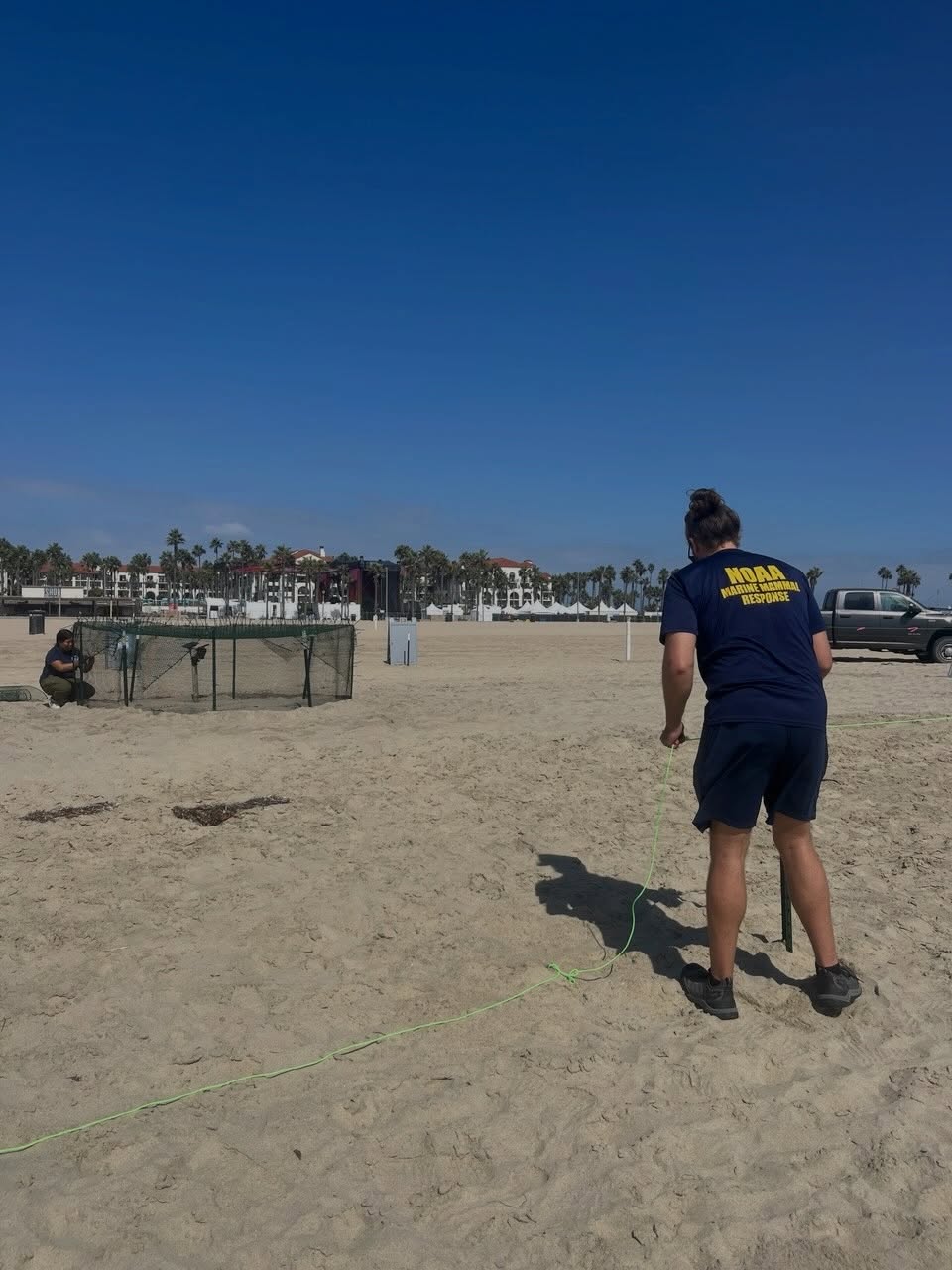
- Current Status: Both nesting sites have been cordoned off with physical barriers, protective fencing, and educational signage to ensure the clutches remain undisturbed during the critical incubation window.
NOAA Fisheries, alongside a coalition of local lifeguards, municipal departments, and wildlife conservation groups, has taken immediate command of the sites. Officials have emphasized that public cooperation is paramount to giving these unexpected embryos a fighting chance at survival.
Chronology of Events: From Surfside to Huntington Beach
The unfolding of this unprecedented biological narrative occurred across an intense, highly monitored three-day period in late September.
September 22: The Surfside Discovery
The extraordinary sequence began when beachgoers and local monitors spotted an olive ridley sea turtle navigating the surf line in Surfside—a small, affluent community nestled within Orange County. Unlike marine mammals that occasionally haul out to rest, this female exhibited classic, purposeful nesting behavior. She crawled past the high-tide line, selected a suitable patch of dry sand, excavated a deep egg chamber using her rear flippers, and deposited her clutch before carefully camouflaging the site and returning to the Pacific Ocean.
Upon notification, NOAA Fisheries West Coast mobilized personnel to verify the species, authenticate the biological data, and secure the perimeter. Biologists quickly recognized the gravity of the event: olive ridleys are native to the tropical and subtropical waters of the globe, with eastern Pacific populations typically restricted to nesting beaches stretching from Mexico down through Central America.
September 25: The Huntington Beach Encore
Before marine scientists could fully process the biogeographical implications of the Surfside nest, history repeated itself. Just a few miles south, near the iconic Huntington Beach Pier, a second sea turtle emerged from the surf to lay eggs.
According to reports from the Huntington Beach Fire Department and NOAA, this second female successfully completed her nesting sequence. Because the animal returned to the sea before exhaustive physical measurements or biological samples could be gathered from her shell, her exact species classification remains pending further analysis of photographic evidence and genetic tracking.
Supporting Data: Understanding the Olive Ridley and Southern California Waters
To fully grasp the magnitude of these nesting events, one must examine the baseline biology of the olive ridley turtle alongside the unique environmental conditions currently dominating the Southern California Bight.
Profile of the Olive Ridley (Lepidochelys olivacea)
- Physical Dimensions: The olive ridley is widely recognized as the smallest living sea turtle species. Adults typically measure between 2.5 and 3 feet in straight-line carapace length and rarely exceed 100 pounds.
- Lifespan and Range: These reptiles are capable of living up to 50 years. While circumglobal in distribution, they show strong fidelity to tropical pelagic and coastal waters within the Pacific, Indian, and Atlantic Oceans.
- Nesting Habits: Famous for their arribadas—synchronized, mass-nesting events seen in places like Costa Rica—they normally favor tropical and warm subtropical latitudes for reproduction. Finding one depositing eggs in temperate Southern California is an extreme anomaly.
The Regional Environment: A Warm-Water Anomaly
Southern California is no stranger to sea turtles entirely; a resident, non-migratory population of green sea turtles (Chelonia mydas) lives year-round in the warm effluent and concrete channels of the San Gabriel River, which delineates the border between Orange County and Los Angeles County. This constitutes the northernmost resident population of green sea turtles in the eastern Pacific.
However, green turtles in the San Gabriel River are known foragers, not nesters. The sudden appearance of nesting females can be directly correlated with unprecedented oceanographic conditions. Driven by a powerful super El Niño phase, ocean temperatures off the coast of Southern California have spiked dramatically, with surface readings reaching up to 80 degrees Fahrenheit on select days during the late summer and early fall.
These tropical-grade water temperatures likely served as a sensory cue, tricking the migrating or wandering females into believing they had reached traditional, lower-latitude breeding grounds.
Official Responses and Conservation Protocol
The immediate aftermath of the nesting discoveries triggered a coordinated multi-agency response aimed at safeguarding the vulnerable clutches.
In a joint statement released via social media, NOAA Fisheries outlined the protocols currently in place:
"Our team of local, state, and federal partners will monitor the nesting sites throughout the incubation period, which typically lasts for 45-60 days. Both areas are fenced, protected, and have interpretive signage. We urge beachgoers to steer clear and not disturb the sites."
Stakeholder Collaboration
- NOAA Fisheries: Serving as the lead federal agency, NOAA is coordinating scientific oversight, permits, and public communication.
- Local Municipalities and Fire Departments: Lifeguards, park rangers, and local emergency personnel have played a vital role in establishing immediate physical perimeters around the nesting sites to protect them from heavy pedestrian traffic, beach maintenance equipment, and domestic animals.
- Wildlife Volunteers: Trained local naturalists are conducting round-the-clock watches to prevent accidental human encroachment and to gather observational data on local micro-climate conditions affecting the sand.
Implications: Climate Shifts, Incubation Challenges, and Future Outlookes
While the sight of nesting sea turtles on a Southern California beach is undeniably thrilling for the public and a historic coup for wildlife photographers, marine scientists are viewing the development through a lens of cautious concern and intense scientific curiosity.
The Incubation Gamble
Sea turtle eggs require specific thermal parameters for successful embryonic development. Typically, incubation spans 45 to 60 days, heavily influenced by sand temperatures—which also dictate the sex ratios of the developing hatchlings (warmer sands yield more females; cooler sands yield more males).
While the warm September sand provided ideal conditions for the deposition of the eggs, the long-term prognosis is fraught with natural challenges. As autumn progresses into late October and November, Southern California coastal air and sand temperatures inevitably drop.
Biologists are actively debating how these clutches will fare if seasonal cooling sets in rapidly before the 45-to-60-day window closes. Will the embryos slow their development, fail to hatch, or will the ambient warmth of the localized sand pockets prove sufficient? Researchers will be closely monitoring the nests as the projected hatching window approaches in mid-to-late November.
Broader Ecological and Climate Indicators
Beyond the immediate survival of these specific clutches, the events in Surfside and Huntington Beach serve as a living barometer for global climate change and marine ecosystem shifts. As ocean temperatures warm globally, species distributions are shifting poleward. Marine biologists note that sightings of tropical and subtropical marine species—ranging from pelagic red crabs and yellowfin tuna to sea turtles—are becoming increasingly frequent north of the U.S.–Mexico border.
These historical nesting events may no longer be one-off anomalies if warming trends persist, signaling a potential permanent expansion of sea turtle reproductive ranges into temperate North American waters. For now, however, the eyes of the global marine conservation community remain fixed on two small, fenced-off plots of sand in Orange County, waiting to see if history will write another unprecedented chapter when the hatchlings finally break the surface.