Author: Dana Krempels, Ph.D.
Reviewed and Edited by: Rabbit.org Veterinary Medical Review Board
Introduction: The Silent Threat in Rabbit Care
For dedicated rabbit owners and rescue organizations, few medical terms strike as much fear into the heart as gastrointestinal stasis (often referred to simply as GI stasis, or colloquially as ileus). While seasoned pet owners recognize it immediately as a medical emergency, novice caretakers often misunderstand the subtle, insidious nature of the condition until it has progressed to a critical, life-threatening stage.
Unlike humans or cats, who can easily vocalize discomfort or exhibit obvious signs of distress when experiencing internal pain, rabbits are prey animals. By evolutionary design, they instinctively mask weakness, pain, and illness to avoid predation. Consequently, a rabbit experiencing early-stage GI stasis may only show mild lethargy, a slight decrease in appetite, or marginally smaller fecal pellets. Because these signs are easily overlooked, the condition can rapidly spiral into a full-blown medical crisis within hours.
This comprehensive guide examines the physiological mechanisms, causative factors, clinical symptoms, diagnostic procedures, aggressive medical treatments, and long-term prevention strategies surrounding rabbit gastrointestinal stasis.
What is Gastrointestinal Stasis?
To understand GI stasis, one must first understand the unique physiology of the lagomorph digestive tract. Rabbits are obligate herbivores specialized for processing high-fiber, low-nutrient vegetation. Their digestive systems rely on a delicate, highly coordinated balance of motility, specialized microflora in the cecum, and constant fiber intake to push ingesta through the GI tract.
GI stasis is not a primary disease in itself, but rather a clinical syndrome characterized by the slowing or complete cessation of gastrointestinal motility. When gut motility slows, the normal transit of food and gas is interrupted. Food remaining too long in the stomach and intestines dehydrates, compacts, and forms hard masses. Simultaneously, beneficial bacteria in the cecum die off due to the lack of fresh fiber, allowing pathogenic bacteria—such as Clostridium species—to proliferate, producing dangerous toxins and painful gas.
The Pathophysiology of Hypomotility
When a rabbit stops eating, the lack of bulk fiber triggers a cascade of negative physiological events:
- Dehydration of Ingesta: Without continuous water and fiber intake, the contents of the stomach and cecum become dry and impacted.
- Gas Accumulation: Fermentation by opportunistic pathogens creates painful gas pockets (tympanites), causing severe abdominal distension and colic.
- Hepatic Lipidosis: Rapid anorexia in rabbits can precipitate hepatic lipidosis (fatty liver disease), a potentially fatal metabolic complication secondary to starvation.
- Pain-Motility Feedback Loop: Abdominal pain causes the rabbit further stress, which suppresses appetite entirely, deepening the state of stasis.
Recognizing the Signs: Symptoms of GI Stasis
Early detection is the single most critical factor in saving a rabbit’s life. Because rabbits decline rapidly once stasis sets in, owners must be vigilant for any deviation from normal behavior.
Common Clinical Signs:
- Anorexia: Refusal to eat favorite treats or complete refusal of food. This is often the first and most alarming sign.
- Fecal Changes: Pellets become progressively smaller, misshapen, strung together with mucus (enteritis strings), or disappear entirely.
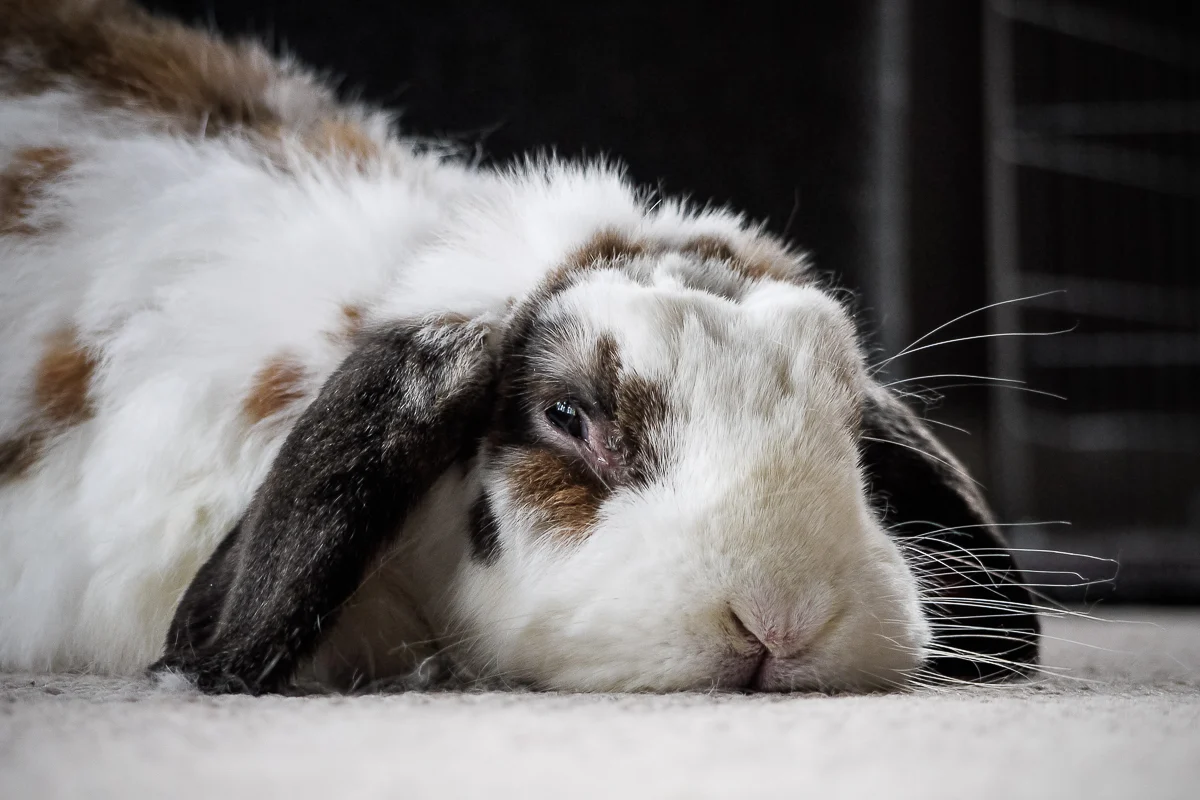
- Lethargy and Posture: The rabbit may sit hunched up, grind its teeth loudly (bruxism—a clear indicator of severe pain), and refuse to move.
- Abdominal Discomfort: Gurgling sounds from the abdomen, or conversely, a completely silent gut. The abdomen may feel doughy, taut, or hard to the touch.
- Dehydration: Sunken eyes, skin tenting, and dry mucous membranes.
Diagnostic Procedures: What to Expect at the Vet
If an owner suspects GI stasis, immediate veterinary intervention is required. A rabbit-savvy veterinarian will perform a thorough physical examination, which typically includes:

- Abdominal Palpation: Carefully feeling for gas pockets, fluid accumulation, or hard impactions in the stomach and intestines.
- Radiographs (X-rays): Essential for confirming the diagnosis. An X-ray will reveal whether the stomach is distended with gas, fluid, or a solid mass of hair and food, and will rule out mechanical obstructions (such as foreign bodies or blockages) that require surgical rather than medical intervention.
- Bloodwork: To assess overall organ function, hydration status, and check for underlying infections or systemic illness that may have triggered the stasis episode.
Aggressive Medical Treatment Protocols
Treating GI stasis requires a multi-pronged, aggressive approach aimed at pain management, rehydration, restoring gut motility, and balancing the microbiome.
1. Fluid Therapy (Rehydration)
Dehydration is almost always present in GI stasis cases. Subcutaneous or intravenous fluid administration is vital to rehydrate impacted stomach contents and restore systemic circulation.
2. Pain Management (Analgesia)
Pain is the primary driver of anorexia in rabbits. Alleviating visceral pain is non-negotiable.
- Meloxicam: A common non-steroidal anti-inflammatory drug (NSAID) used to manage mild to moderate inflammation and pain.
- Buprenorphine: An opioid analgesic often preferred for severe abdominal pain. It provides superior pain relief without significantly suppressing gut motility when used correctly under veterinary supervision.
3. Prokinetics (Motility Stimulants)
Prokinetics are medications designed to restart peristalsis (the wave-like muscular contractions of the gut).
- Cisapride: A widely used prokinetic that stimulates upper and lower GI motility without severe side effects.
- Metoclopramide: Another common motility agent, though it primarily affects the upper GI tract (stomach and duodenum).
4. Assisted Feeding (Critical Care)
If a rabbit has not eaten for more than 12 hours, assisted feeding with a specialized herbivore recovery formula (such as Oxbow Critical Care) is necessary. Syringe feeding provides essential nutrients, keeps the GI tract active, and prevents hepatic lipidosis. Care must be taken to feed slowly and avoid aspiration, especially if gut motility is severely compromised.
Long-Term Prevention Strategies
Preventing future episodes of GI stasis is far easier than treating an active crisis. Owners should implement the following husbandry practices:
- Unlimited Grass Hay: Timothy, orchard, and meadow hays should comprise 80-90% of a rabbit’s daily diet. The long-strand fiber is indispensable for maintaining continuous peristalsis.
- Fresh Greens: Offer a diverse daily rotation of leafy green vegetables (e.g., romaine lettuce, cilantro, parsley, dandelion greens).
- Hydration: Provide fresh water daily via both heavy ceramic bowls and water bottles. Many rabbits drink significantly more water from an open bowl than a bottle.
- Grooming: Regular brushing—especially during seasonal molting periods—minimizes the amount of ingested fur that can contribute to hairballs and subsequent impactions.
- Stress Reduction: Minimize environmental stressors, sudden diet changes, and loud noises, all of which can trigger a stress-induced stasis episode.
Conclusion: A Collaborative Effort in Rabbit Healthcare
Gastrointestinal stasis is a complex, multi-factorial syndrome that demands respect, vigilance, and swift action. By maintaining an optimal diet rich in high-fiber grass hay, monitoring daily fecal output and appetite, and establishing a relationship with an exotic animal veterinarian who understands lagomorph medicine, owners can dramatically reduce the risk of this devastating condition.
When emergency strikes, remember that time is muscle—and in a rabbit’s case, time is gut motility. Prompt veterinary care combined with dedicated home nursing offers the best possible prognosis for recovery.
For a directory of qualified rabbit-savvy veterinarians worldwide, visit the House Rabbit Society at Rabbit.org.