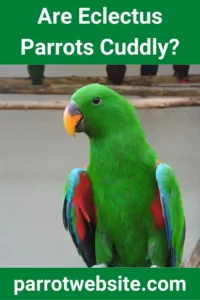
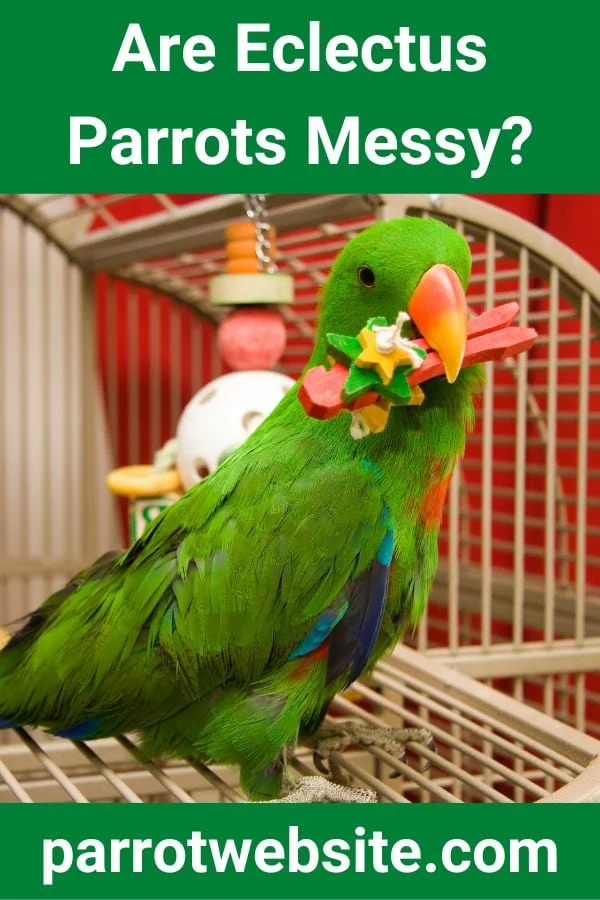
For prospective bird owners, the Eclectus parrot is often a top contender. With their striking, sexually dimorphic plumage—vibrant emerald greens for males and deep, regal reds and purples for females—they are undeniably among the most beautiful creatures in the avian world. However, beauty often masks the practical realities of ownership. Beyond their aesthetic appeal lies a complex, highly intelligent, and notoriously messy animal that requires a significant commitment to husbandry.
If you are considering bringing an Eclectus into your home, it is essential to look past the vibrant feathers and understand the daily labor involved. To put it bluntly: Eclectus parrots are high-maintenance, frequent-soiling, and naturally destructive companions. This article delves into the realities of their lifestyle, the science behind their mess, and how to manage the environment of one of nature’s most demanding pets.
The Core Facts: Why Eclectus Parrots Are Inherently Messy
The fundamental reality of owning an Eclectus parrot is that they are not "tidy" creatures. Unlike domestic cats or dogs that can be housebroken or trained to respect boundaries, parrots are biologically wired for a life in the canopy, where "mess" is simply a way of interacting with the environment.
The Anatomy of Avian Waste
The primary source of frustration for many owners is the frequency of waste. Eclectus parrots have a high metabolic rate, which necessitates frequent bowel movements—often as often as every 15 to 20 minutes. Because they cannot be "potty trained" in the traditional sense, this means that every time your bird is out of its cage, you are essentially living with a creature that will leave waste wherever it chooses.
Dietary Destruction
Eclectus parrots possess specialized, highly efficient beaks designed for cracking seeds, husks, and fibrous fruits. During the act of eating, they do not consume food with the precision of a mammal. Instead, they often engage in a process called "fling-feeding," where bits of seed, pulp, and juice are tossed across the room. While a dry seed diet is messy enough, their reliance on fresh produce—crucial for their health—exacerbates the situation. Vegetable and fruit juices can easily stain carpets, wallpaper, and upholstery, turning the area surrounding their feeding station into a perpetual cleanup zone.
Chronology of Care: A Day in the Life
To understand the scope of the responsibility, one must look at a typical day of maintenance.
- Morning (7:00 AM – 9:00 AM): The day begins with cage maintenance. You must remove yesterday’s food debris, change the liner, and provide fresh, wet-mash food. This is when the bird is most active and, consequently, most likely to begin the day’s "flinging" process.
- Mid-Morning (9:00 AM – 12:00 PM): The bird is typically released for "free-flight" or social time. This requires constant supervision. Owners must be prepared to follow the bird with a cleaning cloth or ensure the room is "bird-proofed" with plastic mats or newspaper buffers.
- Afternoon (12:00 PM – 5:00 PM): During this time, the parrot engages in foraging and play. Because they are highly intelligent, they require a rotation of toys. If these are not provided, they will seek their own "toys," which often consist of baseboards, furniture legs, or drywall.
- Evening (5:00 PM – 8:00 PM): A second, more thorough cleaning of the environment is required. This is the time to remove any waste deposited during the afternoon and to ensure the cage is prepped for the night.
Supporting Data: Understanding Destructive Behavior
Destructive behavior in Eclectus parrots is rarely an act of malice; it is almost always a manifestation of underlying stress or unmet needs.
The Stress Connection
Eclectus parrots are highly sensitive to their environment. A bird that feels neglected or bored will often turn its energy inward or outward. If they feel lonely, they may resort to feather plucking—a self-harming behavior that is common in the species when they are kept in isolation.
The "Destruction" Drive
In the wild, parrots are programmed to chew. They shape their environment by breaking down bark, twigs, and fruit. In a domestic setting, if you do not provide "legal" items to destroy—such as safe, bird-appropriate paper, wood blocks, or cardboard—the parrot will instinctively turn to your home’s infrastructure. Redirecting this energy is not just a cleaning strategy; it is a vital part of the bird’s mental health.
Official Perspectives: Expert Views on Maintenance
Veterinarians and avian behaviorists consistently emphasize that potential owners often underestimate the social requirements of the Eclectus.
"The biggest mistake owners make is assuming the bird will entertain itself," notes one avian specialist. "An Eclectus is a social creature. If you are not prepared to dedicate several hours a day to direct, active interaction, you are setting the stage for a destructive, depressed, and physically unhealthy pet."
When discussing the myth of potty training, experts are unanimous: it is not a realistic goal. While some owners claim to have trained their birds to use a specific perch or "bucket," this is the exception, not the rule. Relying on such training is a recipe for disappointment and a ruined home environment.
Strategies for Environmental Management
While you cannot train the "mess" out of an Eclectus, you can mitigate the damage through clever environmental design.
1. The Container Method
One of the most effective ways to manage food waste is to use large, transparent plastic containers with a small, cut-out door. By placing the food dish inside, the bird enters the "feeding chamber" to eat. The walls of the container catch the majority of the flying seeds and juice, keeping the surrounding room pristine.
2. Strategic Perching
Rather than allowing the bird to sit on your furniture, install perches in locations you have "fortified." Place newspaper, easy-to-clean plastic mats, or specialized absorbent pads underneath these perches. By making these areas the most comfortable and rewarding places to sit, you can encourage the bird to spend its time where the cleanup is manageable.
3. The Multi-Bird Advantage
While it may seem counter-intuitive that adding a second bird would reduce the work, many owners find that a pair of Eclectus parrots creates a more stable, less destructive environment. Because they provide constant social stimulation for one another, they are less prone to the neurotic, destructive behaviors that plague isolated birds. However, this is a long-term commitment: they must be introduced early in life to ensure they bond properly.
Implications: The Reality Check
Is the Eclectus parrot right for you? If you value a spotless, minimalist home, the answer is likely no. If you are a high-energy individual who finds joy in the daily rituals of animal husbandry, they can be one of the most rewarding companions on the planet.
The implications of ownership are clear:
- Financial: You will spend more on cleaning supplies, high-quality fresh produce, and durable toys than you would for many other pets.
- Temporal: You will spend 30 to 60 minutes every single day solely on cleaning and maintenance, in addition to the time spent on socialization.
- Emotional: You must be prepared to handle the psychological needs of a creature that is as intelligent as a human toddler.
Conclusion: A Labor of Love
To live with an Eclectus parrot is to accept that you are sharing your home with a wild spirit. They do not smell—in fact, many owners report a pleasant, honey-like aroma—and they are capable of incredible, deep bonds with their human companions. However, the trade-off for that companionship is a life of constant, vigilant cleaning and an environment that must be adapted to their needs.
If you are prepared to view the "mess" not as a nuisance, but as a byproduct of a vibrant, living creature, the Eclectus is a magnificent choice. If you seek a low-maintenance pet, it is best to look elsewhere. The Eclectus does not change for the home; the home must change for the Eclectus.