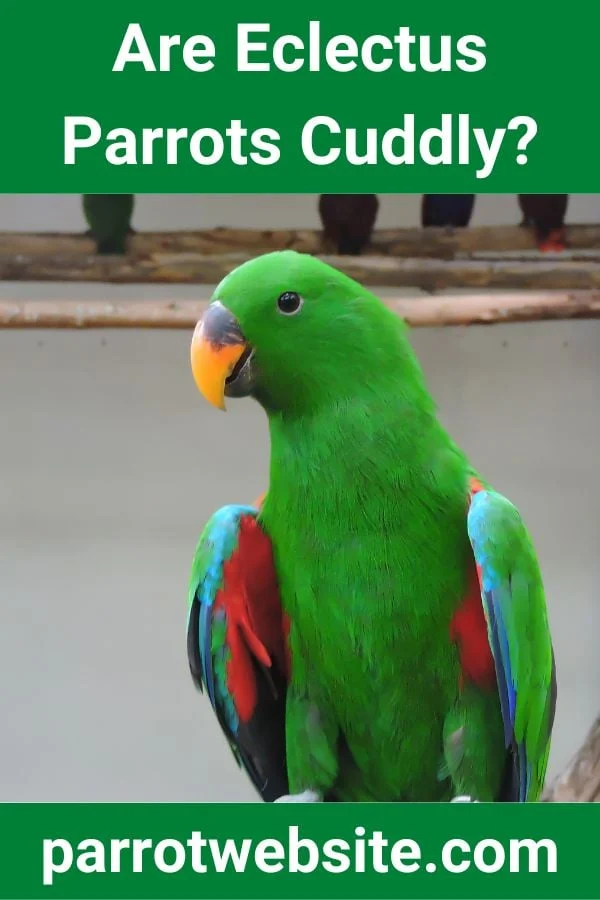
The Eclectus parrot (Eclectus roratus) is widely considered one of the most aesthetically striking and intellectually engaging avian companions in the world. Renowned for their sexual dimorphism—where males display brilliant emerald plumage and females boast deep, vibrant reds and purples—these birds have captured the hearts of bird enthusiasts globally. However, as their popularity has surged, so too have misconceptions regarding their temperament.
Many prospective owners enter the world of avian companionship seeking a "cuddly" pet—a creature that mirrors the tactile intimacy of a dog or cat. When it comes to the Eclectus, however, the reality is far more nuanced. While they are deeply social and profoundly affectionate, they operate on a spectrum of interaction that rarely includes physical cuddling. Understanding the behavioral architecture of this species is essential for anyone considering welcoming one into their home.
Main Facts: The Nature of Eclectus Affection
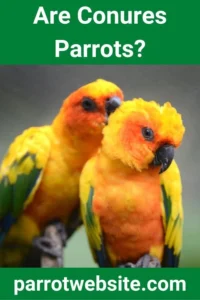
The central tenet of living with an Eclectus parrot is recognizing that they are not domesticated in the traditional sense; they are "tamed" wild animals. In the wild, Eclectus parrots do not engage in the same tactile social grooming behaviors seen in other species, such as cockatoos or conures. Their social structure is built on proximity rather than contact.
For an Eclectus, affection is measured by their willingness to be in the same room as their human "flock member." They are intelligent, observational, and communicative. An Eclectus that chooses to perch on a nearby stand while you work, rather than hiding in a back room, is demonstrating a high level of trust and emotional attachment. Their "love language" is one of vocalization, shared presence, and intellectual engagement, not physical contact.
Chronology of Human-Eclectus Interaction
To understand why these birds behave the way they do, we must look at their evolutionary history. For centuries, these birds lived in the dense tropical forests of the Solomon Islands, New Guinea, and parts of Australia. Their survival depended on high-level vigilance and complex vocal communication, rather than physical coddling.
- The Early Stages of Domestication (19th-20th Century): As these birds were introduced to aviculture, their stunning appearance made them highly sought after. Early owners often tried to force them into the "cuddly pet" mold, leading to behavioral issues, stress, and plucking.
- Modern Aviculture (2000s–Present): The shift toward positive reinforcement training has allowed owners to better understand the bird’s perspective. Modern experts now emphasize "consent-based" interactions. We have moved from viewing the bird as a toy to viewing it as a sentient roommate.
- The Current Behavioral Standard: Today, the consensus among avian behaviorists is that the Eclectus is an independent, high-functioning bird. They are best suited for owners who appreciate a quiet, intelligent companion rather than one that requires constant physical handling.
Supporting Data: The Anatomy of a Bond
Why do Eclectus parrots shy away from touch? Much of it comes down to their sensory biology and social evolution.
- Vocalization as Bonding: Eclectus parrots are among the most proficient talkers in the parrot world. They utilize human speech and complex mimicry not just to entertain, but to solidify their place in the "flock." When your Eclectus learns your specific "contact call," it is a significant evolutionary gesture of inclusion.
- Territorial Boundaries: Particularly in females, the instinct to protect a "nesting site" is profound. This is an evolutionary holdover that makes them naturally more wary of intrusive physical touch, which they may perceive as a violation of their personal space.
- The "Consent" Metric: Data from long-term avian foster programs suggest that owners who respect an Eclectus’s physical boundaries report a higher "happiness index" for the bird. When an owner stops forcing touch, the bird’s stress-related behaviors—such as screaming or feather destruction—drop significantly.
Official Perspectives from Avian Behaviorists
Leading avian experts consistently stress that the desire for a "cuddly" parrot is a human projection. Dr. Elena Vance, a renowned avian behaviorist, notes: "When an owner asks, ‘How can I make my Eclectus cuddle?’, they are asking the wrong question. The question should be, ‘How can I make my Eclectus feel secure enough to exist alongside me?’"
Behaviorists argue that the Eclectus is an "independent thinker." Unlike the Cockatoo, which may suffer from separation anxiety and require constant physical reassurance, the Eclectus is psychologically self-contained. Their "official" response to human over-handling is often withdrawal or, in cases of extreme pressure, defensive biting. Professionals emphasize that if you are seeking a physical, tactile relationship, the Eclectus is objectively the wrong choice for your household.
Behavioral Differences: Males vs. Females
While individual personality always dictates behavior, there are distinct trends between the sexes that prospective owners should be aware of.
The Male Eclectus
Males are frequently described as more "laid back" or docile. They are less likely to express territorial aggression and may, on rare occasions, tolerate brief periods of scratching or perching on the shoulder. However, "tolerate" is the operative word. They remain independent birds that generally prefer to observe their surroundings rather than be held.
The Female Eclectus
The female of the species is the "manager" of the territory. In the wild, they are responsible for guarding the nest, which translates to a more assertive, and at times, more temperamental personality in captivity. They are prone to "hissing" or lunging if a human hand invades their territory—which they often define as their entire cage. They are not "mean," as some labels might suggest; they are simply acting according to their biological imperative.
Implications for Prospective Owners
The decision to bring an Eclectus into your home carries significant implications for your lifestyle and expectations.
1. Re-evaluating the "Pet" Dynamic
You must be willing to transition from the role of a "master" to that of a "partner." If you require a pet that sits on your lap while you watch television, you will be disappointed. You must find joy in watching your bird solve a puzzle, mimic a sound, or simply exist in the same room.
2. The Necessity of Enrichment
Because they are not "cuddlers," they require a much higher level of environmental enrichment. Their intelligence must be stimulated through foraging toys, flight time, and regular intellectual training. An unengaged Eclectus is a bored, destructive bird.
3. Respecting Boundaries
The most critical implication is the necessity of learning "avian body language." A ruffled feather, a certain eye-pinning behavior, or a subtle movement away are all ways an Eclectus says, "no." A responsible owner learns these cues instantly. If you ignore them, you erode the trust that is the foundation of your bond.
4. Long-Term Commitment
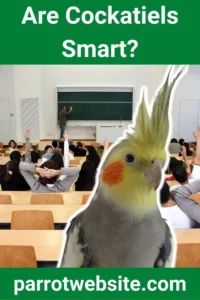
Eclectus parrots are long-lived, often surviving for 30 to 50 years. This is not a "starter" pet. Because they are not physically affectionate, the bond relies entirely on mutual respect and shared activities. If you are not prepared for a multi-decade commitment to a bird that may never want to be held, you should look toward other species, such as the Budgerigar or the Cockatiel, which may be more naturally inclined toward physical contact.
Conclusion: Finding the Right Match
The Eclectus parrot is a magnificent, intelligent, and deeply rewarding creature, but it is not a cuddly teddy bear. Their affection is expressed through loyalty, communication, and proximity—a type of bond that is arguably more profound than physical touch.
If you are a person who finds satisfaction in observing a wild, intelligent mind at work, and if you can derive happiness from a relationship based on mutual respect rather than physical dominance, the Eclectus will be an unparalleled companion. However, if your definition of a successful pet relationship requires physical cuddling, you would be doing both yourself and the bird a disservice by choosing this species.
Ultimately, the best way to love an Eclectus is to let them be exactly what they are: a brilliant, independent, and beautiful inhabitant of the canopy, choosing to share your home on their own terms.