
For many cat owners, the relationship with their feline companion is defined by affection, shared space, and the occasional game of "chase the toy." However, behavioral experts are increasingly highlighting a critical gap in domestic cat care: the misunderstanding of what constitutes true interactive play. Often dismissed as a low-priority activity or something a cat should handle independently, interactive play is actually the cornerstone of a healthy, well-adjusted, and happy cat.
Neglecting this pillar of care does not merely result in a bored pet; it can manifest in a spectrum of behavioral challenges, from destructive tendencies and nighttime zoomies to chronic anxiety and aggressive outbursts. Understanding the science of the feline "hunting sequence" is the key to unlocking a better life for your cat—and a more harmonious household for you.
Main Facts: The Anatomy of the Hunting Sequence
At the heart of feline biology lies a predator’s instinct that does not simply vanish because a bowl of kibble is provided twice daily. To satisfy a cat’s psychological and physical requirements, owners must facilitate the natural predatory cycle: Stalk, Chase, Catch, Eat, and Rest.
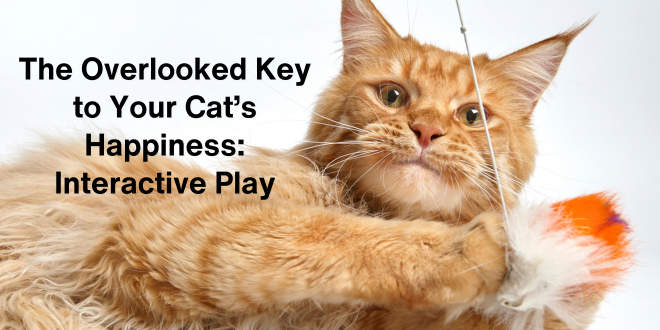
When we leave a cat to play with a pile of toys on the floor, we are missing the most vital ingredient: you. Interactive play, as defined by experts like best-selling author Pam Johnson-Bennett, requires the human to act as the "prey operator." By manipulating a wand toy to mimic the erratic, survival-based movements of a mouse or bird, the human engages the cat’s neurological pathways in a way that static, independent play cannot.
The Myth of "Cat-Only" Play
There is a prevailing misconception that cats are solitary hunters who require no social facilitation for play. While it is true that cats enjoy solo exploration, "play" with a stuffed mouse is closer to a toy-chewing exercise than a satisfying hunt. True interactive play serves as a vital outlet for energy that would otherwise be channeled into behavioral issues. When the owner becomes the conductor of the prey, the play becomes a collaborative, fulfilling, and mentally stimulating event.
Chronology: Structuring Your Daily Sessions
Consistency is the bedrock of feline behavioral modification. Experts recommend at least two dedicated interactive sessions per day, with each session lasting roughly 15 minutes. However, these are not hard-and-fast rules; they should be calibrated to the individual cat’s age, health, and activity levels.
Phase 1: The Warm-Up (Stalking)
The session should begin with a slow, cautious introduction of the toy. Move it along the floor, keeping it low, and utilizing corners or furniture as cover. This allows the cat to transition into "hunting mode," where patience and strategy take precedence over immediate action.
Phase 2: The Intensity (The Chase)
As the cat engages, increase the intensity of the movement. Mimic the flight or escape patterns of prey. However, avoid constant, frantic movement, which can lead to over-stimulation or frustration. Integrate periods of silence and stillness.
Phase 3: The Climax (The Catch)
This is the most critical stage. The cat must feel the success of the hunt. They need to physically grab, pin, and "kill" the toy. This provides the neurological "reward" for the hunt, satisfying their predatory drive.
Phase 4: The Cycle Completion (Eat and Rest)
Never abruptly end a session. An abrupt stop leaves the cat with a spike of adrenaline and nowhere to direct it, which is often the cause of "nighttime hyperactivity." Instead, wind down the movement to simulate an injured or tired prey. Once the cat has "made the kill," offer a high-value treat or transition directly into their regular mealtime. This mimics the natural flow of a wild hunt, leading to a state of post-prandial relaxation.

Supporting Data: Why Laser Pointers Often Fail
One of the most common mistakes in modern cat parenting is the reliance on laser pointers. While they appear to be a convenient way to exercise a cat, they are scientifically problematic.
The predatory sequence requires a tactile conclusion. A cat’s brain is hardwired to experience the "catch"—the feeling of prey under their claws and teeth. Because a laser pointer offers no physical substance, the cat is left in a state of perpetual, unsatisfied arousal. Over time, this leads to significant frustration and can even contribute to redirected aggression. If you choose to use a laser, it should only be used as a "lure" to guide the cat toward a physical toy, ensuring they get the tactile reward of the capture.
Official Responses and Expert Insights
Professional cat behaviorists emphasize that interactive play is not merely a hobby; it is a form of behavioral therapy. According to research in the field of feline ethology, cats that engage in structured play show significantly lower levels of stress-related cortisol and fewer incidents of feline hyperesthesia or anxiety-based grooming.
The "human-in-the-loop" model is consistently praised for its ability to strengthen the bond between species. By playing with your cat, you are engaging in a shared language. For shy or timid cats, this type of play builds confidence, as they learn to navigate their environment with a "prey" focus, eventually feeling like the masters of their territory.
Implications: The Long-Term Benefits
Investing 30 minutes of your day into structured, interactive play produces profound dividends:

- Resolution of Behavioral Issues: Many cases of "aggression" (such as ankle-biting or ambush behavior) are actually misdirected hunting instincts. When a cat has a sanctioned outlet for their prey drive, these "problem" behaviors often vanish.
- Emotional Stability: Boredom is a silent killer of cat happiness. An enriched, active routine provides mental stimulation that prevents the onset of depression and lethargy.
- Physical Health: Obesity is an epidemic among indoor cats. Daily, high-intensity play helps manage weight, improves cardiovascular health, and maintains muscle tone.
- Strengthened Human-Animal Bond: Trust is built in the trenches of play. By being the one to facilitate their joy, you become an essential, positive part of their life, fostering a deeper, more trusting relationship.
A Note on Consistency
It is important to view this as a lifestyle, not a chore. Just as a human might require exercise to stay physically and mentally healthy, a cat requires a structured environment to flourish. When integrated into the daily routine, this practice ceases to be a "requirement" and evolves into a highlight of the day for both the owner and the cat.
Conclusion: Taking the Next Step
If you find that your cat is exhibiting signs of restlessness, or if you simply wish to provide them with the best possible life, start by auditing your current playtime routine. Are you moving the toy like a piece of prey, or like a static object? Are you letting them "win" the hunt? Are you ending the session with a meal or a treat?
For those looking to deepen their understanding of feline psychology and advanced enrichment techniques, the work of experts like Pam Johnson-Bennett remains the gold standard. Her resources offer comprehensive guides on how to tailor these techniques to specific cat personalities, whether you have a senior cat who prefers short, strategic hunts or a high-energy kitten who requires intense physical engagement.
Interactive play is the overlooked key to feline happiness. By shifting your perspective and becoming an active participant in your cat’s natural instincts, you aren’t just playing—you are honoring their heritage and ensuring their well-being. Start today, and you will likely see a transformation in your cat’s mood, health, and affection within just a few weeks.
For further resources on behavior modification and enrichment, consider exploring the specialized literature authored by industry experts, available through leading retailers like Amazon.