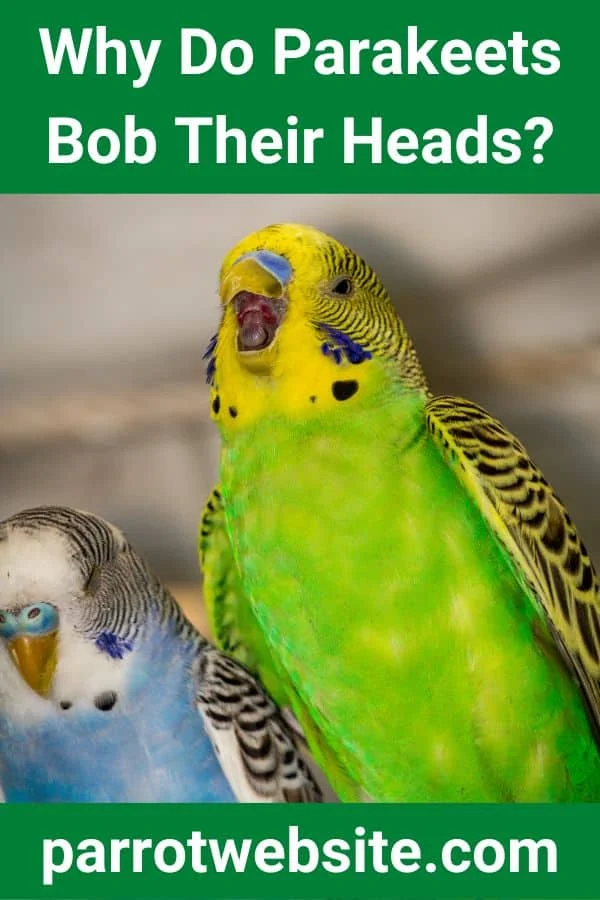
For the millions of households across the globe that share their living spaces with parakeets, also known as budgerigars, the sight of these diminutive, colorful birds rhythmically bobbing their heads is a daily occurrence. To the uninitiated observer, this repetitive motion—often accompanied by energetic chirping—might seem like an eccentric tic or a sign of confusion. However, for avian behaviorists and experienced owners, this movement is a sophisticated form of communication, a window into the parakeet’s emotional state, and a key indicator of their social needs.
While head bobbing is almost universally a benign and normal behavior, understanding the nuance behind the motion is essential for responsible pet ownership. From the thrill of human interaction to the subtle warnings of territorial disputes, the "bob" carries a multitude of meanings.
Main Facts: The Anatomy of a Bob
At its core, head bobbing in parakeets is a mechanical action driven by the bird’s need to navigate its social and physical environment. Unlike mammals, who use complex facial expressions to convey mood, parrots rely heavily on body language.
The most prevalent reason for head bobbing is attention-seeking. Parakeets are intensely social creatures that have evolved to live in large, chattering flocks. When kept as pets, their owner effectively becomes their "flock." If your parakeet begins to bob its head in your direction, it is likely attempting to engage you, asking for interaction, or signaling that it wants to be part of the ongoing activity in the room.
Furthermore, head bobbing is frequently a display of positive reinforcement and happiness. When a parakeet greets its owner after an absence, or when it is comfortably perched in a sunlit spot, a gentle bob can be an expression of contentment. It is a communicative gesture that says, "I am here, I am safe, and I am social."
Chronology of Behavior: From Chick to Adult
The developmental timeline of a parakeet influences its behavioral patterns, including head bobbing.
- Juvenile Stages: Young parakeets often bob their heads while exploring their environment. This is a mix of curiosity and an attempt to gauge the distance of objects in their path.
- Adolescence: As the bird matures, the intent behind the bob becomes more nuanced. Hormonal changes in males often shift the behavior toward courtship rituals.
- Adult Maturity: In adult birds, head bobbing becomes a ritualized social signal. A stable adult bird that is well-adjusted to its environment will bob its head to maintain social bonds with flock mates or human companions. If a bird has developed a repetitive, frantic bobbing pattern that was not present in its youth, it often serves as a diagnostic marker for the owner to investigate potential environmental stressors.
Supporting Data: Why They Move the Way They Do
Scientific observation suggests that parrots, including parakeets, possess a unique ability to synchronize movement with auditory stimuli. This is why many parakeets appear to "dance" to music. Studies into avian neurobiology have indicated that parrots have a highly developed connection between their auditory and motor centers.
When a parakeet bobs to a beat, it is not merely flailing; it is actively processing the rhythm. This capacity for "beat-keeping" is relatively rare in the animal kingdom and underscores the high intelligence of these birds. However, data also indicates that individual personality plays a massive role; just as some humans are rhythmically inclined, some parakeets find music stimulating while others find it over-stimulating or distracting.
The Implications of "The Bob": When to Be Concerned
While the vast majority of head bobbing is healthy, owners must be vigilant regarding the context of the behavior. Because parakeets are prey animals, they are experts at masking illness. However, behavioral changes are often the first "tell" that something is amiss.
The Boredom Factor
Parakeets are high-energy, high-intelligence animals. In the wild, they spend their entire day foraging, socializing, and avoiding predators. In a cage, that same intellect can turn inward. If a bird is left in isolation for long hours without enrichment, it may begin to bob its head obsessively. This is a hallmark of boredom and potential depression.
Implication: If the bobbing is rhythmic but accompanied by pacing or feather-plucking, it is a cry for help. Owners must increase the complexity of the bird’s environment with puzzle toys, foraging opportunities, and, if possible, a companion of the same species.
Anxiety and Stress
Anxiety often manifests as a rapid or jerky, erratic bobbing. This can be triggered by a sudden change in environment, the introduction of a new pet, or even a stressful shift in the household routine. A stressed bird is a compromised bird; chronic anxiety can lead to a weakened immune system, leaving the parakeet vulnerable to secondary infections.
Medical Indicators
In rarer instances, consistent head bobbing can indicate a physiological problem. If the bobbing is accompanied by:
- Lethargy (a puffed-up appearance or sitting at the bottom of the cage)
- Weight loss or loss of appetite
- Discharge from the nares (nostrils) or eyes
- Clicking sounds while breathing
Action Required: These are not behavioral issues; they are medical emergencies. The bird should be taken to an avian-certified veterinarian immediately.
Distinguishing Between Head Bobbing and Head Tilting
It is a common error to conflate "bobbing" with "tilting." While bobbing is an active, rhythmic motion, head tilting is a static adjustment.
When a parakeet tilts its head, it is usually attempting to focus. Because their eyes are located on the sides of their heads, they have a wide field of vision but poor depth perception. By tilting their head, they are aligning one eye to focus on an object or sound with greater clarity. If your parakeet tilts its head when you speak, it is an encouraging sign—it means your bird is actively processing your voice and finding you interesting.
Territoriality and Courtship: A Gendered Perspective
The intent behind a bob can also be gender-specific.
- Male Parakeets: Males are generally more performative. They will bob their heads aggressively to assert dominance over a perch or toy, signaling to other birds that they are in charge of that space. Conversely, in a mating context, they will bob their heads with a specific intensity to attract a female.
- Female Parakeets: While females do bob their heads, they are typically less prone to doing so for courtship displays. If a female is seen bobbing frequently, it is usually either an attention-seeking gesture toward the owner or a defensive signal in a territorial dispute.
Official Guidance for Parakeet Owners
Avian veterinary organizations emphasize that the "normalcy" of head bobbing should be determined by the bird’s baseline behavior. Owners are encouraged to maintain a "behavioral journal."
- Establish a Baseline: Spend 15 minutes a day observing your bird. Note when they are active, what they are doing, and how they react to external stimuli.
- Identify Triggers: Does the bird bob when the TV is on? When you walk in the room? When a specific toy is moved?
- Monitor Frequency: A happy bird bobs sporadically. A stressed bird bobs constantly.
If the behavior is accompanied by a lack of appetite or a change in droppings, professional intervention is mandatory. Do not wait for the bird to appear "sick," as birds are masters at hiding symptoms until they are quite ill.
Conclusion: Embracing the Rhythm
Ultimately, head bobbing is a vital component of the parakeet’s communicative repertoire. It is a sign of a bird that is engaged with its world. Whether your feathered companion is dancing to your favorite song, demanding your attention, or simply expressing its happiness to see you, the bob is a testament to the complex, intelligent, and highly social nature of these birds.
As an owner, your task is to differentiate between the healthy expressions of a social animal and the warning signs of a bored or stressed one. By providing a stimulating environment, consistent social interaction, and a watchful eye, you ensure that your parakeet’s "bob" remains a sign of a vibrant, happy life. When in doubt, mirror the behavior—bob back at them. You might just find that this simple, shared rhythm is the foundation of a deeper, more rewarding bond between human and bird.